Create an account


Welcome, Guest
You have to register before you can post on our site.

Username
  

Password


Search Forums

(Advanced Search)

Forum Statistics
» Members: 20,077
» Latest member: Crosa
» Forum threads: 21,946
» Forum posts: 22,804

Full Statistics

Online Users
There are currently 711 online users.
» 0 Member(s) | 705 Guest(s)
Applebot, Baidu, Bing, DuckDuckGo, Google, Yandex

 
  News - Stephen King's Shining Sequel Doctor Sleep Gets Scary First Trailer
Posted by: xSicKxBot - 06-14-2019, 04:27 PM - Forum: Lounge - No Replies

Stephen King's Shining Sequel Doctor Sleep Gets Scary First Trailer

The first trailer for Doctor Sleep is here. The movie is based on Stephen King's 2013 novel and is directed by Mike Flanagan, who previously helmed the Netflix adaptation of King's Gerald's Game, as well as the hit show The Haunting of Hill House.

King's novel is a sequel to his classic The Shining. In the new movie, Ewan McGregor plays the adult version of Danny Torrance, the telekinetic kid from that earlier book and movie. Torrance meets a young girl with similar powers to his and must protect her from a sinister cult who are targeting children with similar gifts. Flanagan has previously proved himself a master at balancing scares and a heartfelt drama, and this looks like no exception. There's also quite a few cool references to scenes and iconic moments from The Shining--check it out above.

Doctor Sleep also stars Rebecca Ferguson (Mission Impossible: Fallout), Bruce Greenwood (Gerald's Game), Jocelin Donahue (House of the Devil), and Jacob Tremblay (The Predator). Danny isn't the only character from The Shining to feature either--Carl Lumbly (Alias) plays Dick Hallorann, while Alex Essoe (Starry Eyes) appears as Wendy Torrance. The movie hits theaters on November 9, 2019.

In a recent interview with Bloody Disgusting, Flanagan spoke about the inevitable shadow that Stanley Kubrick's movie adaption of The Shining cast over Doctor Sleep. "I think you do have to acknowledge [it]," he said. "There is no version of the world where I am trying not to acknowledge one of the greatest films ever made. There's no upside in shying away from that reality.

"It's its own story and in a very specific way," he continued. "If you've read the book, you know exactly why it's so different but it's quite a tightrope that we're walking I think. I'm having a great time doing it. I'm just going to get the movie out and then turn off the internet for two weeks and see how it all goes."

Print this item

  Microsoft - For help using Microsoft’s assistive technology, DAD has the answers
Posted by: xSicKxBot - 06-14-2019, 04:27 PM - Forum: Windows - No Replies

For help using Microsoft’s assistive technology, DAD has the answers

Globally, more than 1 billion people are living with a disability, yet just one in 10 people has access to assistive technology, according to the World Health Organization 

a man uses a smart phoneOver the years, Microsoft has been building inclusion into its products and services. And to help everyone get the most from accessibility resources, the company has the Disability Answer Desk, or DAD. It is free, 24/7 technical support from Microsoft experts trained in assistive technologies.   

“Our goal is to make the Disability Answer Desk a best-in-class support team for customers with disabilities and to use feedback to drive greater accessibility across our engineering teams,” says Sean Marihughan accessibility escalation engineer at Microsoft. 

Technology has the power to strengthen opportunities for everyone, but it must be intuitive to have an impact. DAD gives customers the technical support they need while gathering critical feedback to improve the assistive features in products.  

[Subscribe to Microsoft on the Issues for more on the topics that matter most.] 

a man in a wheelchair views his computer monitorsEach year, DAD experts field about 150,000 inquiries, assisting customers with products such as Office 365, Xbox, Windows and Skype, as well as third-party assistive technologies, such as screen readers, screen magnifiers, and speech recognition software.   

Microsoft has also established an Enterprise Disability Answer Desk, or eDAD, that supports enterprise customers. Available globally as a free service in English, eDAD also reports customer feedback to specific product teams so they can quickly resolve issues.   

“With eDAD, we have the potential to empower people with disabilities to achieve more at work and schooland enable organizations to provide more accessible experiences to their employees and customers,” says Crystal Jones, also an accessibility escalation engineer at Microsoft.  

Since introducing DAD in 2012, Microsoft has extended the service to customers in 11 English-speaking countries: the US, UK, South Africa, Ireland, New Zealand, the Philippines, Singapore, Malaysia, Canada, Australia, and India. The service has been rolled out to French and Spanish-speaking countries, including France, Belgium, Canada, Mexico, and Spain. 

With eDAD, we have the potential to empower people with disabilities to achieve more at work and school—and enable organizations to provide more accessible experiences to their employees and customers.
Crystal Jones

Over the years, Microsoft has gradually expanded the channels for accessing the service. DAD is available through 24/7 chat service and on Twitter by sending a direct message to @MSFTEnable 

DAD also has American Sign Language support through videophone. People who are blind or have low vision can use Be My Eyes, a free app that connects customers through live video calls 

DAD is among a growing number of efforts by Microsoft to empower people with disabilities and create a more inclusive work environment.  

For more on these innovations and accessibility initiatives at Microsoft, visit microsoft.com/en-us/accessibilityAnd follow @MSFTIssues on Twitter. 

Print this item

  News - Gears Tactics Still In Development, Despite E3 2019 No-Show, Microsoft Says
Posted by: xSicKxBot - 06-14-2019, 09:22 AM - Forum: Lounge - No Replies

Gears Tactics Still In Development, Despite E3 2019 No-Show, Microsoft Says

Gears Tactics is not dead, according to publisher Microsoft, despite its E3 2019 no-show. The Xbox One and PC game was first unveiled at E3 2018 alongside Gears 5 and Gears Pop, but while those were shown off again at Xbox's press conference this time round, Tactics was not.

This prompted fears from some that the game was canceled or experiencing development struggles. However, the publisher has now reassured fans that the strategy title is still on the way.

Longtime series producer Rod Fergusson told Kotaku: "Last year we wanted to really talk about all three games [Gears 5, Pop, and Tactics] and show that Microsoft is tripling down on the Gears of War franchise, but now that we've had that we're really trying to make sure it's not always this three-pack … We'll talk about Gears Tactics later."

No release date has been revealed for Gears Tactics, while Gears 5 launches on September 10. Gears Pop, meanwhile, will come to iOS and Android in "late summer" this year.

Microsoft's E3 2019 conference focused heavily on Gears 5, which will receive a Terminator crossover in which you can play as the T-800 himself or Sarah Connor. Players will also have a couple of chances to try out Gears 5 ahead of its release. In July, The Coalition will launch a versus multiplayer test that includes a new competitive game type called Arcade. Then the following month, on August 19, you can test out Horde Mode.

More E3 news:

Print this item

  News - Dragon Quest XI S Is Getting A Lovely Switch Hardware Bundle In Japan
Posted by: xSicKxBot - 06-14-2019, 09:22 AM - Forum: Nintendo Discussion - No Replies

Dragon Quest XI S Is Getting A Lovely Switch Hardware Bundle In Japan


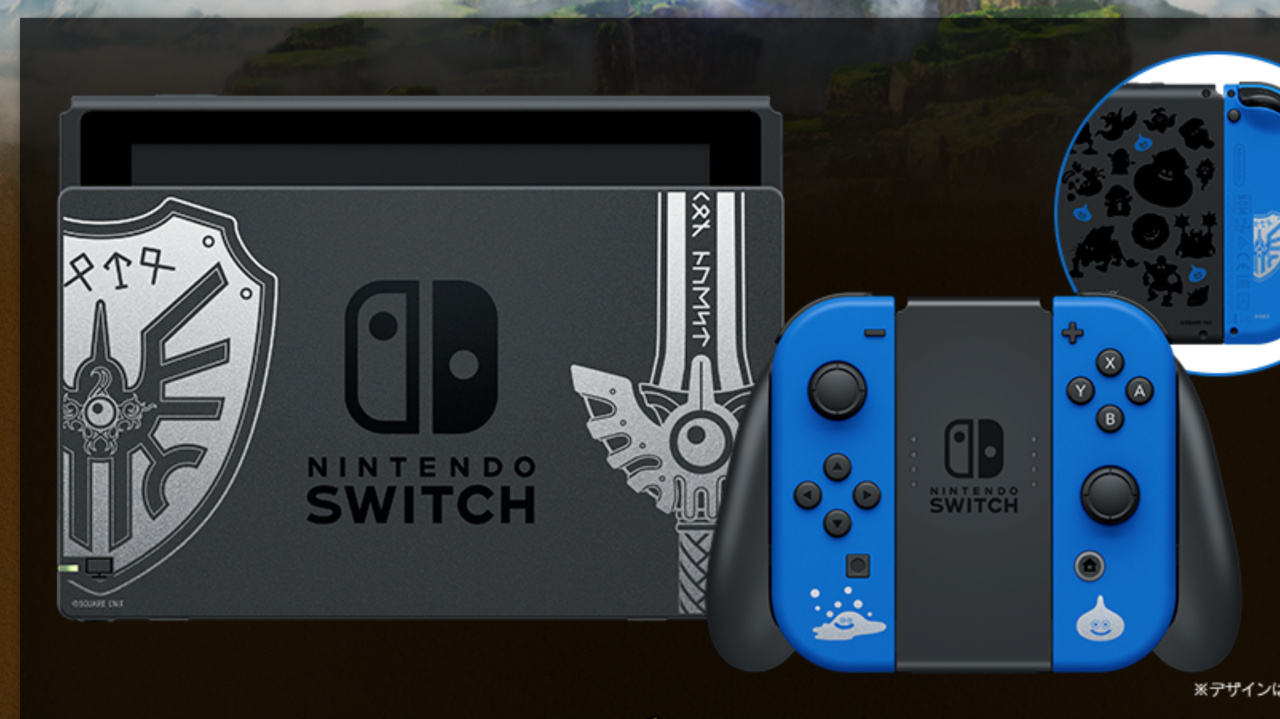
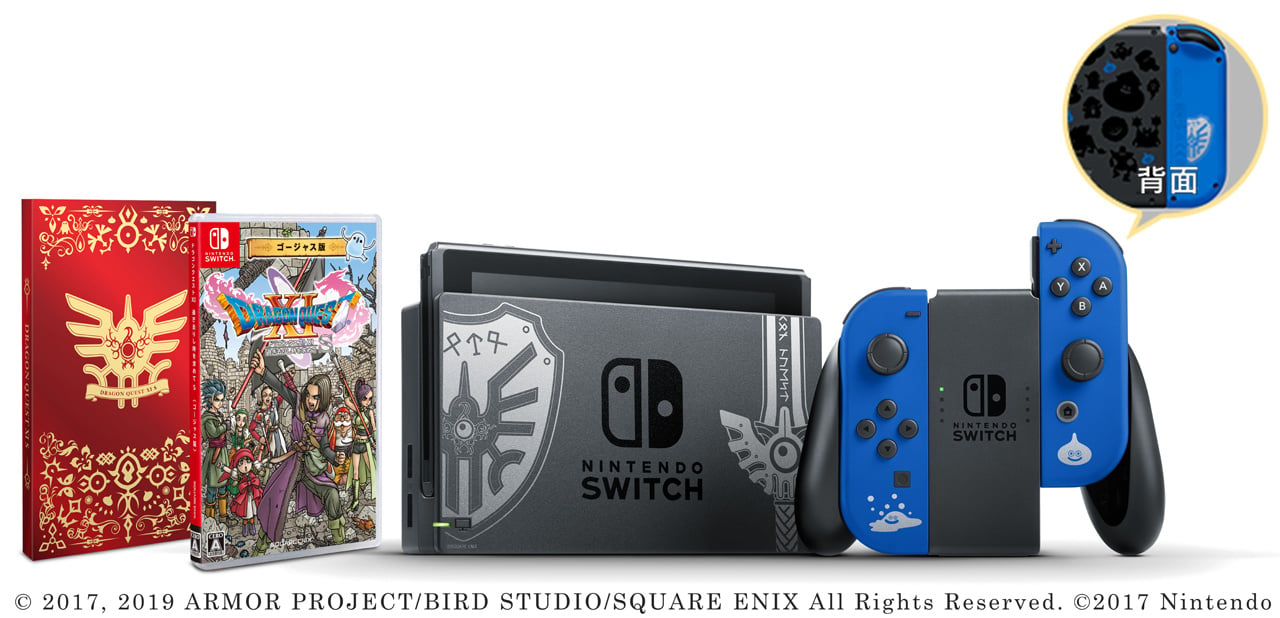
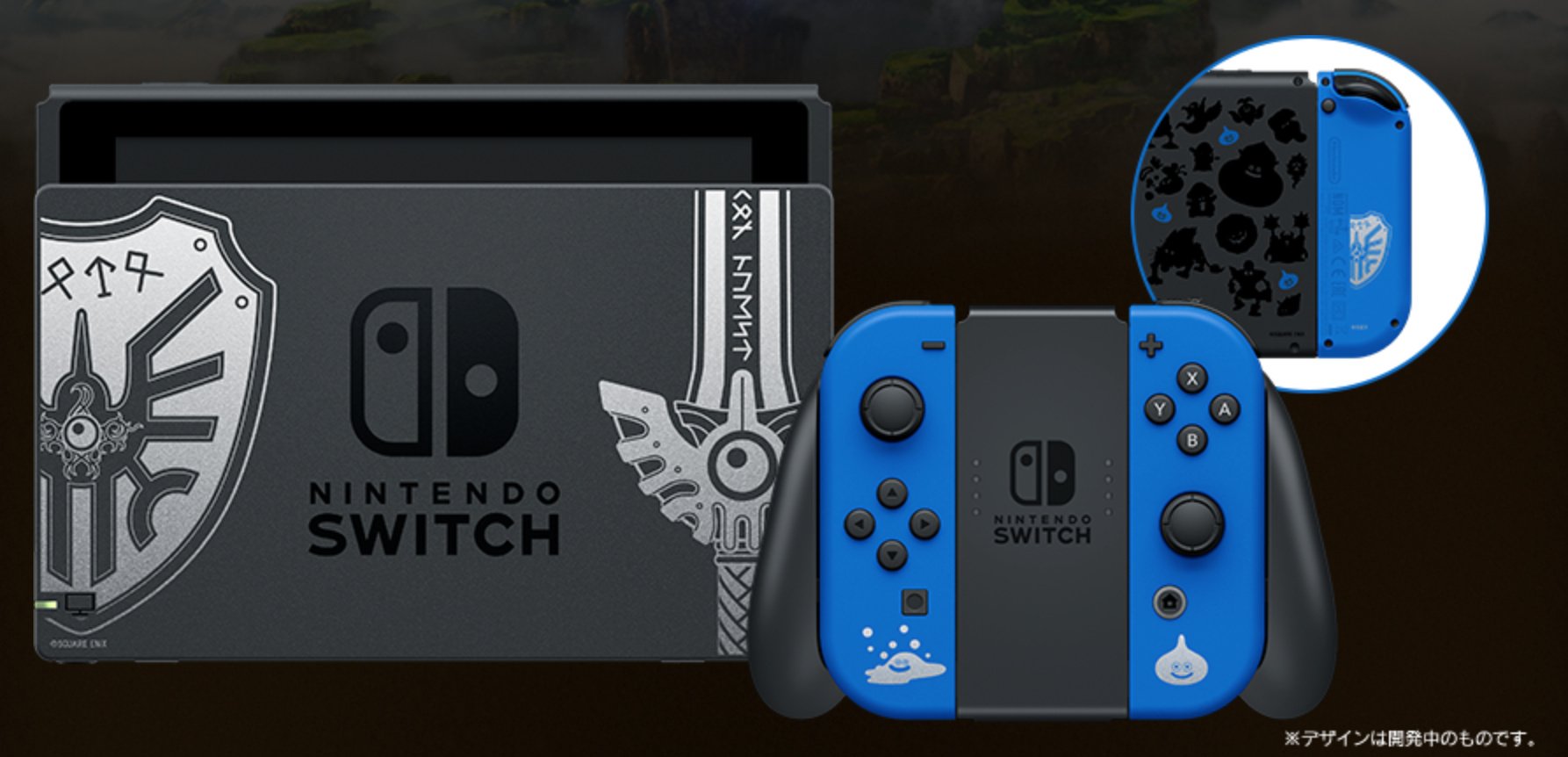
During Nintendo’s E3 Direct, it was revealed that Dragon Quest XI S: Echoes of an Elusive Age – Definitive Edition (which still needs a bit of a title trim, in our opinion) is headed to Switch this September. Not content with having just a release date announcement, Square Enix has also revealed a juicy looking Switch hardware bundle set to release on the very same day.

Called the ‘Dragon Quest XI S Loto Edition’, the bundle comes with a custom designed Switch and dock, Dragon Quest-themed Joy-Con, a Joy-Con grip, an AC adaptor, HDMI cable, and a safety guide. It’ll also include what is apparently called a ‘Gorgeous Edition’ of the game which features all of the following and an even longer title.

Dragon Quest XI S: Echoes of an Elusive Age – Definitive Edition (Gorgeous Edition):
A physical copy of the game (with a gorgeous sleeve)
– Voice Drama downloadable content (full story set)
– Japanese / English voice switching downloadable content
– Gorgeous Edition bonus downloadable content
— Kingdom of Trodain Set (changes the appearance of the protagonist)
— Wild Boar Set (changes the appearance of Veronica)
— Happy Adventurer Set (Pep pop x5, Seed of skill x5)

Dqswitch

dqswitch

Yesterday, we also shared the news that Square Enix is releasing a special Hori-made Slime controller for the Switch. It’s definitely not a bad time to be a Dragon Quest fan, although it’s worth noting that all of the products mentioned above are only currently destined for Japan. You’ll need to get your importing game on if you want any of these.

Do you like the Switch design? Are you mad enough about Dragon Quest to go ahead and import one? Let us know in the usual place.

Print this item

  AppOnboard Acquire Buildbox
Posted by: xSicKxBot - 06-14-2019, 09:22 AM - Forum: Game Development - No Replies

AppOnboard Acquire Buildbox

AppOnboard, perhaps most famous for the technology powering the Google App Store “Try Now” functionality have just acquired BuildBox.  BuildBox is a nocode or codeless game engine that just released version 3.0 and announced a pricing change.  The acquisition will not change the management or structure of the BuildBox team.

Details from the BuildBox blog announcement:

I’m extremely excited to announce the next chapter for Buildbox, and explain how we’re going to vastly expand our product, ability, and community going forward, but before I do that I believe it’s most important to discuss what is not changing.

With this acquisition, every single employee is staying with Buildbox, including myself and Nik.  Buildbox will run independently — as it always has — while being able to grow much more quickly, and tap into the great resources that AppOnboard provides.  Nik and I will still be focused 100% on vision and additions to complete line of our products. We will not be making any changes in product, besides improvements and additions we already have planned.

What we will have access too, that we did not before, is resources to help us hire more developers, content creators and more for Buildbox.  You’ll see our development times vastly improve, and content creation for Buildbox speed up drastically.

AppOnboard is amazingly dedicated to not changing our vision, but helping us see it through to its largest potential.

AppOnboard have also released a statement available here.  BuildBox also released an email to all developers with the following details (thanks J.P for the heads-up!):

A lot of changes are underfoot and all of them positive! Every employee from Buildbox that you know and love are all still here and will definitely be here for a long time. We’re the same Buildbox team that you know and love; it’s just that we have much more resources now to hire more developers, content creators, etc!
So what’s next for us?

  • a FREE version of Buildbox
  • much better Android, ad network, and export support
  • new nodes and smart assets
  • a new smart asset store
  • roadmapping expansions for the MasterCollection software
  • lots and lots of Buildbox 3 Upgrades
  • … and so much more!

At face value, this development seems like a pure win for existing BuildBox developers.

GameDev News


Print this item

  XONE - Lovecraft's Untold Stories
Posted by: xSicKxBot - 06-14-2019, 02:03 AM - Forum: New Game Releases - No Replies

Lovecraft's Untold Stories


Publisher: BadLand Publishing

Release Date: May 10, 2019

Print this item

  News - The Unexpected Stars Of E3 2019
Posted by: xSicKxBot - 06-14-2019, 02:03 AM - Forum: Lounge - No Replies

The Unexpected Stars Of E3 2019

E3 2019 has just about reached its end. This year's Electronic Entertainment Expo delivered some big news, including a Zelda: Breath of the Wild sequel, a new Xbox console named Project Scarlett, and plenty more.

However, it also contained some wacky and wonderful moments none of us expected, and it gave rise to some stars we never thought would shine at the gaming expo. Let's take a look at some of the people--and animals--that have brightened up our E3.

Doug Bowser Picking A Fight With, Uh, Bowser

After Reggie Fils-Aime's recent retirement, Nintendo needed a new star to present its E3 Directs. Thankfully, Bowser was there to take over--in style. Doug Bowser, that is.

The Koopa King thought he was the one to tell us about Nintendo's new games at E3 2019, but it turns out there was a mistake, and D Bowser promptly put Mario's longtime enemy in his place. Sorry, Bowser.

Keanu Reeves Is In Cyberpunk 2077

Keanu Reeves had already captured the internet's hearts for being an all-round Good Egg. So when he emerged on-stage at Microsoft's E3 2019 press conference, everyone understandably went wild. The actor, perhaps best known for his roles in the Matrix and John Wick franchises, is in Cyberpunk 2077. He plays a character named Johnny Silverhand, who is described by developer CD Projekt Red as a "legendary rocker boy" who gets his name from the fact that he has a robotic, silver arm. Silverhand is a "key" character in Cyberpunk 2077, so we may see a lot of him.

Reeves not only provided the voice and likeness of Silverhand, but he also performed full-body motion capture. This means Silverhand will look and act like Reeves. That's good news, because as behind-the-scenes John Wick training videos have shown, Reeves is a talented actor who commits to his craft to ensure the best possible result.

Ubisoft Brought An Adorable Dog On Stage

Ubisoft's E3 2019 press conference was as varied as ever, bringing us news on Watch Dogs: Legion, Rainbow Six Quarantine, and more. But by far the most adorable moment was when actor John Bernthal (The Wolf of Wall Street, Daredevil, The Punisher) arrived on stage accompanied by his dog, Bam Bam. Bernthal was there to discuss his role in Ghost Recon Breakpoint, while Bam Bam was merely there to be A Good Boy. Watch the wholesome moment above.

Ikumi Nakamura Is The Internet's New Favorite Game Developer

The grey clouds of Activision's reduced E3 presence and Sony's no-show seemed ready to unleash a shower of disappointment on E3 2019. And then the Bethesda press conference happened. Tango Gameworks creative director Ikumi Nakamura took to the stage, and like a beam of light from the sun, she cut through the miasma to energize and uplift us all. Nakamura arrived on stage to announce Ghostwire: Tokyo, a new game from the studio behind The Evil Within and The Evil Within 2.

Nakamura casually strolled onto the stage with an enthusiastic, "Yayyyyyyy!" This was followed by, "Wow, wow, wow, so many people." Obviously, Nakamura was feeling overwhelmed by the size of the audience, but at the same time, she stayed cool, calm, and collected.

Nakamura's minor case of stage fright belies her experience in game design and development. Though she may not be a familiar name or face to the greater video game fanbase as a whole, she has been involved in the creation of some of the most beloved games of all time, including Okami and Bayonetta, and of course The Evil Within.

Over the course of a few minutes, Nakamura's earnestness and excitement won hearts and minds. She admitted her nervousness, said she'd give speaking English--which she is doing for our benefit--a solid shot, and then delivered a charismatic pitch for her new "spooooooky" game. People are vanishing in Tokyo, and we the player must find out why, unraveling conspiracies and delving into the occult along the way. She promised we'd meet spirits that were [ominous voice] "dangerous" and [playful voice] "peaceful."

Helen, Watch Dogs: Legion's Killer Grandmother

Ubisoft's E3 2019 press conference had quite a few unexpected surprises--one of which we've of course been over already--but none seems to have hit as hard as an octogenarian with a mean streak. Helen, one of the showcased playable characters from Watch Dogs: Legion, has captured the hearts of the internet.

That's no small feat, because the pitch behind Legion is that anyone is a playable character. All of London's residents you find wandering around have their own stories, backgrounds, and habits, and you can hack into their lives and learn more about them to recruit them. Many of them have specialized skills like brawling or robotics expertise. Helen, according to the trailer, is a former assassin, and the wrinkles have made her no less deadly.

More E3 news:

Print this item

  News - Midweek Madness – SCS Software Advertising App, 75% Off
Posted by: xSicKxBot - 06-14-2019, 02:03 AM - Forum: Lounge - No Replies

Midweek Madness – SCS Software Advertising App, 75% Off

© 2019 Valve Corporation. All rights reserved. All trademarks are property of their respective owners in the US and other countries.

VAT included in all prices where applicable.   Privacy Policy   |   Legal   |   Steam Subscriber Agreement   |   Refunds

Print this item

  News - Don’t Miss: How bad crediting hurts the game industry and muddles history
Posted by: xSicKxBot - 06-14-2019, 02:03 AM - Forum: Lounge - No Replies

Don’t Miss: How bad crediting hurts the game industry and muddles history

You’d think that game credits would be simple.

It’s just a list of names and roles, after all. How hard can that be to get right?

But credits are rarely simple, because neither is game development. And yet credits are an invaluable, underappreciated aspect of game making.

They’re our best — and often only — record of the human labor that goes into game development, serving not only as a reminder that games are made by people — sometimes lots of them — but also as a tool for developers to advance their careers.

For studios, crediting can be a tool for leverage; amid the recent furor over Rockstar’s bad labor practices, for example, we were reminded that the studio has long maintained a policy of not crediting people who worked on a game unless they were present when it shipped, to encourage the team “to get to the finish line.”

For historians and journalists, meanwhile, they’re a way to begin to peel back the layers. To uncover the stories of the people and companies behind the games.

Despite their importance, however, it’s not unusual for the credits published with games to be inaccurate, incomplete, overly vague, or even (on rare occasions) downright misleading. This is a problem with many causes, but one of the big reasons, Fun Bits CEO Chris Millar told me in an interview earlier this year, is simply that credits in games aren’t standardized.

“While they’re much better than they used to be we’re still not anywhere near the movie industry,” he said, “in terms of giving people credit for all of their work on creative endeavors.”

Indeed, the IGDA published the last version of its crediting guidelines back in 2014 — after multiple high-profile instances of bad crediting in the decade before, including an entire team of 55 people being wiped off the credits for Manhunt 2, and a years-long discussion about the importance of credit standards. But those guidelines are hard to find and with no union agreements in place they’re for publishers to follow (or not) at their own discretion — provided they’re even aware that the guidelines exist.


“[Atari not crediting game makers] was an attempt to dis-empower designers by removing the bargaining power associated with explicit authorship.”

In order to get a proper understanding of how credits can help, hinder, contort, and otherwise affect games history and archiving, and to start to puzzle out how much of a difference credits standardization would actually make, I asked four historians and a few developers about the issue. Their stories reveal a complex relationship between labor, authorship, ownership, and recognition in game development throughout the history of the medium — and no doubt long into the future.

A (flawed) record of authorship


“The fact that credits exist in games reflects human concerns about authorship and ownership with regard to creative production,” notes Laine Nooney, an assistant professor of media industries at NYU Steinhardt who has spent years researching and writing about the history of Sierra On-Line. The role of credits is to provide a factual record of this creative production but, as Nooney argues, they are also political.

“When Atari management made it policy to not list designers’ names on their games, this was an attempt to dis-empower designers by removing the bargaining power associated with explicit authorship,” she explains. It backfired. Warren Robinett hid his name in a secret room in 1978 Atari VCS game Adventure, and five other star programmers soon left in protest of the policy to start Activision — ironically taking power away from Atari as a result.

Warren Robinett’s famous hidden credit room, tucked away in Adventure

Games historian Jimmy Maher, who runs the Digital Antiquarian blog, points to other examples: “Radio Shack was also notorious for refusing to credit the people who made the TRS-80 games they carried in their stores,” he says. “Even at a progressive publisher like Infocom, there was a lot of debate over whether and to what extent the authors of the games should be highlighted, as opposed to the Infocom brand and the so-called ‘matrix’ of genres and difficulty levels.”

Some, Maher explains, thought their names should be on the box. Others “really couldn’t care less, and just wanted to make the Infocom brand successful.”

The historical relationship between credits and branding gets more intriguing as you dig deeper. MicroProse head Wild Bill Stealey — acting on a comment by the late comedian/actor Robin Williams about the games industry lacking recognizable stars — was responsible for Sid Meier’s name becoming a branding tool. The Sid Meier’s prefix soon came to decorate not only the titles of games that the Civilization designer led creatively but also the ones that he barely more than consulted on.

Maher adds that Origin’s Worlds of Ultima: The Savage Empire similarly included Richard Garriott’s name in the credits as an executive producer “despite having absolutely nothing to do with the game that I could discern.” (And meanwhile Warren Spector was left off the credits despite reportedly creating the concept, setting, and plot outline for the game.)

Politics gets in the way


Credits can be as much a reflection of internal politics as they are of actual project and company roles. While this gives historians interesting threads to explore, they must first become aware of which names are omitted or included because of politics.

This can result in history vanishing, as in the case of Arthur Abraham, who developed the prototype scripting language and game logic for Sierra’s King’s Quest and what would become the Adventure Game Interpreter (AGI) engine. “Abraham was fired part way through the development of King’s Quest,” explains Nooney, “and his name was left out of the credits of every King’s Quest port (with the exception of the Apple IIe version), as well as every future Sierra release that used AGI.”

Because of this, it took several interviews and extensive archival research, spread across several years, for Nooney to discern that Abraham was a key figure in AGI’s development. “He died in prison before I could make an attempt to contact him,” she continues. “Had I known at the start that he was foundational to AGI, I might have been able to correspond with him earlier and shed some light on the development of King’s Quest — a game which is shrouded in misinformation about its development.”

Many publishers have (or had) set policies of not crediting developers for their role on a project if they leave before it ships. I learned while conducting interviews for an Assassin’s Creed oral history at Polygon, for instance, that several people who appeared in the credits under the title “additional” were in fact core team members who left before the game’s four-year development concluded. Starcraft‘s original designer Ron Millar was similarly relegated to “special thanks” in the game’s credits when he left to join Activision (which ironically now owns the entire company) while it was in testing.

Sometimes entire studios go uncredited for their work on a game. Games journalist and author of the Untold History of Japanese Game Developers book series John Szczepaniak notes that Namco does not allow anybody in Japan to disclose the names of staff who worked on any of its games. (Szczepaniak, however, has nothing preventing him from sharing those names outside Japan, and as such he has obtained a spreadsheet listing credits for the Pac-Land arcade game.) The original Castlevania was likewise published without credits, he adds. After extensive investigation, the best Szczepaniak and his colleagues can gather is that the main creator was Hitoshi Akamatsu — who they’ve been unable to contact.

Meanwhile, the practice of “white label” outsourcing — whereby companies are contractually-bound to keep quiet about their work on a game — has been around for decades. One Japanese studio, TOSE, reportedly works on 30 to 50 games per year and only receives credit for a handful of those (curiously, this only happens at the request of their clients — they have business reasons to want to stay anonymous).

[embedded content]

A clip of the Castlevania credits

Szczepaniak, who wrote about this world of “ghost developers” like TOSE for The Escapist back in 2006, believes there should be some sort of international regulatory body preventing this from happening. “Every staff member should be credited for their work,” he argues.

Even tiny indie and amateur games can wind up with names omitted entirely. “For small independent games, like fangames or freeware, one of the most difficult things is a total lack of credits,” says Phil Salvador, a librarian and digital archivist who runs a blog about little-known and forgotten games called The Obscuritory.

“Sometimes developers will only go by a pseudonym or a company name, or they’ll intentionally leave their name off. That’s an understandable problem without much of a fix. Not everyone wants to use their real name on all their work or to be associated with a weird game they threw together when they were 14.”

But when they do this — whether we’re talking commercial efforts made by professionals or non-commercial games by amateurs and hobbyists — they also cause a huge headache for historians, who might want to learn more about how/when/why a game was made or to build up a more complete catalog of games released. “Even minimal credits can be helpful for asking around and starting the research process,” notes Salvador. “With the companies often gone and their records presumably lost, anyone listed in a game’s credits is a potentially helpful source.”

Lost in translation


If it seems like a tough challenge to use credits as a jumping-off point to uncovering more of the history behind Western-developed games, spare a thought for the people digging into the Japanese industry. “You cannot even begin to imagine the Herculean task of disentangling Japanese credit listings,” says Szczepaniak. “And once you find a thread and follow it down the rabbit hole, you just bring up more questions than answers.”


“Naoto Ohshima said Sega wouldn’t allow staff to attribute their real name since it meant Sega had a stronger hold over the rights to any work created in-house.”

Like the other historians interviewed for this article (and in my anecdotal experience, nearly everyone else), Szczepaniak uses MobyGames as a key reference guide for checking game and individual developer credits. He says its quick cross-referencing capabilities are invaluable for research, and it’s been making great strides with both listing kanji for Japanese names and disentangling different people with the same name.

But it’s an incredibly complex problem. Any fully-accurate staff crediting system for Japanese games, Szczepaniak argues, needs to have support for native kanji, phonetic hiragana and furigana (phonetic symbols that appear above kanji), and correct romanizations of these symbols, plus a means of differentiating between first and family names (in his book, Szczepaniak chose to put surnames in ALL CAPS) — as Japanese convention puts the surname first whereas Western convention is to put it last, but neither culture is always consistent.​

Szczepaniak points to Naoto Ohshima as an example of problems with naming conventions. “There’s actually three people with the same phonetically pronounced name, all in the games industry, who all worked on different series at different companies,” he explains. “The Sega guy [who designed Sonic], another at ASCII who worked on the Wizardry series, and a graphics guy at Konami who worked on Silent Hill. And for a very long time a lot of websites mixed up the Sega and Konami, thinking they were the same person.”

Even Sega-16, one of the leading sources on all things Sega. This then had knock-on consequences. The misattribution spread to Wikipedia and then across the Internet.

“This misattribution is due to lack of consistency with regards to listing kanji for non-English names,” says Szczepaniak. “All three men have the same phonetic name, ‘Naoto Ohshima,’ but the OHSHIMA part uses different kanji for each of them — that is, different Japanese symbols, which have different pictographic meanings, but all sound exactly the same.”

It gets more confusing. “This problem can also be inverted, with different people having exactly the same kanji symbols, but in each case using a different phonetic pronunciation,” says Szczepaniak. Shigeru Miyamoto, for instance, was miscredited as Shigeru Miyahon in early NES games. And Szczepaniak adds that even Japanese people find this pronunciation issue confusing — to the point where many business cards use hiragana to explicitly state the pronunciation of someone’s name, and at least one developer, Masatoshi Mitori of Human Entertainment, asks that the kanji for his surname not be listed because his family name uses archaic symbols that nobody recognizes.

Then you have the lack of gendered pronouns in Japanese conversation, which means interviews that mention a colleague named “Suzuki-san” could be referring to a man or a woman with the surname Suzuki — and if it’s an archived interview then you can’t necessarily just ask for clarification. As if that wasn’t enough complexity, Japanese credits also have sometimes had nicknames in lieu of real names in them.

Szczepaniak explains that this was not always a case of programmers trying to be cool. Sometimes the publisher ordered it. “Sega was especially notorious for this, and Tecmo as well,” he says. “The reason was to ‘prevent headhunting,’ since companies were terrified that skilled programmers would be snatched up by rivals, and also to prevent later copyright claims for work they had done. Naoto Ohshima said Sega wouldn’t allow staff to attribute their real name since it meant Sega had a stronger hold over the rights to any work created in-house.”

The failure of credits


The reality is that credits, even as a snapshot, could never properly encapsulate the messiness of games history — the complicated power dynamics that form within companies and teams and between individuals, as well as the collaborative nature of the medium and the vast formal and informal support structures that lie beneath each company and project.

Roles are often fluid or informal. One person might start out on programming but finish as a writer or composer, or something else. When I was researching my book, The Secret History of Mac Gaming, I learned that the final design of the very first Mac game, Alice aka Through the Looking Glass, owed as much to the informal requests and complaints of Macintosh marketing rep Joanna Hoffman (who was the best player in the office) as to the work of its creator Steve Capps.

Similarly, Salvador gives an example where the de facto director of 1994 game Millennium Auction “was actually the company’s vice president of business development, and they only received special thanks in the credits.”

Millennium Auction in action

Nooney says that informal cross-pollination of roles was common at Sierra, too, whereby people with specific titles pitched in with work on other aspects of a game but weren’t credited for that additional labor due to interpersonal politics.

This can go both ways. People might get a “thanks” credit for non-development labor, or perhaps benefit from a role title that oversells their actual contribution, then try to leverage that to get ahead in their career. Veteran developer Noah Falstein has come across the full spectrum of crediting issues during his 30-plus years in games, and he says he even once received a resumé from someone who said they’d worked on Sinistar — an arcade game project led and co-designed by Falstein.

“I didn’t recognize his name,” says Falstein. “I asked others I knew who had been at the company at the time, and it turned out he had helped load the games onto trucks, so technically it was correct, but had nothing to do with the role he was applying for.”

The truth of the matter is as Maher says, sadly, that because of their inconsistencies and lack of standardization across the breadth of games history, credits must be looked at skeptically. They are a wonderful resource, no matter what, but their failures to properly document the history of labor perhaps reveal a need for something more than just credits as a high-level document record.

“It would certainly be interesting, and helpful for future historians, for companies to credit the entirety of their staff,” says Nooney. “But I think a more provocative way to think about this issue is to recognize the limitations of the ‘authorship model’ as a basis for historical research on games. What else is worth knowing about the game industry beside who worked on a game?”

For Nooney — and indeed for anyone else doing macro-level histories of the different parts of the industry — internal organizational charts are often more valuable than credits because they provide insight into company-wide power relations. More valuable still, she says, is documentation of large corporate or economic events such as mergers, buyouts, layoffs, key hiring decisions that trigger internal re-organization, stock market crashes, and IPOs.

“We tend to miss this critical historical phenomena when we look at the game as our primary source of knowledge about the industry,” she concludes.

In short: Credits matter, and we need to get them right, but if we want to have a good understanding of the history of this medium, and the industries built around it, they’re actually just the tip of the iceberg. We need to do better, across the board, at documenting how we make and sell games.

Print this item

  Xbox Wire - June 5th : New Preview Alpha Ring 1906 Update (1906.190603-1940)
Posted by: xSicKxBot - 06-14-2019, 02:03 AM - Forum: Xbox Discussion - No Replies

June 5th : New Preview Alpha Ring 1906 Update (1906.190603-1940)

Starting at 2:00 p.m. PST today, members of the Xbox One Preview Alpha Ring will begin receiving the latest 1906 Xbox One system update (Build: 19H1_RELEASE_XBOX_DEV_1906\18362.4046.190603-1940).

DETAILS:


  • OS version released: 19H1_RELEASE_XBOX_DEV_1906\18362.4046.190603-1940
  • Available: 2:00PM PDT 6/5/19
  • Mandatory Date/Time: 3:00 AM PDT 6/6/19

Fixes:


My Games and Apps


  • We have fixed the issue the collection not correctly showing the latest Ready To Install (RTI) list for the signed in user when launching My Games and Apps.

System


  • Fixed Game clip trim right button now keyboard navigable.
  • Various Narrator fixes.
  • Various Localization fixes.

Known Issues:


Audio


  • Headsets are not being assigned to the users profiles and not working correctly.

My Games and Apps


  • We are tracking an issue in which My Games and apps is blank after deleting a title from collection.  A console reboot fixes this temporarily and we are working on a fix.

Profile Color


  • Sometimes users may encounter the incorrect Profile color when powering on the console.

Print this item

 
Latest Threads
Black Ops (BO1, T5) DLC's...
Last Post: Crosa
5 hours ago
(Indie Deal) Free Blackli...
Last Post: xSicKxBot
9 hours ago
News - PlayStation Disc D...
Last Post: xSicKxBot
9 hours ago
Redacted T6 Nightly Offli...
Last Post: RayaneGR
Today, 06:20 AM
Ibotta Sign-Up Offer [STG...
Last Post: linka111
Today, 01:27 AM
Ibotta Rewards Explained ...
Last Post: linka111
Today, 01:25 AM
Ibotta Welcome Bonus Guid...
Last Post: linka111
Today, 01:24 AM
Ibotta Referral Program [...
Last Post: linka111
Today, 01:23 AM
Ibotta Referral Link Bonu...
Last Post: linka111
Today, 01:22 AM
Ibotta Sign-Up Offer [STG...
Last Post: linka111
Today, 01:21 AM

Forum software by © MyBB Theme © iAndrew 2016