E3 2019: Every New Game And Update From Assassin’s Creed To State Of Decay 2
E32019 is packed with announcements for the coming year and beyond. Many of the biggest games won't be released until late summer or the fall at the earliest, and this year many more were slated for 2020. But if you're watching from home, you can still try some new games yourself before the week is out--and possibly even right now.
In recent years, many publishers have been leaning into the fan spectacle of E3 by preparing at least a few of their surprise announcements to go live during the week, or even during their press conference. From games you hadn't heard about before to ones that are surprisingly closer than you realized, here are all the games, DLC, and big free updates you can play during the games industry's biggest week.
Assassin's Creed Odyssey Creator Mode (Free, Now Available)
An update to the massive open world game Assassin's Creed Odyssey makes it even bigger. A new Creator Mode application is available for PC, letting you create dialogue trees and mission objectives with a tool-set similar to the one the developers at Ubisoft used. Though the tools are only available through a PC app, the actual missions can be accessed on any platform.
Borderlands 2 DLC (Free, Now Available)
Though it had leaked beforehand, the announcement of free DLC for Borderlands 2 was still a treat at the Microsoft conference. Commander Lilith & The Fight for Sanctuary tells one more story in the Borderlands 2 world, setting the stage for Borderlands 3. And as it so happens, it's compatible with The Handsome Collection, which is included this month on both PlayStation Plus and Game Pass.
Cadence of Hyrule ($25, Releasing June 13)
Nintendo is lending its iconic Legend of Zelda characters and music to Crypt of the Necrodancer developer Brace Yourself, for a rhythmic Zelda spin-off called Cadence of Hyrule. It will launch on June 13, the last day of the E3 festivities, so you can unwind with some toe-tapping combat.
Contra Anniversary Collection ($20, Now Available)
The Contra Anniversary Collection was stealth-released during the Nintendo Direct presentation this year. It includes several classic games in the shooter series, including NES and Arcade versions of Contra, Super C, Contra 3: The Alien Wars, Hard Corps, and more.
Collection of Mana ($40, Now Available)
The Seiken Densetsu series is one of the most revered in RPG canon, and this collection of classic games includes one rare gem. The Collection of Mana compilation brings together Seiken for the Game Boy--previously released in America as Final Fantasy Adventure--along with Secret of Mana and the hard-to-find Trials of Mana. Meanwhile, an HD remake of Trials of Mana is on the way next year.
Fallout 76 Free Trial (Free, Now Available)
Fallout 76 released last year to a largely negative reception, but Bethesda isn't giving up on the game. The studio detailed some upcoming additions to the persistent online wasteland, and invited players who may be skeptical to try it for themselves for free this week.
Forza Horizon 4 Lego Speed Champions Expansion ($20, Releasing June 13)
Following in the footsteps of Forza Horizon 3's Hot Wheels expansion pack, the latest in the racing series is getting toy-ified. The Lego Speed Champions expansion for Forza Horizon 4 adds a garage full of Lego cars like the McLaren Senna, Ferrari F40 Competizione, and the 1967 Mini Cooper S Rally. Plus you can compete in Lego challenges and collect hidden bonus cubes.
Game Pass for PC ($10/month, Now Available)
After teasing its plans, Microsoft expanded Game Pass to PC with a large swath of newly included games and a bundle that includes the console and PC services together, along with Xbox Live Gold.If you're curious, you can try out the Ultimate version of the Game Pass subscription service for just $1 for the first month.
The Last Remnant Remastered ($20, Now Available)
The 2008 RPG The Last Remnant makes the jump from PlayStation 3 and Xbox 360 to the portable Nintendo Switch. You can play this remastered version with enhanced graphics and game engine on the go.
Octopath Traveler PC ($60, Now Available)
If you missed out on the classically styled RPG from Square Enix on Nintendo Switch, it has now launched on PC. Octopath Traveler follows the stories of eight separate adventurers, each with their own unique set of skills, in a beautifully rendered style that modernizes the 16-bit RPG aesthetic found in games like Final Fantasy 6.
Rainbow Six Siege: Operation Phantom Sight ($30 Year 4 Pass, Now Available)
A new expansion for Rainbow Six Siege called Operation Phantom Sight, which is available now for Year 4 Pass holders. It adds two new Operators and various updates. Those without a Year 4 Pass will be able to unlock the Operators starting next week, on June 18.
Roller Champions Pre-Alpha (Free, Now Available)
Ubisoft's foray into esports is a stylized take on roller derby. But you don't have to wait to try it out. The company made a pre-alpha version available for PC this week, ending on June 14 so you can hit the rink and try Roller Champions for yourself.
State of Decay 2: Heartland ($10, Now Available)
The Xbox zombie survival management sim (whew) State of Decay 2 got its biggest expansion yet this week, titled Heartland. The trailer featured a pair of survivors both searching for someone--one for her missing father, and another for a legendary operative.
Nintendo Ran With A Zelda II Joke When The Power Went Out At E3 2019
Can you imagine the amount of power consumed inside of the Los Angeles Convention Center around this time of year? It’s probably a lot – considering all of those big screens and video game kiosk showcasing a bunch of brand new titles.
Sure enough, though, there’s been a power outage at this year’s expo. On Wednesday, E3 2019 was sent back to the prehistoric era, when the show floor went into darkness. According to Polygon, every television monitor and internet router temporarily went down for a “few” minutes.
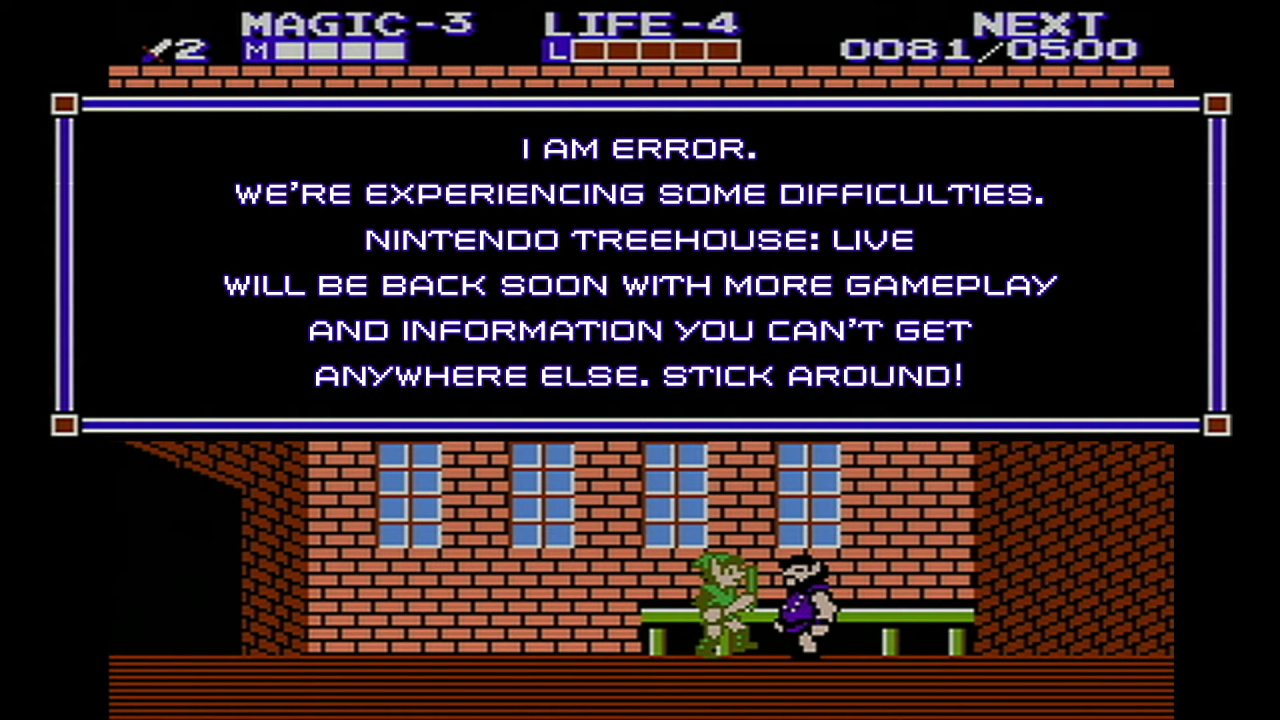
Nintendo, however, was prepared for the inevitable, when the interruption took day two of its Treehouse Live stream offline. During this interruption, the above image was beamed across to the screens of online viewers, showing Error, the villager from Zelda II: The Adventure of Link. If you’re not familiar with the meme, you can read more about it here.
Later on, when the recording of the stream was uploaded to YouTube, viewers apparently discovered Nintendo had cut sections of the video due to the power outage. Update: Turns out the mishap is still in there:
Did you witness this moment yourself? Tell us down in the comments.
Posted by: xSicKxBot - 06-13-2019, 07:38 PM - Forum: Windows
- No Replies
Graduate Molly Paris proves the power of inclusive technology
In 2018, the team at the Microsoft Store in Jacksonville, FL, met a young lady that forever changed them. Her name is Molly, and she is a remarkable example of ingenuity, grit and gusto.
At the age of two, Molly’s parents learned that she was born with a neuro-developmental disorder called Rett Syndrome, a rare condition which, over time, has severely impacted her mobility and her ability to speak. But as Molly will be the first to tell you, the disorder has not impacted her interminable spirit or her intense desire to empower those around her.
With the support of her family, Molly found The Foundation Academy, a school that was able to accommodate her needs and has spent her academic career there.
Over the years, the Microsoft team has grown close to Molly and her mother, Robin. They’ve helped her with a number of projects, including one where she hacked the Xbox Adaptive Controller to make a dancing wheelchair. The team was happy to jump in to support her big ideas because it’s clear when you meet Molly that she is going to do great things for the world.
Last week, we had the honor of watching Molly give her Valedictorian speech at her graduation from The Foundation Academy. She has blossomed into a curious developer, eager to pursue a career in computer science and engineering, so she can one day develop new technologies to empower herself and others like her.
But the story doesn’t end there because, after all, graduation is just the beginning of a lifetime of learning and potential.
Our graduation caps are off to you, Molly, your family and the team at The Foundation Academy!
Share your story or a story about another Changemaker in education, submit here through the Microsoft Education blog.
To discover everything Microsoft has to offer and how we can work with you, please visit your local Microsoft Store.
E3 2019: Conan Game We Thought Was A Joke Is Real, Releasing In September
During the PC Gaming Show at this year's E3, Australian developer Mighty Kingdom unveiled a surprise announcement: that joke roguelike, stick figure Conan game is very real. And it's coming out very soon.
Conan Chop Chop is set to release this September, but it started out as what appeared to be an April Fool's joke clip posted to publisher Funcom's YouTube channel. The game features a crudely-drawn Conan chop-chopping various baddies like skeleton warriors and stick-figure-eating werewolves. You can take control of the titular barbarian or team up with up to four friends in local couch co-op as they control Bêlit, Pallantides, or Valeria. And, of course, there will be plenty of loot to gather, combos to unlock, and randomly-generated levels to explore. Check out the official trailer below.
Conan Chop Chop launches on Nintendo Switch, PC, PlayStation 4, and Xbox One on September 3.
Video: Watch Miyamoto And Tezuka “Spin The Wheel” At E3 2019
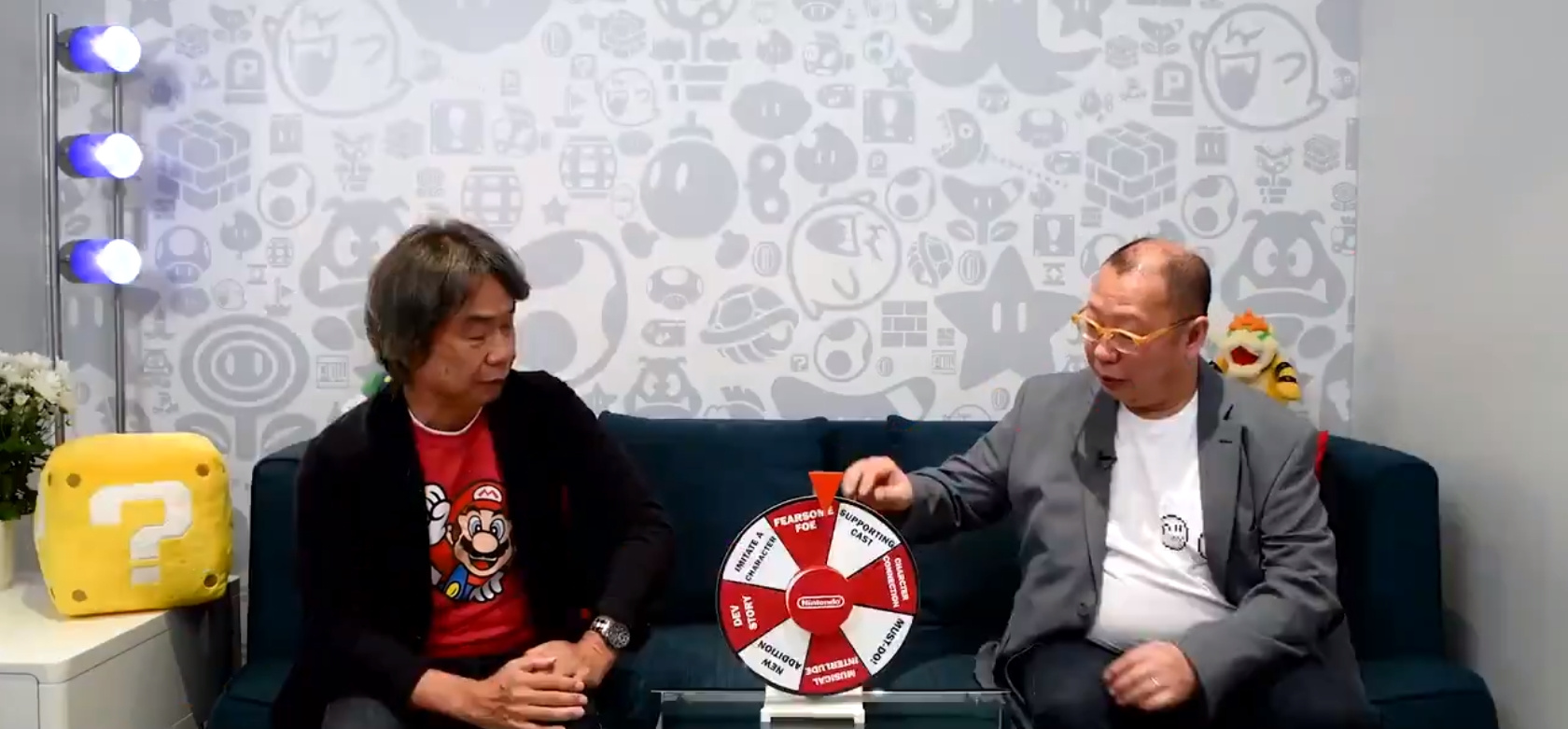
If you’re one of the lucky people attending this year’s E3, you may or may spot Nintendo’s legendary game designer Shigeru Miyamoto and the producer of Super Mario Maker 2, Takashi Tezuka.
While the annual event is intended to be a business trip for most people within the industry, that won’t stop these two veterans from having a little bit of fun. That’s why Nintendo of America sat them down together and got them to play “spin the wheel” – where you spin a wheel and then answer a question related to Super Mario Maker 2.
Watch this video to see Mr. Tezuka imitate a Hammer Bros., find out what makes Mario so special as a character, learn about one thing that everyone who plays video games must do and discover who Mr. Miyamoto’s favourite supporting character is within Super Mario Maker 2.
In all honesty, we’re just glad to see these two talented individuals are enjoying themselves so much at this year’s event.
What did you think of their responses? Are you looking forward to playing Super Mario Maker 2 later this month? Share your thoughts down in the comments.
Posted by: xSicKxBot - 06-13-2019, 01:13 PM - Forum: Windows
- No Replies
Microsoft’s campus, then and now, in 10 photos
Redmond, Washington, has been home to Microsoft’s 500-acre main campus since 1986.Thispast January,demolition began on a multi-year campus remodel.
This project will result in 17 new buildings; 6.7 million square feet of renovated workspace; and $150 million in transportation infrastructure improvements, public spaces, sports fields and green spaces.The new campus will be a modern workspace that fosters a sense of community.
Click through the images below to look at how the campus has changed over the years.
Breaking ground, then: In 1985, Microsoft moved its headquarters from Bellevue, Washington, to nearby Redmond. The original campus included six buildings constructed on its wooded, 30-acre setting.
Breaking ground, now: Demolition begins in January 2019, as Microsoft modernizes its headquarters. Thirteen buildings will be decommissioned using sustainable practices.
Changing office space, then: an employee at work in 1989.
Changing office space, now: Treehouses are part of a larger redesign that gives people the chance to work outside.
Life on campus, then: a soccer match in 1996.
Life on campus, now: In addition to a soccer field for recreation, the Commons, which was completed in 2009, is a place where employees can shop and eat.
Dining options, then: meal prep in 1999.
Dining options, now: Microsoft now has more than a dozen places to eat on campus.
An evolving design, then: Microsoft’s original 1980s-era, X-shaped buildings.
An evolving design, now: a view of Microsoft’s future campus.
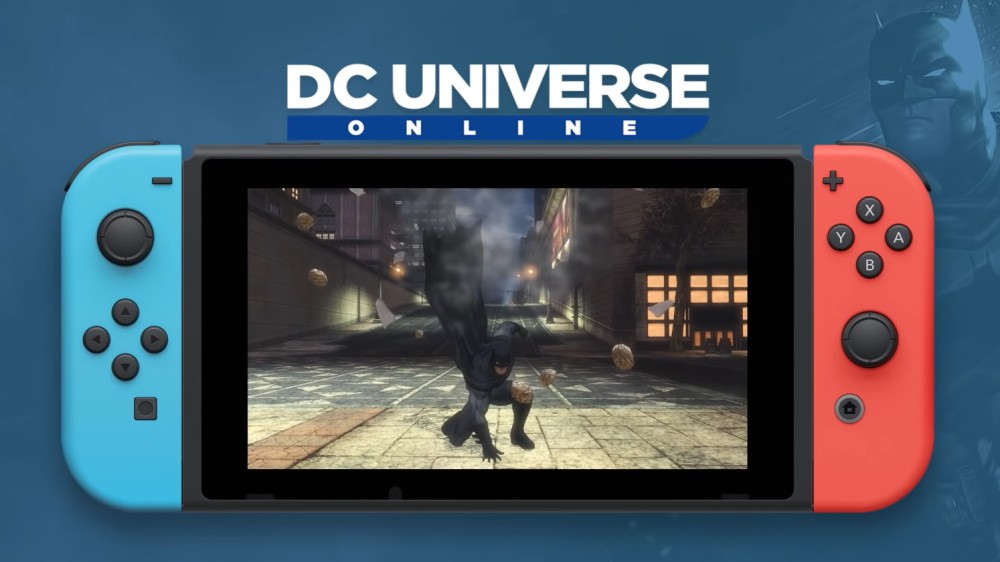
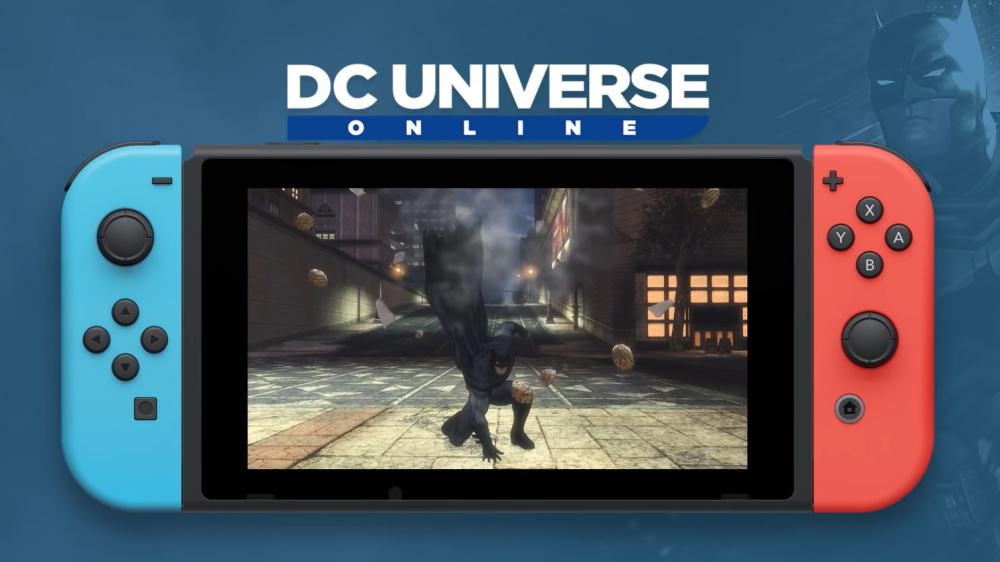
Hands On: DC Universe Online Is Paving The Way For MMOs On Switch
When you ask Creative Director S.J. Mueller and Executive Producer Leah Bowers what makes them passionate about DC Universe Online, their reasons are as vast as the game itself.
There is a definite shimmer in Mueller’s eyes as she recounts her comics-filled childhood memories with her sister, or the moment she was thanked by a deployed servicemember for creating a game that allowed them to not only keep in touch – but actually play – with their kid from across the world.
The just-announced Nintendo Switch version of DC Universe Online will be arriving this summer, and we had the chance this week to not only get our hands on the real thing, but also pick the brains behind this very unique newcomer in the Nintendo world.
Going into the demo, you can be sure we had our share of questions. As the first full-fledged MMO available in the US on the Nintendo Switch (Dragon Quest X was ported over in Japan), our curiosity abounded around details such as servers, online features, load times and cross-play. How could it all possibly work on this platform?
What we discovered was a carefully planned strategy for the release of this game on new platforms – one in which slow and steady will (hopefully) win the race.
Right off the bat, the biggest elephant in the room was the lack of cross-play with other systems. As DC Universe Online is now over 8 years old – and the core of its appeal is the ability to play with massive numbers of other players online – it will be difficult to sell this version of the game to those who wish to play with users on PlayStation or PC (Xbox does not currently support cross-play either).
The response to this concern is one that has clearly had its benefits weighed against its costs. Bowers explained to us that, as the game is already very established on other platforms, they want to ensure that any new version first has parity before it is added to the mix, so that it does not jeopardize the enjoyment of others. Therefore, as they did with the Xbox release, they have decided to (likely temporarily) give the Switch version its own server, in order to be able to work the kinks out in a controlled environment before releasing it into the wild.
The possibility of cross-play with other platforms is being investigated later this year – and based on what we saw of the game’s initial performance on Switch, it definitely looks promising. As we explored the vast new map of Atlantis, we noticed smooth rendering and texture loading – little if any lag, and running at a steady 30 fps in handheld mode.
With a nervous chuckle, the team told us we were actually playing on the hotel’s guest wifi network – which they weren’t sure would be able to handle the game until they arrived. Not only that, but they’d also been testing it on a mobile hotspot previously, and found that it worked well then, too. Even they had surprised themselves.
This bodes very well for the possibility of cross-play on the Switch in the future, as it appears the game performance is definitely on par with the other systems it has more established on. They also said Nintendo and Microsoft are both “very open” to cross-play opportunities on their systems, and are hopeful about the upcoming discussions.
The next question we had was regarding Nintendo Switch Online and the game’s integration with this service. Although there are no concrete plans right now, talks are happening, and it will hopefully be in the works soon. For now, voice chat is integrated into the game itself, and can be used with an external mic.
On the topic of subscriptions – for those who are unfamiliar with DC Universe Online – the game itself is free-to-play when purchased; however, it is also constantly being updated with new maps, episodes, visuals, and other features – often on a weekly basis. Players have the option to either purchase these updates à la carte, or to opt into a $14.99 per month subscription, in which they automatically receive all new updates as they release. For Nintendo fans, who are generally used to this format with DLC in other games, this is a flexible option that allows for users of any level to play what they want, as much as they want.
As Bowers and Mueller made very clear, their end goal with this game is to bring as many players from as many walks of life as possible together to enjoy an ever-changing and growing experience with each other. The ability to now reach a brand-new audience in Nintendo, and enable players to take this MMO wherever they go, is something completely new and exciting for many fans – and while it still has quite a few hurdles to jump in order to achieve success here, it’s clear this dynamic duo absolutely has the experience and passion to follow this game through to its realized success on yet another platform, potentially for years to come.
Have you previously played DC Universe Online on other platforms? Do you plan to give it a shot on the Switch this summer? Let us know in the comments below.
Nintendo E3 Demo Reveals Brand New Pokémon For Sword And Shield
Two brand new Pokémon have been discovered by fans at E3 thanks to a playable demo of Pokémon Sword and Shield. The two Pokémon are known as Yamper and Impidimp.
As you can see, Yamper appears to resemble a corgi – which would make sense given the region’s UK-inspired location – and Impidimp seems to be a mischievous imp. Serebii has managed to track down further details on both Pokémon:
Yamper Type: Electric-type Ability: Ball Fetch Known Moves: Play Rough, Spark, Crunch, Wild Charge
Impidimp Type: Dark/Fairy-type Known Moves: Assurance, Sucker Punch, Play Rough
If you missed the news, the Nintendo Treehouse discussion for Pokémon Sword and Shield revealed that not all Pokémon from past generations can be transferred into the new games. As such, you’ll want to get to know this new friendly bunch of ‘mon for your next adventure.
Do you like the look of these two designs? Share your thoughts with us in the comments below.
Modularity enables Fedora to provide alternative versions of RPM packages in the repositories. Several different applications, language runtimes, and tools are available in multiple versions, build natively for each Fedora release.
The Fedora Magazine has already covered Modularity in Fedora 28 Server Edition about a year ago. Back then, it was just an optional repository with additional content, and as the title hints, only available to the Server Edition. A lot has changed since then, and now Modularity is a core part of the Fedora distribution. And some packages have moved to modules completely. At the time of writing — out of the 49,464 binary RPM packages in Fedora 30 — 1,119 (2.26%) come from a module (more about the numbers).
Modularity basics
Because having too many packages in multiple versions could feel overwhelming (and hard to manage), packages are grouped into modules that represent an application, a language runtime, or any other sensible group.
Modules often come in multiple streams — usually representing a major version of the software. Available in parallel, but only one stream of each module can be installed on a given system.
And not to overwhelm users with too many choices, each Fedora release comes with a set of defaults — so decisions only need to be made when desired.
Finally, to simplify installation, modules can be optionally installed using pre-defined profiles based on a use case. A database module, for example, could be installed as a client, a server, or both.
Modularity in practice
When you install an RPM package on your Fedora system, chances are it comes from a module stream. The reason why you might not have noticed is one of the core principles of Modularity — remaining invisible until there is a reason to know about it.
Let’s compare the following two situations. First, installing the popular i3 tiling window manager, and second, installing the minimalist dwm window manager:
$ sudo dnf install i3
...
Done!
As expected, the above command installs the i3 package and its dependencies on the system. Nothing else happened here. But what about the other one?
It feels the same, but something happened in the background — the default dwm module stream (6.1) got enabled, and the dwm package from the module got installed.
To be transparent, there is a message about the module auto-enablement in the output. But other than that, the user doesn’t need to know anything about Modularity in order to use their system the way they always did.
But what if they do? Let’s see how a different version of dwm could have been installed instead.
Use the following command to see what module streams are available:
The output shows there are four streams of the dwm module, 6.1 being the default.
To install the dwm package in a different version — from the 6.2 stream for example — enable the stream and then install the package by using the two following commands:
Finally, let’s have a look at profiles, with PostgreSQL as an example.
$ sudo dnf module list
...
postgresql 9.6 client, server ...
postgresql 10 client, server ...
postgresql 11 client, server ...
...
To install PostgreSQL 11 as a server, use the following command:
$ sudo dnf module install postgresql:11/server
Note that — apart from enabling — modules can be installed with a single command when a profile is specified.
It is possible to install multiple profiles at once. To add the client tools, use the following command:
$ sudo dnf module install postgresql:11/client
There are many other modules with multiple streams available to choose from. At the time of writing, there were 83 module streams in Fedora 30. That includes two versions of MariaDB, three versions of Node.js, two versions of Ruby, and many more.
Posted by: xSicKxBot - 06-13-2019, 06:23 AM - Forum: Windows
- No Replies
Microsoft at MWC Barcelona: Introducing Microsoft HoloLens 2
This evening at a press event to kickoff MWC Barcelona, I had the pleasure of joining CEO Satya Nadella and Technical Fellow Alex Kipman onstage to talk in depth about Microsoft’s worldview for the intelligent cloud and intelligent edge.
As part of today’s press event, we also introduced the world to HoloLens 2.
YouTube Video
This is a tremendously exciting time for Microsoft, our partners, our customers, the computing industry and indeed the world. The virtually limitless computing power and capability of the cloud combined with increasingly intelligent and perceptive edge devices embedded throughout the physical world create experiences we could only imagine a few short years ago.
When intelligent cloud and intelligent edge experiences are infused with mixed reality, we have a framework for achieving amazing things and empowering even more people.
Today represents an important milestone for Microsoft. This moment captures the very best efforts and passion of numerous teams spanning Azure, HoloLens, Dynamics 365 and Microsoft Devices — this truly is a moment where the sum is greater than the parts. From cutting-edge hardware design to mixed reality-infused cloud services, today’s announcements represent the collective work of many teams. And none of this would be possible without our passionate community of customers, partners and developers.
On behalf of everyone on the team, it is my privilege to introduce you to HoloLens 2 and all the announcements we made today to kick off MWC Barcelona.
Introducing HoloLens 2
Since the release of HoloLens in 2016 we have seen mixed reality transform the way work gets done. We have unlocked super-powers for hundreds of thousands of people who go to work every day. From construction sites to factory floors, from operating rooms to classrooms, HoloLens is changing how we work, learn, communicate and get things done.
We are entering a new era of computing, one in which the digital world goes beyond two-dimensional screens and enters the three-dimensional world. This new collaborative computing era will empower us all to achieve more, break boundaries and work together with greater ease and immediacy in 3D.
Today, we are proud to introduce the world to Microsoft HoloLens 2.
Our customers asked us to focus on three key areas to make HoloLens even better. They wanted HoloLens 2 to be even more immersive and more comfortable, and to accelerate the time-to-value.
Immersion is greatly enhanced by advancements across the board, including in the visual display system, making holograms even more vibrant and realistic. We have more than doubled the field of view in HoloLens 2, while maintaining the industry-leading holographic density of 47 pixels per degree of sight. HoloLens 2 contains a new display system that enables us to achieve these significant advances in performance at low power. We have also completely refreshed the way you interact with holograms in HoloLens 2. Taking advantage of our new time-of-flight depth sensor, combined with built-in AI and semantic understanding, HoloLens 2 enables direct manipulation of holograms with the same instinctual interactions you’d use with physical objects in the real world. In addition to the improvements in the display engine and direct manipulation of holograms, HoloLens 2 contains eye-tracking sensors that make interacting with holograms even more natural. You can log in with Windows Hello enterprise-grade authentication through iris recognition, making it easy for multiple people to quickly and securely share the device.
Comfort is enhanced by a more balanced center of gravity, the use of light carbon-fiber material and a new mechanism for donning the device without readjusting. We’ve improved the thermal management with new vapor chamber technology and accounted for the wide physiological variability in the size and shape of human heads by designing HoloLens 2 to comfortably adjust and fit almost anyone. The new dial-in fit system makes it comfortable to wear for hours on end, and you can keep your glasses on because HoloLens 2 adapts to you by sliding right over them. When it’s time to step out of mixed reality, flip the visor up and switch tasks in seconds. Together, these enhancements have more than tripled the measured comfort and ergonomics of the device.
Time-to-value is accelerated by Microsoft mixed reality applications like Dynamics 365 Remote Assist, Dynamics 365 Layout and the new Dynamics 365 Guides applications. In addition to the in-box value, our ecosystem of mixed reality partners provides a broad range of offerings built on HoloLens that deliver value across a range of industries and use cases. This partner ecosystem is being supplemented by a new wave of mixed reality entrepreneurs who are realizing the potential of devices like HoloLens 2 and the Azure services that give them the spatial, speech and vision intelligence needed for mixed reality, plus battle-tested cloud services for storage, security and application insights.
Building on the unique capabilities of the original HoloLens, HoloLens 2 is the ultimate intelligent edge device. And when coupled with existing and new Azure services, HoloLens 2 becomes even more capable, right out of the box.
HoloLens 2 will be available this year at a price of $3,500. Bundles including Dynamics 365 Remote Assist start at $125/month. HoloLens 2 will be initially available in the United States, Japan, China, Germany, Canada, United Kingdom, Ireland, France, Australia and New Zealand. Customers can preorder HoloLens 2 starting today at https://www.microsoft.com/en-us/hololens/buy.
In addition to HoloLens 2, we were also excited to make the following announcements at MWC Barcelona.
Azure Kinect Developer Kit (DK)
The Azure Kinect DK is a developer kit that combines our industry-leading AI sensors in a single device. At its core is the time-of-flight depth sensor we developed for HoloLens 2, high-def RGB camera and a 7-microphone circular array that will enable development of advanced computer vision and speech solutions with Azure. It enables solutions that don’t just sense but understand the world — people, places, things around it. A good example of such a solution in the healthcare space is Ocuvera, which is using this technology to prevent patients from falling in hospitals. Every year in the U.S. alone, over 1 million hospital patients fall each year, and 11,000 of those falls are fatal. With Azure Kinect, the environmental precursors to a fall can be determined and a nurse notified to get to patients before they fall. Initially available in the U.S. and China, the Azure Kinect DK is available for preorder today at $399. Visit Azure.com/Kinect for more info.
Dynamics 365 Guides is a new mixed reality app that empowers employees to learn by doing. Guides enhances learning with step-by-step instructions that guide employees to the tools and parts they need and how to use them in real work situations. In addition to the experience of using Guides on HoloLens, a Guides PC app makes it easy to create interactive content, attach photos and videos, import 3D models and customize training to turn institutional knowledge into a repeatable learning tool.
This application will help minimize downtime and increase efficiency for mission-critical equipment and processes and becomes the third Dynamics 365 application that will work on both the previous generation of HoloLens and the new HoloLens 2.
Dynamics 365 Guides is available in preview starting today.
Azure Mixed Reality Services
Today we also announced two new Azure mixed reality services. These services are designed to help every developer and every business build cross-platform, contextual and enterprise-grade mixed reality applications.
Azure Spatial Anchors enables businesses and developers to create mixed reality apps that map, designate and recall precise points of interest that are accessible across HoloLens, iOS and Android devices. These precise points of interest enable a range of scenarios, from shared mixed reality experiences to wayfinding across connected places. We’re already seeing this service help our customers work and learn with greater speed and ease in manufacturing, architecture, medical education and more.
Azure Remote Rendering helps people experience 3D without compromise to fuel better, faster decisions. Today, to interact with high-quality 3D models on mobile devices and mixed reality headsets, you often need to “decimate,” or simplify, 3D models to run on target hardware. But in scenarios like design reviews and medical planning, every detail matters, and simplifying assets can result in a loss of important detail that is needed for key decisions. This service will render high-quality 3D content in the cloud and stream it to edge devices, all in real time, with every detail intact.
Azure Spatial Anchors is in public preview as of today. Azure Remote Rendering is now in private preview in advance of its public preview.
Microsoft HoloLens Customization Program
HoloLens is being used in a variety of challenging environments, from construction sites and operating rooms to the International Space Station. HoloLens has passed the basic impact tests from several protective eyewear standards used in North America and Europe. It has been tested and found to conform to the basic impact protection requirements of ANSI Z87.1, CSA Z94.3 and EN 166. With HoloLens 2 we’re introducing the Microsoft HoloLens Customization Program to enable customers and partners to customize HoloLens 2 to fit their environmental needs.
The first to take advantage of the HoloLens Customization Program is our long-standing HoloLens partner Trimble, which last year announced Trimble Connect for HoloLens along with a new hard hat solution that improves the utility of mixed reality for practical field applications. Today it announced the Trimble XR10 with Microsoft HoloLens 2, a new wearable hard hat device that enables workers in safety-controlled environments to access holographic information on the worksite.
Open principles
Finally, as we closed things out, Alex Kipman articulated a set of principles around our open approach with the mixed reality ecosystem.
We believe that for an ecosystem to truly thrive there should be no barriers to innovation or customer choice.
To that end, Alex described how HoloLens embraces the principles of open stores, open browsers and open developer platforms.
To illustrate our dedication to these principles, we announced that our friends at Mozilla are bringing a prototype of the Firefox Reality browser to HoloLens 2, demonstrating our commitment to openness and the immersive web. Alex was also joined by Tim Sweeney, founder and CEO of Epic Games, who announced that Unreal Engine 4 support is coming to HoloLens.
In the coming months we will have more announcements and details to share. We look forward to continuing this journey with you all.