Posted by: xSicKxBot - 04-11-2019, 06:35 AM - Forum: Lounge
- No Replies
First Lion King Trailer Is Impressive And Nostalgic
Disney has released the first trailer for its remake of The Lion King. The movie, which is set to hit cinemas in July, features an all-star voice cast that includes James Earl Jones as Mufasa and Chiwetel Ejiofor as Scar. The trailer gives us an early look at how both of these characters look and sound, and it's quite impressive.
The trailer also features a number of other characters who will be familiar to fans of the animated classic, including Simba (Donald Glover), Nala (Beyonce), Rafiki (John Kani), and, very briefly, Shenzi, Banzai, and Ed the hyenas. Evoking nostalgia seems to be very much a goal of The Lion King, and we see a few iconic scenes from the animated film given new life. Most notable among these is the stampede and Simba standing on the cliff. There's also a nice musical finish at the end of the trailer. Check it out above.
The new Lion King is written by Jeff Nathanson, who previously worked on Catch Me If You Can and Pirates of the Caribbean: Dead Men Tell No Tales. It's directed by Jon Favreau, known for his work on Iron Man and the 2016 Jungle Book remake.
Other actors in the film include comedian John Oliver, who plays Zazu, while Seth Rogen and Billy Eichner voice Timon and Pumbaa, respectively. Keegan-Michael Key and Eric Andre are also voicing characters. You can see the full cast in the image here. The Lion King and hits theatres on July 18, 2019.
The video shows off some of the basic manoeuvres you and a friend will be able to pull off when the game arrives later this month. If you haven’t played any of the previous games in the series – which would be a shame, because they’re worth a go – then you might want to study closely to learn the tricks of the blocky puzzle trade.
The game will be available to download from the eShop on 26th April in Europe, or a day earlier if you happen to be in North America.
Are you planning on picking this one up? Have you played any previous BOXBOY! games? Let us know down below.
Many a videogame has promised horror and darkness, some calling forth these more than others, but as whole the tone and genre has become practically anodyne. Familiarity breeds contempt. Zombies, vampires, nuclear wastelands. Compared to these, Cultist Simulator is a breed apart, the horror genre reforged. It takes the familiar and human and making it secret, alien, cruel. Within the game the player could found the titular cult, gain forbidden knowledge, lose parts of body and soul, and eventually ascend to a higher, stranger plane of existence.
This is just the prosaic, reductive, ‘gamified’ run-down of what ‘happens’ in the game, for those who simply want a cheat-sheet for the experience of play. Any such summary, mine or others, is bound to give short shrift, though, for the writing in the game is sublime and dense, full of cross-references and slow-building lore.
Similarly, the game is an exercise in small actions building to grand consequences. While managing the main ‘verbs’ of the game (dream, explore, study, work) to gain resources and more esoteric scraps of knowledge, the aspirant navigates past histories and accounts of fellow occultists while dreaming of powerful entities.
The path for ascension is simply known as the House, and these entities (who are born, deposed, transformed) are known as the Hours. Each little interaction within the game offers a glimpse of what these hidden truths look like. The Hours have Aspects, you see, which are zones of existence, modes of action. Lantern, Grail, Forge, Knock, Moth, Heart, Edge, Winter. No, that’s not quite right. In this dim occultist’s estimation, it’s rather that fabric of reality, the nature of things themselves which bear the influence of these primary Aspects, and the Hours rule over them. Oh, and there are alternate histories, future timeline marked and erased like battlefronts on a map.
So that’s the theme, roughly, and it’s heady nature is so potent that it is distilled in every snippet of text. Ornamentation is instruction, the occult is hidden in the open, and a canny player will learn to love the lore for its guiding principles as much as its rich mythos. But what of everyday life for our humble aspirant? Well, it’s shockingly full of toil and drudgery. Money is paramount, of course, but so are the three qualities of Health, Passion, and Reason, which are useful in work but can also be sacrificed to the ravages of disease or arcane rituals. To say nothing of lore fragments, gained at first locally from rare and unusual books, then later from far-flung tomes retrieved on perilous expeditions.
That’s the roadmap, and by dragging resources and items to their requisite tiles, the timer starts and the game moves forward. Because of its real-time nature, the game often feels like nothing so much as spinning plates, skilfully and with expert knowledge and vision, of course, but mechanically demanding, nonetheless. Fortunately there is a pause button, which is practically a must to plan properly and absorb the game’s rich atmosphere.
Certain phrases stick out, some for their piquancy (‘pavane grace’), others as recurrent motifs (‘the skin of the world’). The game’s rhythm and constant upkeep is almost hypnotic, or better yet, hypnagogic. It is in this suggestible, wearied state that the player begins to learn, to see the cosmic underbelly of Cultist Simulator and reckon with its eldritch dream-logic. So there is a seamless synthesis between form and function, or as game reviewers like to say, gameplay and theme.
They aren’t twins here (Sister-and-Witch and Witch-and-Sister say cheers) so much as one entity which we split to make the whole more comprehensible. And this is why the game grabs new players and sucks them in, brainwashes them into thinking they are founders and leaders of cults when in truth all are dupes, all dance to the same tuneful mystery.
‘Mystery’ in the grandest sense of wonder, but also the diminutive, driving potboiler sense. Figuring out how to stay alive and make ends meet is as much a struggle as occult concerns, to say nothing of Despair (the ‘wolf that devours’) or Fascination, which have ended many a run. Here the game is a little coy about its permadeath, one life, one run philosophy. Yes, game over is permanent. I miss the option to manually backup saves because on a cold-hearted practical note, the game is long and difficult, which makes permadeath losses especially stinging. Just a minor drawback.
In conclusion: yes, yes, a million hollow moons yes, Cultist Simulator is a good game, the kind which will haunt your waking moments with its patterns and intricacies. The app is so easy to use, making the repetition of the game dreamlike rather than simply dull, and though I’ve beaten it twice and wasn’t sure I could tackle another go-around, it seems like I’m a born again cultist. I’ll remember my fleshsack days fondly, looking back from the seat of the Glory upon those quotidian beginnings. But first I have to finish this last bit of research…
A Brand New Story Of Seasons Game Is Currently In Development, Says Marvelous
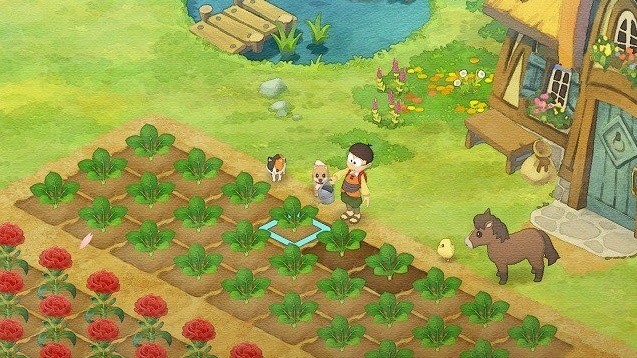
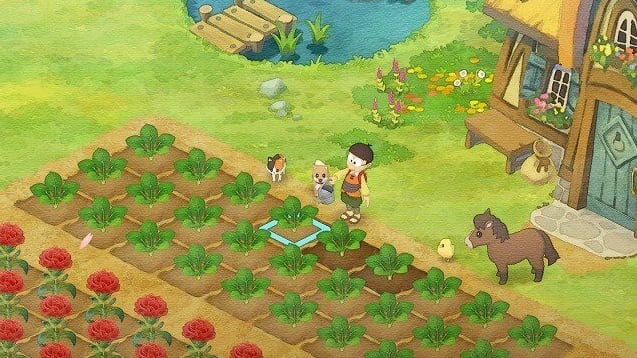
As you may well be aware, Doraemon Story of Seasons – a crossover title featuring elements of both Japanese manga series Doraemon and Story of Seasons – is launching in Japan this June. In case that wasn’t enough for you, it has now been confirmed that another Story of Seasons game is currently in development, separate to that release.
The news comes from the latest issue of Weekly Famitsu in Japan, which contains an interview discussing the Doraemon crossover. The interview features several interesting points about that game, while also teasing this second game in development. The folks over at Gematsu have shared the following list of key points:
– Doraemon Story of Seasons is a project that was launched by Bandai Namco’s Koji Nakajima, who was a fan of Harvest Moon: Back to Nature. – Unlike past Story of Seasons titles, Doraemon Story of Seasons has a proper main story (as opposed to just working on the farm). – The theme is family, and the main story focuses on love for one’s family. – Working on the ranch is the player’s main task, and at first the farm work will be quite hard. – Doraemon’s secret gadgets will help resolve the things that “inconvenience you” in Story of Seasons. – The “At Gungun,” which causes crops to grow immediately, is an expendable item, so it cannot be used carelessly. – Other than Doraemon Story of Seasons, work is underway on a new Story of Seasons game, according to Marvelous’ Hikaru Nakano.
Are you a Story of Seasons fan? Will you be keeping an eye out for more announcements on this going forward? Let us know your thoughts below.
The game debuted with an estimated 70,990 sales on Switch, which is comfortably higher than the figure Yoshi achieved in its debut last week.
As you may already be aware, Media Create – the company which usually provides our Japanese chart figures – has changed the way in which it operates. The figures below are from Famitsu which, while seen as being slightly less accurate than Media Create’s data, should provide us with estimates of sales going foward.
As such, you’ll likely notice some slightly odd differences between the figures below and those which we shared last week.
Here are the top 10 (first numbers are this week’s sales, followed by total sales):
1) [NSW] Super Dragon Ball Heroes: World Mission (Bandai Namco Games) {2019.04.04} – 70.990 / NEW 2) [NSW] Yoshi’s Crafted World (Nintendo) {2019.03.29} – 28.468 / 78.475 3) [PS4] Sekiro: Shadows Die Twice (From Software) {2019.03.22} – 18.101 / 212.961 4) [NSW] Super Smash Bros. Ultimate (Nintendo) {2018.12.07} – 14.775 / 3.007.151 5) [NSW] Minecraft (Microsoft Game Studios) {2018.06.21} – 12.278 / 719.845 6) [NSW] New Super Mario Bros. U Deluxe (Nintendo) {2019.01.11} – 12.111 / 560.098 7) [NSW] Mario Kart 8 Deluxe (Nintendo) {2017.04.28} – 9.551 / 2.246.416 8) [NSW] Splatoon 2 (Nintendo) {2017.07.21} – 8.161 / 3.028.994 9) [NSW] The Legend of Zelda: Breath of the Wild (Nintendo) {2017.03.03} – 6.309 / 1.281.348 10) [NSW] Super Mario Party (Nintendo) {2018.10.05} – 6.305 / 991.550
As for hardware, Switch is still sitting at the top of the chart, selling an estimated 46,850 units this week. Here are this week’s figures:
1) Switch – 46,850 2) PlayStation 4 – 8,347 3) PlayStation 4 Pro – 5,507 4) New 2DS LL – 3,469 5) 3DS – 919 6) PlayStation Vita – 482 7) Xbox One X – 60 8) Xbox One – 33
Roderick W. Smith‘s sgdisk command can be used to manage the partitioning of your hard disk drive from the command line. The basics that you need to get started with it are demonstrated below.
The following six parameters are all that you need to know to make use of sgdisk’s most basic features:
-p Print the partition table:
# sgdisk -p /dev/sda
-d x Delete partition x:
# sgdisk -d 1 /dev/sda
-n x:y:z Create a new partition numbered x, starting at y and ending at z:
# sgdisk -n 1:1MiB:2MiB /dev/sda
-c x:y Change the name of partition x to y:
# sgdisk -c 1:grub /dev/sda
-t x:y Change the type of partition x to y:
# sgdisk -t 1:ef02 /dev/sda
–list-types List the partition type codes:
# sgdisk –list-types
The SGDisk Command
As you can see in the above examples, most of the commands require that the device file name of the hard disk drive to operate on be specified as the last parameter.
The parameters shown above can be combined so that you can completely define a partition with a single run of the sgdisk command:
Relative values can be specified for some fields by prefixing the value with a + or – symbol. If you use a relative value, sgdisk will do the math for you. For example, the above example could be written as:
The value 0 has a special-case meaning for several of the fields:
In the partition number field, 0 indicates that the next available number should be used (numbering starts at 1).
In the starting address field, 0 indicates that the start of the largest available block of free space should be used. Some space at the start of the hard drive is always reserved for the partition table itself.
In the ending address field, 0 indicates that the end of the largest available block of free space should be used.
By using 0 and relative values in the appropriate fields, you can create a series of partitions without having to pre-calculate any absolute values. For example, the following sequence of sgdisk commands would create all the basic partitions that are needed for a typical Linux installation if in run sequence against a blank hard drive:
The above example shows how to partition a hard disk for a BIOS-based computer. The grub partition is not needed on a UEFI-based computer. Because sgdisk is calculating all the absolute values for you in the above example, you can just skip running the first command on a UEFI-based computer and the remaining commands can be run without modification. Likewise, you could skip creating the swap partition and the remaining commands would not need to be modified.
There is also a short-cut for deleting all the partitions from a hard disk with a single command:
# sgdisk –zap-all /dev/sda
For the most up-to-date and detailed information, check the man page:
Posted by: xSicKxBot - 04-11-2019, 12:35 AM - Forum: Windows
- No Replies
Microsoft announces quarterly earnings release date
Microsoft to host earnings conference call webcast
REDMOND, Wash. — April 10, 2019 — Microsoft Corp. will publish fiscal year 2019 third-quarter financial results after the close of the market on Wednesday, April 24, 2019, on the Microsoft Investor Relations website at https://www.microsoft.com/en-us/Investor/. A live webcast of the earnings conference call will be available at 2:30 p.m. Pacific Time.
Microsoft (Nasdaq “MSFT” @microsoft) enables digital transformation for the era of an intelligent cloud and an intelligent edge. Its mission is to empower every person and every organization on the planet to achieve more.
For more information, financial analysts and investors only:
Investor Relations, Microsoft, (425) 706-4400
For more information, press only:
Microsoft Media Relations, WE Communications, (425) 638-7777, rrt@we-worldwide.com
Note to editors: For more information, news and perspectives from Microsoft, please visit the Microsoft News Center at https://news.microsoft.com. Web links, telephone numbers, and titles were correct at time of publication, but may since have changed. Shareholder and financial information is available at http://www.microsoft.com/en-us/investor
Play from the POV of one of eight protagonists in each chapter and explore the dungeons, towers, and islands to uncover the deadly sins of the protagonists' pasts. Hunt for materials & food while fending off monsters in real-time battle environments; but don't forget to eat, sleep, & go to the bathroom (seriously, it's bad for your health & fatal for your party). With every life cycle lasting only 13 days, each clone?s stats, abilities, and capabilities differ as they grow from youths to old age.
Super Smash Bros. Ultimate For Switch Might Be Adding Stage Builder Mode
It appears Super Smash Bros. Ultimate is adding a new stage-builder mode. A new commercial for the game released by Nintendo shows what appears to be the new Stage Builder mode from the main menu. You can see this for yourself at 0:02 in the video below.
Super Smash Bros. Brawl for Wii and Super Smash Bros. for Wii U also featured stage-builder modes, so it's not a big surprise that it could be added to Ultimate. What's more, the stage-builder mode was already leaked thanks to a data-mine. Another new mode, Home Run Contest, is also reportedly coming to Ultimate, according to Source Gaming.
A Nintendo Direct briefing is reportedly coming on Thursday, April 11, so it might be there that Nintendo officially announces new modes for Ultimate. Nothing is confirmed at this stage, however, so for now consider this a rumour.
Switch's Second Tetris 99 Tournament Taking Place This Weekend
Nintendo is holding another tournament in Switch's battle royale-inspired Tetris game, Tetris 99. The second Maximus Cup runs this weekend from April 12-14, with another $10 worth of My Nintendo Gold points at stake. And this time around, you don't need to be a Tetris master to have a shot at winning.
Unlike the first Maximus Cup, which ranked participants by the number of first-place wins they racked up during the tournament, all players will receive a different amount of points depending on what place they finish during this weekend's competition. Every 100 points you amass will count as one "Tetris Maximus"--equivalent to a first-place win. You can see the full point breakdown below.
1st Place -- 100 points
2nd Place -- 50 points
3rd Place -- 30 points
4th - 10th Place -- 20 points
11th - 30th Place -- 10 points
31st - 50th Place -- 5 points
51st - 80th Place -- 2 points
81st - 99th Place -- 0 points
As before, the top 999 players with the most points during the Maximus Cup will receive 999 My Nintendo Gold points, which can be redeemed for specific rewards on the My Nintendo website--such as discounts on select 3DS or Wii U games--or used to purchase games and DLC from the Switch Eshop. Gold points can typically only be earned by buying Switch titles, so if you fancy yourself a good Tetris player, this is a good chance to earn some free Eshop credit.
The second Maximus Cup begins at 6 AM PT / 9 AM ET on April 12 and runs through 11:59 PM PT on April 14 (2:59 AM ET on April 15). Nintendo will notify the winning players via the week of April 28. You can read the full rules on the official Tetris 99 website.
Tetris 99 is free to download, but only for players who subscribe to the Nintendo Switch Online service. Memberships cost $4 USD per month, $8 USD for three months, and $20 USD for 12 months. Nintendo also offers a $35 annual Family Membership that can be shared between eight Nintendo Accounts across multiple Switch consoles.