Waifu Uncovered Temporarily Pulled From Japanese eShop Due To Explicit Scene
This week saw the release of One-Hand-Free Studios’ Waifu Uncovered on the Nintendo Switch eShop.
As you might recall, it mixes bullet-hell shoot ’em up action with “a light-hearted story” in which you de-robe one of eight “beautiful females” by blasting away their virus-infected clothing. It even comes with a “one finger mode” for when you’re “busy with other things”, as well as a “censorship unlock system”.
Its openness seems to have caused some issues, as the title has now been pulled from the eShop in Japan. Here’s the official notice about this temporary removal from its publisher Eastasiasoft:
According to Automaton (via Nintendo Everything), Waifu Uncovered’s removal is supposedly tied to a scene that reveals some extra skin. The uncensored mode was reportedly removed from the Japanese version of the game, so this particular scene shouldn’t even be on display.
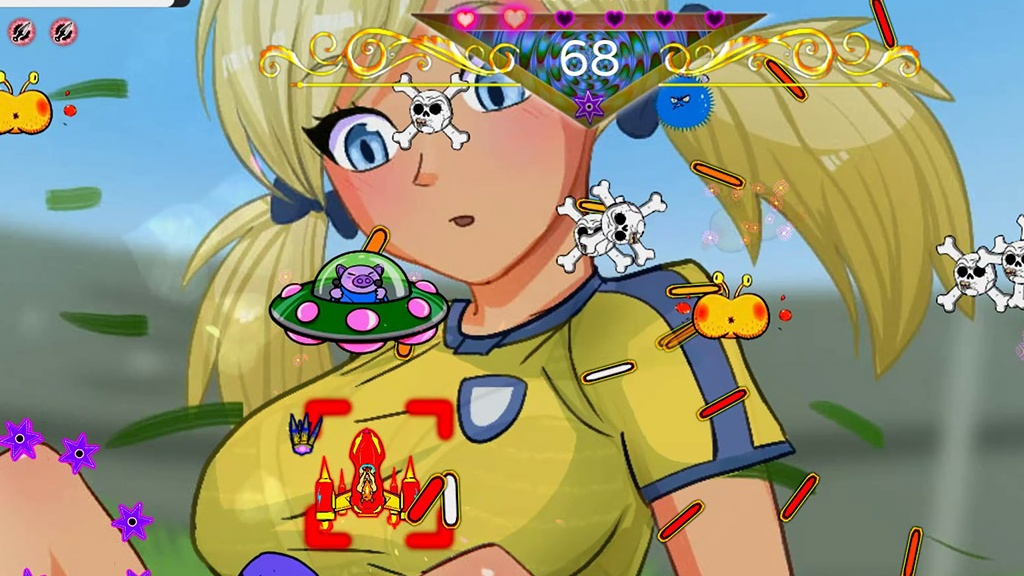
During a brief second of gameplay, one of the character’s breasts is fully exposed. This is the scene in which it can occur
Normally there should be clothing or some sort of object preventing full exposure:
As noted by Eastasiasoft, it’s now working on a fix to bring the game back as quickly as possible.
Feature: Upcoming Nintendo Switch RPGs To Look Out For In 2020
Since launching in 2017, we’ve seen some outstanding games launch on Nintendo Switch, becoming home to many fine RPGs in the process. We’ve previously explored the best Nintendo Switch RPGs and best action-RPGs, but 2020 alone has already been filled with great examples, and all catering to the different sub-genres.
Even with these, Nintendo’s popular hybrid machine still has more RPGs left before the year ends. On the first-party front, Nintendo just launched their latest RPG with Paper Mario: The Origami King, marking the sixth entry for this sub-series, and as far as we’re currently aware 2020’s second half will see a line-up dominated by third party developers.
Big names are coming through, and so from turn-based affairs to more social experiences, there’s a whole lot to look forward to. With that in mind, here’s 10 upcoming RPGs we’re particularly excited for.
Publisher: Square Enix / Developer: Square Enix
Release Date: 27th Aug 2020 (USA) / 27th Aug 2020 (UK/EU)
Final Fantasy Crystal Chronicles was a surprise multiplayer hit on Gamecube; it marked Final Fantasy’s return to Nintendo platforms for the first time since Final Fantasy VI, bringing in dungeon crawling and action-RPG elements. Allowing teams of four players, each player needed their own Game Boy Advance and whilst enjoyable, that last factor made it somewhat impractical.
It spawned several follow-ups across the Wii and DS, but Square-Enix are now bringing us a Remastered Edition on the 27th of August, hoping to recreate this co-op experience through online multiplayer. To make life easier, cross-play support has also been confirmed with the PS4 edition, making it more accessible than ever before.
Publisher: Naps Team / Developer: Naps Team
Release Date: Q3 2020 (USA)
It’s been awhile since we’ve heard about Baldo. Developed by Naps Team, it was first revealed during Nintendo’s Indie World Showcase back in March. Inspired by Studio Ghibli films and The Legend Of Zelda, this Italian title brings us an action-adventure RPG reminiscent of Ni No Kuni. Taking us to the land of Rodia, an ancient prophecy begins to unfold after a heartless creature was sealed away by the Owls; there’s a high focus on puzzle solving across this interactive open world and it’ll launch on Switch this summer as a timed console exclusive.
Publisher: Warner Bros. Interactive Entertainment / Developer: WayForward
Release Date: 3rd Nov 2020 (USA) / 3rd Nov 2020 (UK/EU)
Nintendo took us by surprise last week when they teased a surprise WayForward reveal during their Paper Mario Treehouse Presentation. Speculation ran wild despite Nintendo’s efforts but few people expected we’d receive Bakugan: Champions Of Vestroia. Based off the anime TV series, Champions of Vestroia brings us an original storyline, seeing players team up with their alien Bakugan in battle. Confirmed to feature co-operative play and online fights, there’s a potentially fun multiplayer experience here when it launches this November.
Having previously brought us 2012’s critically acclaimed Journey, Thatgamecompany have taken a different direction with Sky: Children of the Light. Designed as a social experience that pushes meeting new people, this adventure game with RPG elements sees you exploring a magical kingdom. Each stage is based on a stage of life, letting you fly across it via a cape as you collect the scattered “Winged Lights”, and whilst it can be played alone it’s recommended to be played with friends. Having previously released across iOS and Android, a Switch version is now due for a Summer release.
Publisher: Obsidian Entertainment / Developer: Obsidian Entertainment
Release Date: 2020 (USA) / 2020 (UK/EU)
Taking gameplay inspiration from Dungeons and Dragons, Pillars of Eternity has been a success for Obsidian Entertainment, acting as a spiritual successor to Baldur’s Gate. Switch fans received the Complete Edition last year and to little surprise, Pillars Of Eternity II: Deadfire is next. Taking us back to Eora five years later, we find the god of light and rebirth, Eothas, has returned in a violent awakening.
You’ll play as a “Watcher”, someone who can look into the souls of others whilst reading their memories, helping to influencing events around you. It launched on PS4 and Xbox One back in January but like many Switch ports was sadly delayed, although considering these came with performance issues, this may be a blessing in disguise. It’s still scheduled for Switch this year but for now, all we can do is wait.
Publisher: Modus Games / Developer: Dreams Uncorporated
Release Date: 17th Nov 2020 (USA) / 17th Nov 2020 (UK/EU)
Cris Tales has become one of 2020’s more anticipated indie releases since developers Dreams Uncorporated revealed it. Bringing us a visually stunning game, this classically inspired RPG sees you guiding Crisbell and her allies to save their world, and stopping the Time Empress from rewriting history. Featuring turn-based battles and puzzle solving, Crisbell can witness the past, present and future all at once, altering her foes’ individual timelines. Due for release in November, we cannot wait to see how this unfolds.
Neptunia made its Switch debut last year with spinoff title Super Neptunia RPG and in two weeks’ time, the main series will be joining it. Initially released back in 2016, the confusingly-titled Megadimension Neptunia VII is actually Neptunia’s fourth main entry, taking us back to the world of Gamindustri where characters act as representatives of video game companies.
Turning the console wars into an anime RPG, it received positive reviews and if successful on Switch, previous entries could also make the jump. If you’re a collector of physical editions too, you’ll also be pleased to hear that Limited Run Games are handling its Switch release, as confirmed by their recent broadcast.
Publisher: NIS America / Developer: Nippon Ichi
Release Date: Q3 2020 (USA)
Disgaea is no stranger to Nintendo Switch, seeing Disgaea 5 Complete arrive two months after it launched. Since then, Nippon Ichi have also brought over complete editions for Disgaea 1 and most recently Disgaea 4, but with this latest compilation the series’ mascot race Prinnies are back in the spotlight.
Previously seeing two comedy spin-offs released on PSP back in 2008 and 2010, Prinny 1-2: Exploded and Reloaded brings both 2D platformers in a singular package, featuring upscaled visuals and all prior DLC, but also comes with a high difficulty. Due for launch on the 13th of October, it’ll help fill the gap whilst fans continue waiting for news on the rumoured Disgaea 6.
Publisher: Square Enix / Developer: Team Asano
Release Date: 2020 (USA) / 2020 (UK/EU)
Back on the Nintendo 3DS Bravely Default was a pleasant surprise for fans in 2013, warranting a sequel three years later, and for a time its future was unclear, especially when Square-Enix moved onto Octopath Traveler. Seeing a return to traditional JRPG gameplay and turn-based combat, Bravely Default II was confirmed last December and is currently scheduled to launch in 2020.
Set within the same universe but taking us to a new location, this adventure sees us following the story of heroes Seth, Gloria, Elvis, and Adelle. It marks a fresh start for Bravely Default and if you want to try it early, the demo is still currently available via the eShop.
Set 700 years before Ys I, this action-RPG is more of a dungeon crawler than other entries, set entirely within Darm Tower. You’ll play as either Yunica Tova or Hugo Fact, and much like MegaDimension Neptunia VII, it’ll be available as a physical release via Limited Run Games for the next two months, but right now all we’ve got is a vague 2020 release date.
A good set of RPGs to round out 2020. Any games you’re particularly looking forward to? Let us know in the comments.
In this article, you’ll learn the basics of parsing an HTML document using Python and the LXML library.
Introduction
Data is the most important ingredient in programming. It comes in all shapes and forms. Sometimes it is placed inside documents such as CSV or JSON, but sometimes it is stored on the internet or in databases. Some of it is stored/transferred or processed through the XML format, which is in many ways similar to HTML format, yet its purpose is to transfer and store data, unlike HTML, whose main purpose is to display the data. On top of that, the way of writing HTML and XML is similar. Despite the differences and similarities, they supplement each other very well.
Both Xpath and XML are engineered by the same company W3C, which imposes that Xpath is the most compatible Python module to be used for parsing the XML documents. Since one of the programing principals which would push you towards the programming success is to “not reinvent the wheel”, we are going to refer to the W3C (https://www.w3.org/) consortium document and sources in regarding the syntax and operators on our examples to bring the concept of XPath closer to the people wishing to understand it better and use it on real-life problems.
The IT industry has accepted the XML way of transferring data as one of its principles. Imagine if one of your tasks was to gather information from the internet? Copying and pasting are one of the simplest tools to use (as it is regularly used by programmers as well); it might only lead us to gather some simple data from the web, although the process might get painfully repetitive. Yet, in case if we have more robust data, or more web pages to gather the data from, we might be inclined to use more advanced Python packages to automate our data gathering.
Before we start looking into scraping tools and strategies, it is good to know that scraping might not be legal in all cases, therefore it is highly suggested that we look at the terms of service of a particular web site, or copyright law regarding the region in which the web site operates.
For purposes of harvesting the web data, we will be using several Python libraries that allow us to do just that. The first of them is the requests module. What it does is that it sends the HTTP requests, which returns us the response object. It only used if urge to scrape the content from the internet. If we try to parse the static XML file it would not be necessary.
There are many parsing modules. LXML, Scrapy and BeautifulSoup are some of them. To tell which one is better is often neglected since their size and functionality differs from one another. For example, BeautifulSoup is more complex and serves you with more functionality, but LXML and Scrapy comes lightweight and can help you traversing through the documents using XPath and CSS selectors.
There are certain pitfalls when trying to travel through the document using XPath. Common mistake when trying to parse the XML by using XPath notation is that many people try to use the BeautifulSoup library. In fact that is not possible since it does not contain the XPath traversing methods. For those purposes we shall use the LXML library.
The requests library is used in case we want to download a HTML mark-up from the particular web site.
The first step would be to install the necessary packages. Trough pip install notation all of the modules above could be installed rather easily.
Necessary steps:
pip install lxml (xpath module is a part of lxml library)
pip install requests (in case the content is on a web page)
The best way to explain the XML parsing is to picture it through the examples.
The first step would be to install the necessary modules. Trough pip install notation all of the modules above could be installed rather easily.
What is the XPath?
The structure of XML and HTML documents is structurally composed of the nodes (or knots of some sort), which is a broader picture that represents the family tree-like structure. The roof instance, or the original ancestor in each tree, is called the root node, and it has no superior nodes to itself. Subordinate nodes are in that sense respectively called children or siblings, which are the elements at the same level as the children. The other terms used in navigating and traversing trough the tree are the ancestors and descendants, which in essence reflect the node relationship the same way we reflect it in real-world family tree examples.
XPath is a query language that helps us navigate and select the node elements within a node tree. In essence, it is a step map that we need to make to reach certain elements in the tree. The single parts of this step map are called the location steps, and each of these steps would lead us to a certain part of the document.
The terminology used for orientation along the axis (with regards to the current node) is very intuitive since it uses regular English expressions related to real-life family tree relationships.
XPath Selector
XPath selector is the condition using which we could navigate through an XML document. It describes relationships as a hierarchical order of the instances included in our path. By combining different segment of XML syntax it helps us traverse through to the desired parts of the document. The selector is a part of the XPath query language. By simply adding different criteria, the XPath selector would lead us to different elements in the document tree. The best way to learn the XPath selector syntax and operators is to implement it on an example. In order to know how to configure the XPath selector, it is essential to know the XPath syntax. XPath selector is compiled using an etree or HTML module which is included within the LXML package. The difference is only if we are parsing the XML document or HTML.
The selector works similarly as a find method with where it allows you to select a relative path of the element rather than the absolute one, which makes the whole traversing less prone to errors in case the absolute path gets too complicated.
XPath Syntax
XPath syntax could be divided into several groups. To have an exact grasp of the material presented we are going to apply further listed expressions and functions on our sample document, which would be listed below. In this learning session, we are going to use a web site dedicated to scraping exercises.
Node selection:
Expression
Description
nodename
Selects all nodes with the name “nodename“
/
Selects from the root node
//
Selects nodes in the document from the current node that match the selection no matter where they are.
.
Selects the current node
..
Selects the parent of the current node
@
Selects attributes
Using “..” and “.” we can direct and switch levels as we desire. Two dot notations would lead us from wherever we are to our parent element, whereas the one dot notations would point us to the current node.
The way that we travel from the “context node” (our reference node), which is the milestone of our search, is called “axes”, and it is noted with double slash //. What it does is that it starts traversing from the first instance of the given node. This way of path selection is called the “relative path selection”. To be certain that the // (empty tag) expression would work, it must precede an asterisk (*) or the name tag. Trough inspecting the element and copying its XPath value we are getting the absolute path.
XPath Functions and Operators
here are 6 common operators which are used inside the XPath query. Operators are noted the same way as in plain Python and serve the same purpose. The functions are meant to aid the search of desired elements or their content.
Path Expression
Result
=
Equal to
!=
Not equal to
>
Is greater than
<
Is less than
=>
Is greater or equal to
=<
Is less or equal to
To add more functionality to our XPath expression we can use some of LXML library functions. Everything that is written in-between the “[]” is called a predicate and it is used to closer describe the search path. Most frequently used functions are contains() and starts-with(). Those functions and their results would be displayed in the table below.
Going Up and Down the Axis
The conventional syntax used to traverse up and down the XPath axes is ElementName::axis.
To reach the elements placed above or below our current axes, we might use some of the following axes.
The goal of this scraping exercise is to scrape all the book genres placed at the left-hand side of the web site. It almost necessary to see the page source and to inspect some of the elements which are we aiming to scrape.
from lxml import html

import requests url = 'http://books.toscrape.com/' # downloading the web page by making a request objec

res = requests.get(url) # making a tree object

tree = html.fromstring(res.text) # navingating the tree object using the XPath

book_genres = tree.xpath("//ul/li/a[contains(@href, 'categ')]/text()")[0:60] # since the result is the list object, we iterate the elements,

# of the list by making a simple for loop

for book_genre in book_genres: print (book_genre.strip())
The 197th GalaQuiz will be LIVE soon, win up to $50 in GalaCredit!
[www.indiegala.com] The GalaQuiz will take place in less than 15 minutes from this announcement Today's GalaQuiz[www.indiegala.com] hints are up. The theme will be 90's rom-coms.
Over on the Unity Asset Store, Unity are running the Power Tools bundle, a collection of addons for the Unity game engine providing functionality from dialog support, to advanced terrain tools and even in game painting capabilities. This bundle is organized into tiers, buying a higher dollar value tier gives you access to all the lower tiers.
The tiers of this bundle include:
$9.99
Editor Console Pro
Rainbow Folders 2
Tail Animator
$29.99
Dynamic Bone
The Vegetation Engine
Nice Vibrations Haptic Feedback
Path Painter
Obi Rope
Lean Touch+
$59.99
Enhanced Scroller
Microsplat Terrain Collection
Paint in 3D
TerraWorld – Automatic Level Designer
DoozyUI: Complete UI Management System
Poly Few Mesh Simplifier and Auto LOD Generation
Dialog System for Unity
If you purchase the bundle using this link, GFS receives a small commission (and thanks if you do!). You can learn more about the bundle in the video below. The bundle runs until August 1st, 2020.
Destiny 2: Where Is Xur July 17-21? Exotic Weapons And Armor Location
Though Destiny 2's next expansion, Beyond Light, has been delayed until November, that might be good news for Guardians. The Season of Arrivals has been greatly expanded, providing more time to hang out on Titan, Mercury, Mars, and Io, and to complete activities that will leave the game in the fall--including several raids, and the new Moments of Triumph. Gear up with new Exotics to take down Destiny 2's toughest (old) challenges by visiting Xur this week. Here's where to find him and what he's selling.
Head to the Tower to find Xur this week, hanging out in Hangar section. For his weapon, Xur is offering Skyburner's Oath. Hunters can pick up the Lucky Raspberry chest armor; for Titans, there's the Peacekeepers leg armor; and for Warlocks, Xur has the Vespers of Radius chest armor. Read on for an in-depth look at the stats and attributes of each Exotic.
Xur Location
Spawn in at the central Tower transmat zone and head to your left to take the stairs down to the Hangar. When you reach the bottom, turn left and walk past the Dead Orbit area to find some stairs leading up to a catwalk, near the edge of the area. You'll find Xur standing there, surveying the Tower and overlooking a spectacular view of the Last City.
Posted by: xSicKxBot - 07-19-2020, 03:38 AM - Forum: Python
- No Replies
Python One Line If Without Else
Crafting beautiful Python one-liners is as much an art as it is a science. In this tutorial, you’ll learn how to compress an if statement without an else branch into a single line of Python code.
Problem: What’s the one-liner equivalent of the simple if statement without an else branch?
Here’s an example:
condition = True if condition: print('hi') # hi
You may want to (i) print something, (ii) assign a value to a variable, or (iii) append an element to a list if the condition holds.
In this article, I’ll show you four methods of how to accomplish this goal. All four methods are generally applicable—and you can easily customize them to your specific application.
Let’s have a quick overview of the four methods in our interactive code shell:
Exercise: Run the code for both True and False conditions. Are all methods semantically equivalent?
Method 1: One-Liner If Statement
The first is also the most straightforward method: if you want a one-liner without an else statement, just write the if statement in a single line! There are many tricks (like using the semicolon) that help you create one-liner statements. But for an if body with only one statement, it’s just as simple as avoiding the line break.
condition = True # Method 1: One-Liner If

if condition: print('hi')

# hi
This method is perfectly valid and you could see it in practice. Yet, I have to mention that it “violates” the PEP8 standard (multiple statements in a single line). Therefore, you shouldn’t consider this to be Pythonic code (there are worse things under the sun though).
Method 2: Ternary with Throw-Away Else Branch
Sure, you can also use the ternary operator:
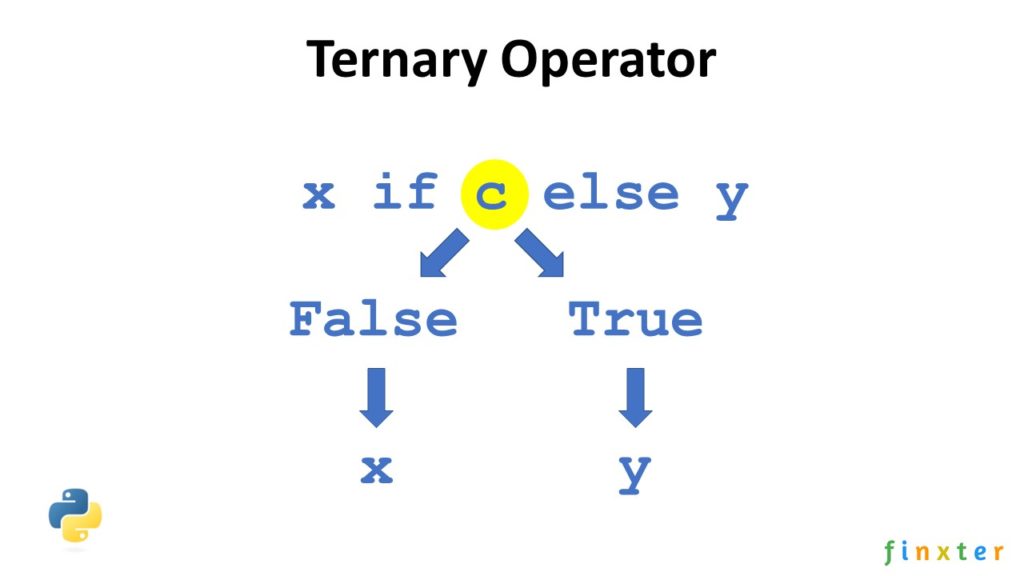
If you need a quick refresher on the ternary operator, check out my detailed blog article. The ternary operator is commonly used to conditionally assign values. But you can also throw away the return value by not assigning the result to any variable. In this case, it doesn’t matter if you use None or any other “dummy” return value as the result of the else branch:
condition = True # Method 2: Ternary with Dummy

print('hi') if condition else None
It’s readable, short, and concise and I like this (well, I may be a bit biased as author of the book Python One-Liners). Sure, people will ask why you didn’t write it in multiple lines. But where is the fun there?
Method 3: Ternary with Default Value for Assignment
If you need to assign a value conditionally to a variable, but you want to do so without an else branch, you can do the following:
condition = True # Method 3: Ternary with Dummy for Assignment

x = 42 if condition else None
If the condition does not hold, the “dummy” value None is assigned to the variable.
Method 4: Short Circuiting
This method I like most. It uses a Python optimization called “short circuiting” for Boolean operators: the logical and operator simply returns the second operand if the first is True. There’s no Boolean conversion of the second operand, it’s just returned as is.
If the first operand is False, the second operand is not even evaluated.
You can use this to conditionally execute the if branch print('hi') or any other code function.
condition = True # Method 4: Short circuiting

condition and print('hi')
There are two options:
condition == True: As the first operand is True, the second operand is returned. Thus, the statement print('hi') is executed and the string hi appears on the screen.
condition == False: As the first operand is False, the second operand is not even evaluated because the result of the logical and operation is False anyway. Thus, the statement print('hi') is never executed.
Where to Go From Here?
Enough theory, let’s get some practice!
To become successful in coding, you need to get out there and solve real problems for real people. That’s how you can become a six-figure earner easily. And that’s how you polish the skills you really need in practice. After all, what’s the use of learning theory that nobody ever needs?
Practice projects is how you sharpen your saw in coding!
Do you want to become a code master by focusing on practical code projects that actually earn you money and solve problems for people?
Then become a Python freelance developer! It’s the best way of approaching the task of improving your Python skills—even if you are a complete beginner.
The 196th GalaQuiz will be LIVE soon, win up to $50 in GalaCredit!
[www.indiegala.com] The GalaQuiz will take place in less than 15 minutes from this announcement Today's GalaQuiz[www.indiegala.com] hints are up. The theme will be Famous Duets.
Random: Super Smash Bros. Ultimate Mod Swaps Snake For Ninja
With Super Smash Bros. Ultimate throwing the door open to a number of popular third-party franchise characters, it wouldn’t be completely out of the question to see the ultra-popular Fortnite be represented in some way later down the line. For many, when you think of games like Fortnite, you think less about its in-game characters and more about the real-life people who have helped to make it the wild success that it is.
So, what are the chances that Ninja, the world’s most famous streamer best known for his Fortnite coverage, could end up in the game one day? It’s unlikely, sure – in fact, we’d happily bet our entire Smash amiibo collection on such a collaboration never happening – but one modder has taken the time to show us just what that particular mashup could look like.
Below, you’ll see Snake’s character model replaced with Ninja’s in-game Fortnite skin, with all of Snake’s movements and attacks still intact. His voice has been replaced with clips from Ninja’s streams, including a scream of ‘What am I doing?!’ for his Final Smash. As a word of warning, the clip features some mature language.
If you’d rather avoid such language, we’ve grabbed some screenshots for you, too.
What do you think? Could you see a Fortnite representative working in Smash? Can you imagine the absolute chaos such a reveal would cause among the more vocal members of the Nintendo community? Have your say below.
Colors Live And The Colors SonarPen Are Now Available To Pre-Order
If you missed out on the Colors LiveKickstarter campaign but wish you could have secured a copy for yourself, you’ll be pleased to know that general pre-orders have now gone live.
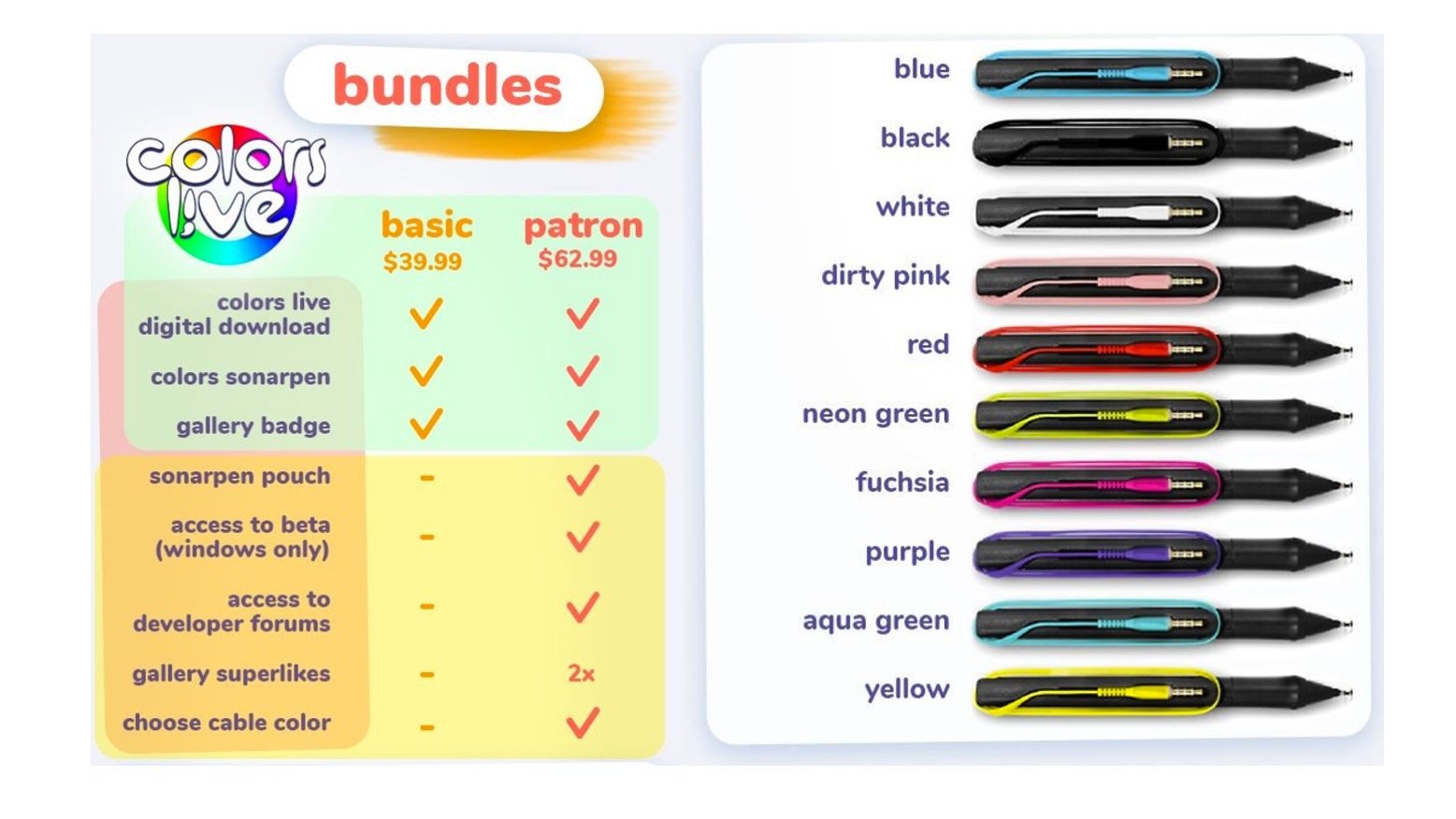
The team behind the game has opened pre-orders on its very own store via Gamefound. There are two different options to choose from: a $39.99 Basic Pre-Order Bundle which includes a digital copy of the game, the SonarPen, and an in-game badge, or the $62.99 Patron Pre-Order Bundle which throws in plenty of in-game extras, a pouch for your pen, access to a beta, and a choice of pen colour.
Your SonarPen will be shipped out to you when the game launches this summer, and you’ll receive a digital game code via email which can be redeemed on the Switch eShop once the software goes live.



























 in GalaCredit!