[www.indiegala.com] Awesome Summer days await you with the IndieGala Scratchy Summer Sale. Get huge discounts on your favourite games + a Scratch Card with a secret Steam game in it!
Epic Games, creators of the popular Fortnite series, as well as Unreal Engine, have just announced they have received a $250M investment from Sony, makers of the PlayStation consoles. It was announced in June that Epic Games were looking for investments valuing the company at 17B dollars. While this does not appear to be that investment, it does in fact value Epic Games at over 17B USD.
The $250M dollar investment represents an ownership stake of 1.4%, a far cry from the 40% Tencent received for it’s 2012 $330M investment. The ultimate question is… what does Sony get out of this? Dean Takahashi at VentureBeat discusses exactly that subject:
The deal is important for Sony because it needs allies in the upcoming console war. Later this year, Sony plans to launch the PlayStation 5 game console in competition with Microsoft’s Xbox Series X. But Epic has said that its Unreal Engine 5 and Fortnite will work with all game platforms, as Epic has generally been neutral when it comes to making cross-platform technology. If Sony gets any advantage from investing in Epic, it isn’t clear from this deal.
In a statement, Sony CEO Kenichiro Yoshida said that Epic’s technology keeps it at the forefront of game development and that is exemplified in the features of Fortnite. Epic CEO Tim Sweeney, meanwhile, said in a statement that both Sony and Epic have created businesses at the intersection of creativity and technology and they share a vision of real-time 3D social experiences that will lead to a convergence of gaming, film, and music. He also said the parties plan to build a “more open and accessible digital ecosystem for all consumers and content creators.”
The bolded point above is perhaps the most important part for game developers, Unreal Engine should not be affected by this investment. You can learn more in the video below.
Home automation firm Wink to enforce subscription program on July 27
After a series of delays, smart home device maker Wink is making final preparations to roll out a controversial subscription service on July 27, much to the dismay of its user base.
Announced in a blog post on the company’s website, Wink says that the new $4.99 subscription will take effect later this month. If users do not subscribe by July 27, their service will be significantly limited.
Users revolted when Wink initially announced plans to institute a subscription service, as many previously-free features will, in effect, be locked behind a paywall. Wink justified the move as a way to keep the company afloat as the upfront cost of the hardware alone was not sufficient.
After substantial backlash, Wink delayed the planned subscription service multiple times to allow users to respond to the change, whether it be to find a new platform to migrate to or accept the new subscription terms.
If users choose not to subscribe they will lose the ability to add new devices, update the firmware on the hub, use voice control, access their home remotely, and much more.
Users or new adopters who wish to sign up for a Wink subscription can learn more from the company’s website.
Posted by: xSicKxBot - 07-10-2020, 10:04 AM - Forum: Windows
- No Replies
The New Yorker: Can our ballots be both secret and secure?
Near the end of last year, I met Josh Benaloh, a senior cryptographer at Microsoft, in a conference room in Building 99 on the company’s sprawling campus, in Redmond, Washington, to talk about a fundamental problem with American elections. When we vote, we take it on faith that our ballots have been recorded—and recorded correctly. This is not always the case. In 2015, in Shelby County, Tennessee, hundreds of votes that were cast in predominantly African-American precincts disappeared somewhere between the polling place and the final tally. Where they had gone, and why, remains a mystery, because the ballots were cast on a touch-screen voting machine that did not provide a paper record. In 2018, three thousand votes went missing during a Florida recount. The next year, eight hundred uncounted ballots were found in a storage closet in Midland, Texas, after a hotly contested school-bond vote. To prevent these types of errors, Benaloh said, “You could, in theory, sign your name on your ballot and watch it go through the system.” In actual elections, however, that is precisely what is not supposed to happen. Our ballots are secret; after we drop them in the ballot box, they are, literally, out of our hands.
We don’t publish everyone’s name next to their candidate selections because, Benaloh said, “if we do that, we’ll also be opening up everyone to coercion and vote selling.” Both were features of American democracy well into the late nineteenth century, as voters revealed their choices in public—polling often took place during carnivals and festivals—either by voice or by dropping color-coded tickets, printed by each party, into a ballot box. By 1888, corruption had become so widespread that states began to abandon the spectacle. Voters in Massachusetts, following the examples of Australia and Britain, were the first in the U.S. to register their choices in a private space, on uniform ballots printed at public expense.
Since 2018, as part of a program called Defending Democracy, Benaloh has been working on voting software that attempts to solve the problem of trust in secret-ballot elections. At Microsoft, he is both a researcher and an internal consultant, using what he learns in his theoretical investigations to help the company develop secure products. His election software is based on a mathematical process that he invented called homomorphic encryption. Standard encryption obscures information behind unintelligible strings of letters and numbers; homomorphic encryption enables those unintelligible strings to be added together while still remaining behind the veil. Applied to elections, this technology could allow ballots to be aggregated, tallied, and verified without the individual votes having to be decrypted. If it worked, voters could check that their choices had been accurately counted, without anyone else ever seeing them.
At sixty years old, Benaloh is still boyish, with a stubbly beard and curly hair that is just beginning to gray. When he began thinking about how encryption might improve voting, as an undergraduate at the Massachusetts Institute of Technology, he had no sense that anything was wrong with the electoral system. “I didn’t really know a lot about elections,” Benaloh said. “I was a geeky kid growing up in New York who loved numbers, and elections were the time when everyone else was looking at numbers all day.” This was back when his surname was Cohen, before he married his wife, Laurie Blake, who was then a math teacher, and they scrambled the letters of their last names together. (“ ‘Ben’ sort of from the Latin prefix ‘benefactor,’ ” he told me, “and ‘aloh’ for the Hawaiian greeting ‘aloha.’ ”) While taking a class on cryptography, he started to see voting as a powerful way to show that the mathematical tools he was developing could be used to create a ballot that was transparent and private, and that the accuracy of elections could be verified from start to finish.
In 1987, after successfully defending his doctoral dissertation, titled “Verifiable Secret-Ballot Elections,” at Yale, Benaloh moved to Toronto, for a three-year postdoc appointment, and then to upstate New York, to teach computer science at Clarkson University. He continued to refine the math for end-to-end verifiable elections. This included an effort to figure out how to apply his research to voting by mail, which he is still attempting to do, but with more urgency, in the face of the COVID-19 pandemic. (“I’m getting close,” he told me recently.) He also settled on a method that would give voters a simple way to test the integrity of the process: they could “spoil” ballots. Unlike cast ballots, spoiled ballots would be decrypted, and anyone could check whether the choices they had made on those ballots were the ones revealed by the decryption. In 2012, Benaloh put his ideas into practice, as one of seven researchers tapped by the clerk of Travis County, Texas, to create an actual voting system from the ground up. “We were trying to design something that achieved the mathematical needs of end-to-end verifiability in a way that their voters could interact with,” he said. But STAR-Vote, as the system was called, never made it off the page and into the polling place.
In 2016, after it became clear that Russian intelligence was probing state election systems, Benaloh took part in an extensive investigation conducted by the National Academies of Sciences, Engineering, and Medicine to determine the best ways to enhance the integrity of American elections. Its September, 2018, report, “Securing the Vote: Protecting American Democracy,” offered forty-one suggestions for making voting more secure, including adding end-to-end verifiability. By then, Microsoft had witnessed attacks on the electoral system firsthand. The company had provided cybersecurity services for both parties’ conventions in the previous election cycle; in July, 2016, during the Democratic National Convention, Microsoft’s threat-intelligence team noticed that a nation-state actor, later traced to Russian intelligence, was registering fake Microsoft domain names. Not long afterward, the team saw the same thing happening during the French and European Union elections. Fake domains are often the bait for phishing expeditions, and Russian hackers were initially targeting academics and consultants likely to be involved in key issues of a campaign. “If you’ve infiltrated an academic who is going to be an adviser to the Presidential campaign, now it’s easier to hack into the Presidential campaign,” Tom Burt, the company’s vice-president for customer security and trust, told me. “That person sends an e-mail saying ‘look at this really cool document,’ and they click on it and they’re infected.”
In 2018, Microsoft created the Defending Democracy program, which offered political campaigns a service called AccountGuard. The company trained campaign staff on basic cyber hygiene and monitored their accounts for malicious activity. (AccountGuard is now offered to nonprofits, academics, and political consultants in twenty-nine countries.) The program reached out to Benaloh to ask about the possibility of using the kinds of mathematical tools he’d been developing to create a verifiable voting system. “Josh had been thinking about this for a long time, but nobody had made the investment to do it,” Burt told me. “It was going to be expensive, but it was something we could invest in, and I was willing to take a risk.” (Burt, a rugged, silver-haired veteran of corporate law, would only tell me that the cost was “in the seven-figure range.”)
Benaloh began to conceive what an end-to-end encrypted ballot-system toolkit would look like. It would be a piece of software—an add-on to voting machines or scanners, not the hardware itself. It would also be system-agnostic, able to work alongside most kinds of voting apparatuses, whether digital or analog. As Benaloh told Congress last June, with an end-to-end verifiable election system, “voters will have the ability to use their unique tracking codes to look up their encrypted votes and confirm that they are unaltered and correctly counted.” Election officials, meanwhile, he said, “will be able to publish C.V.R.S.”—cast-vote records—“without releasing sensitive raw election data that can be abused by malicious actors.”
Posted by: xSicKxBot - 07-10-2020, 10:03 AM - Forum: Lounge
- No Replies
Final Fantasy, Dragon Quest Games Get Huge Discounts At Humble Bundle
Earlier this week, Humble Bundle launched the Summer Adventures Bundle, offering $174 worth of games for as little as $15. You should definitely check it out, but Humble Bundle also just kicked off a new sale centered on Square Enix games that's worth browsing. From now until July 16, you can save up to 50% on popular Square Enix games, including a bunch of Final Fantasy and Dragon Quest titles.
The Square Enix Publisher Promotion includes dozens of games, most of which are role-playing titles. Final Fantasy is heavily featured, with most mainline entries and several spin-offs on sale. If you haven't played the most recent mainline entry, Final Fantasy XV, you can grab it for $17.49. Meanwhile, all three Final Fantasy XIII games are available for cheap, with XIII down to $8, XIII-2 discounted to $10, and Lightning Returns at $10.
Deck building Witcher RPG Thronebreaker suddenly releases on iOS
CD Projekt Red, in a sudden turn of events, has launched Thronebreaker on iOS. No one seems to have known that The Witcher RPG was coming to mobile, but it’s a pleasant surprise nonetheless! You can also download Thronebreaker on the App Store right now, for those of you that can’t wait. Since Gwent: The Witcher Card game launched on mobile not so long ago, we’ve been waiting for Thronebreaker news, as a deck building RPG that uses the same card system – check our Gwent review to find out more!
CD Projekt Red originally developed Thronebreaker as the story mode for Gwent, before deciding to create The Witcher Tales and spin it off into its own game. We’re glad it did, though, as Thronebreaker is both an excellent RPG and deck building game.
For those that don’t know, Thronebreaker follows the story of Queen Meve, a beloved character from the books who knights Geralt, hence his ‘of Rivia’ title. Her story involves traipsing across The Continent, trying to reclaim her kingdom, as, all while, the second Nilfgaardian war rages around her.
You can watch the iOS release trailer below if you want to see how it plays:
[embedded content]
In celebration of Thronebreaker coming to mobile, CD Projekt Red are giving away a set of rewards, including the soundtrack, some concept art, and an annotated map of Lyria – one of Meve’s kingdoms. Gwent players can also claim some benefits from jumping into Thronebreaker, such as unique ornaments, and 20 new cards.
We’re excited to see Thronebreaker finally take its rightful place on mobile, as a game that is perfectly built for the platform. If you want to find out more about creating the art of The Witcher universe, we spoke to Gwent’s art director not so long ago about creating Gwent’s card art – check it out!
Posted by: xSicKxBot - 07-10-2020, 12:16 AM - Forum: Windows
- No Replies
How companies are making buildings smarter with Azure IoT
Commercial real estate developers, building owners, facilities management companies, and tenants have a huge opportunity to address, and solve for, the unique business challenges faced by their industry, by applying the Internet of Things (IoT) to buildings. For example, by leveraging data from IoT sensors and building management systems, companies can gain insights that enable them to save energy, reduce operational expenses, increase occupant comfort, and optimize space.
However, the COVID-19 crisis has presented a new set of challenges for developers, owners, and management companies. New forecasts show the smart building market size growing between 7.3 percent and 11.6 percent annually to overall market revenues of between $65.2 billion and $82.7 billion USD in 2025.1
Smart buildings also help companies meet regulations for tracking and reducing greenhouse gas emissions.
Let’s look at how Bosch Building Technologies, Bentley Systems, Schneider Electric, and ICONICS use Azure IoT to deliver the benefits of smart buildings.
Decreasing energy requirements
The American Council for an Energy-Efficient Economy estimates that implementing smart building technology in an existing building can result in energy savings of 30–50 percent.2 For example, companies can combine data from occupancy sensors with data from HVAC and lighting systems to lower room temperatures and turn lights off in unoccupied rooms.
Bosch Building Technologies developed an in-house Energy Platform to analyze energy consumption and pursue ongoing energy efficiency. Based on Microsoft Azure, the Energy Platform monitors and analyzes energy consumption in real-time. Bosch customers use the Energy Platform to connect to IoT enabled devices and then link to existing meters, sensors, and machines. Customers can make informed decisions to improve energy and resource efficiency.
Bosch offers the solution to customers and uses it internally at more than 100 manufacturing plants worldwide. At one of their larger plants, Bosch saves up to €1.2 million (approximately $1.3 million USD) a year.
Bosch also created a Building Intelligence as a Service program to provide new IoT-based services for customers. Bosch adopted Azure Digital Twins as part of their Connected Building Services offering. By leveraging Azure Digital Twins, the company can query data from entire rooms or spaces, rather than from disparate sensors, to build complete digital models of the physical building environment.
By using Azure Digital Twins, Bosch gains more precise data for a wide range of building technology systems. With this level of precision, it’s easier for customers to fully understand data points, consumption results, context, and how they relate to the physical environment to quickly gain insights on energy usage to inform their business decisions.
Human factor design of new buildings can help decrease energy requirements.
Creating a connected workplace
At Microsoft’s Frasers Tower in Singapore, Bentley Systems and Schneider Electric implemented sensors and telemetry to create a connected workplace. They used a mix of 179 Bluetooth beacons in meeting rooms and 900 sensors for lighting, air quality, and temperature. The platform generates nearly 2,100 data points that are stored and analyzed in Azure. Using the data, Microsoft optimizes various aspects of the spaces, making them more comfortable for employees, while reducing energy consumption in a sustainable and economical manner.
Additionally, Bentley Systems built a digital twin of the Fraser Towers on its Bentley iTwin platform—using Azure Digital Twins, Azure IoT Hub, and Azure Time Series Insights. The iTwin platform uses both historical and real-time data from IoT sensors to create an exact digital replica of the physical building. The building management team uses the information to dynamically allocate space, increase utilization, reduce costs, improve competitiveness, and enhance collaboration and productivity.
Sensors generate data that is stored and analyzed to decrease energy use.
Monitoring occupancy and reducing costs
ICONICS smart building software has run on Microsoft Azure since 2015. The software is an integration hub for building management systems that control heating, ventilation, and lighting and collect and centralize each system’s sensor data. ICONICS relies on Azure Digital Twins to boost solution scalability and rapidly deliver innovative capabilities to customers, such as viewing space occupancy and spatial analytics.
Microsoft uses the ICONICS smart building software to collect sensor data in office buildings in the Puget Sound area of Washington State. The ICONICS solution aggregates the data over multiple buildings to give facility managers visibility into building health and applies big data analytics to provide insights that drive decisions in order to deliver energy savings. In fact, the Microsoft Energy Smart Buildings program, leveraging ICONICS software, has saved Microsoft 20 percent off its energy bills.
Next steps
Smart buildings provide insights that enable real estate developers, commercial building owners, facilities managers, and tenants to save energy, reduce operational expenses, increase occupant comfort, and meet regulatory and sustainability goals.
To learn more about best practices for planning smart building projects, download the white paper, Smart buildings: From design to reality, co-written by Microsoft and L&T Technology Services.
Also visit, Azure IoT to find the right IoT approach for your solutions.
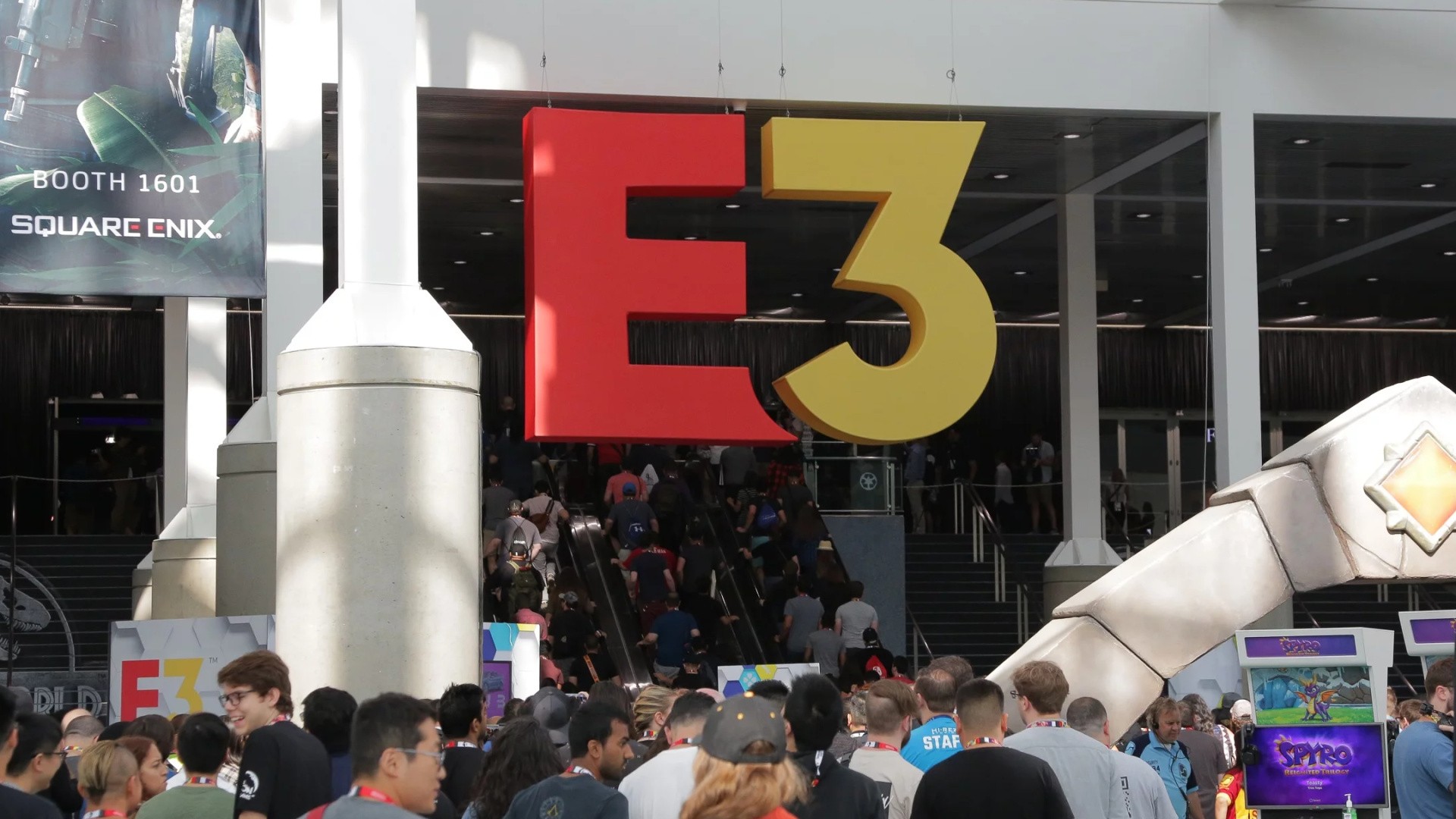
A fresh new tweet from the official expo account has reminded followers that the convention still exists “thanks to video games” and that it will be back. There’s also a short promotional video attached, take a look below:
Despite the Entertainment Software Association cancelling this year’s E3, the majority of developers and publishers managed to find other ways to share their new game announcements. The reportedly rebranded “fan, media and influencer festival” is meant to be taking place between 15th – 17th June 2021.
Are you looking forward to the return of E3? How have you gone without it this year? Leave a comment down below.
Feature: 8 Games That Could Really Benefit From A Modern Remake On Switch
Ever since the rumour that several 3D Super Mario remasters may be coming to Switch, we’ve been champing at the bit to experience those classics again on Switch. Say what you like about Switch ports but if they’re treated with the care and respect they deserve, we’re all for bringing everything–past and present– to Switch. We’ll take the lot.
However, there’s an argument to be made that recycling the same classic games time and time again is a bit of a waste, especially when we’ve played them to death already. How about spending that development time sprucing up games that fell short of greatness, or games we haven’t had easy access to since they originally released? Rather than gilding the lily over and over, why not put that effort into remaking games that didn’t live up to their potential the first time around?
Remakes provide a solid blueprint for developers to work from and come with an existing fanbase, so it’s no wonder they’re attractive to big companies. Still, it would be nice to see more risks taken in this area. Master System classic Wonder Boy: The Dragon’s Trap was given a fresh lick of paint and polished up beautifully for modern consoles, and although the source material for the recently-announced Alex Kidd in Miracle World remake isn’t as revered, the developers will be hoping to pull off a similar trick.
Of course, Nintendo puts out remakes on a semi-regular basis, and we recently enjoyed Xenoblade Chronicles: Definitive Edition. However, that’s not the sort of HD upgrade and spit-polish we have in mind for the games below. We’re talking fundamental overhauls along the lines of The Legend of Zelda: Link’s Awakening or, better yet, the mighty Metroid: Zero Mission for GBA, the latter of which took the ageing shell of the original Metroid and gave it a startling refurbishment. In fact, the Metroid series got another excellent remake in the form of Metroid: Samus Returns on 3DS.
So, let’s take a look at a handful of games from various developers that we believe had a promising, tasty kernel within but could have benefited from more time in the oven…
Controversial! Well, not really. The fact is that while we adore the spirit, quirkiness and legacy of the Game Boy’s Super Mario Land, the actual gameplay doesn’t live up to the potential of the system or the series and, as such, it’s one of the lesser games in the Mario canon. Sure, at the time it felt like a minor miracle–and the game isn’t without its own brand of magic–but the stellar Super Mario Land 2: 6 Golden Coins trumped it in every department and proved what could be achieved on Nintendo’s most modest of consoles.
An expanded, reimagined remake of Super Mario Land, though? That could be a spicy little meatball.
Publisher: Disney Interactive Studios / Developer: Junction Point
Release Date: 30th Nov 2010 (USA) / 26th Nov 2010 (UK/EU)
Rumours that a remaster of this 3D platformer might be in the works have popped up recently, and Epic Mickey is certainly a brilliant concept which arguably didn’t quite live up to its potential. It’s gorgeous game which gave Mickey Mouse a little of his bite back and ushered in Disney’s more modern, less reverant (and infinitely more fun) approach to its mascot these days.
We’ve spoken to veteran designer Warren Spector in the past and he’s quite rightly proud of the game, but it would be facsinating to see how a remake could buff out the imperfections a decade later on modern systems.
Publisher: SEGA / Developer: SEGA Technical Institute
We’ve got a special place in our heart for Sonic Spinball, and we won’t hear a word said against its soundtrack, bonus stages or overall premise. Still, even for we young Sonic fans back in the day. the stuttering gameplay and odd physics didn’t feel quite right back in the day, especially after coming from the silky smooth Sonic 2. And the less said about the hedgehog’s sprite here, the better.
Oh, but imagine a remake using the Sonic Mania engine and sprites which would marry the winning concept with the ‘proper’ movement and inertia of his 16-bit platformers! It could turn a flawed game into an instant classic.
Publisher: Capcom / Developer: M4
Release Date: 3rd Jun 2002 (USA) / 3rd Jun 2002 (UK/EU)
Capcom are no strangers to remaking (sorry, REmaking) the Resident Evil franchise and the success of the recent RE2 and RE3 releases (sorry, REleases) means Capcom will be recycling (sorry, REcyc–okay we’ll stop now) the lot of them, no doubt. It started back on the GameCube, and although the original PlayStation game is a kitsch gem, REmake transformed it into a modern classic in keeping with the tone established by later instalments. We’re still sore that Capcom hasn’t brought the remake of the second game to Switch.
While the upcoming RE4 remake has fans divided, there are few gamers who would argue that Resident Evil Gaiden on Game Boy Color couldn’t be improved with a reimagined version for modern systems. It wasn’t well received and it came last in our reader poll of the best Resident Evil games ever, but it features the dream team of Leon S. Kennedy and Barry Burton. Tell us that there’s not gold to be mined from that pairing!
Nuts to RE4 – that’s already a classic. Why not take another crack at REG, Capcom? And please, please, keep that abreviation; it’d be tagline gold.
Publisher: Nintendo / Developer: Project Sora
Release Date: 23rd Mar 2012 (USA) / 23rd Mar 2012 (UK/EU)
One of Nintendo’s dormant franchises, the plain fact is that the awkward control scheme of this 3DS entry split player opinion (and a few ulnar nerves, too). It has its defenders–we very much enjoyed the game–but a remaster with a completely reworked control scheme might give more people the chance to appreciate Kid Icarus: Uprising. Perhaps once Masahiro Sakurai is finished with Smash Bros.? Then again, perhaps it would be simpler to create a new entry from scratch. We’d take that, too.
Also, Sakurai will never be finished with Smash, ever. Nintendo won’t allow it. Poor chap.
Publisher: Konami / Developer: Konami
Release Date: 5th May 2000 (USA) / 5th May 2000 (UK/EU)
Possibly the most highly regarded entry here in its original form, the game known as Metal Gear: Ghost Babel in Japan was actually an excellent entry for the series on Game Boy Color. However, much like Link’s Awakening, reimagining this classic would bring it to the attention of a wider audience over two decades on from release, and a remake could alleviate some of the control design choices necessary to get the game working on GBC.
Plus, who wouldn’t jump at the chance to play a Solid Snake adventure on Switch? We’ll take the rest of his back catalogue while you’re at it, Konami. Much obliged.
Publisher: Nintendo / Developer: Nintendo R&D1
Release Date: 30th Jan 1985 (USA) / 16th Mar 2007 (UK/EU)
Some NES games hold up very well indeed, while others haven’t aged so gracefully. In the case of ‘black box’ vertical platformer Ice Climber, it hardly set the world alight back in the day, and Popo and Nana would probably be consigned to the annals of Nintendo history (on the same pile as Stanley the Bugman) were it not for the aforementioned Masahiro Sakurai sending them an invitation to join the Super Smash Bros. Melee.
Being a distinctly average game, there’s ample scope to improve upon the original’s awkward controls and give this game a 21st century makeover. A task for a talented Nindie dev, perhaps? Popo and Nana deserve better.
With so many games to its name, the Zelda franchise is bound to elicit a variety of opinions as to the best or worst game in the series. We find that one good way to gauge someone’s Zelda fandom is whether or not they’ve played through Zelda II: The Adventure of Link. The first sequel in the long-running series, it’s very different from the original and has enjoyed a critical reappraisal over the past decade, fuelled largely by the success of Dark Souls and similar games which refuse to hold your hand.
Viewed in the context of the entries that followed, Zelda II is the most obtuse Zelda, with mistranslations adding to its general inscutability. 8-bit games of all genres are routinely more challenging than modern equivalents, but you should feel zero compunction using save states and a walkthrough to complete Zelda II if you’re determined to tick it off your list.
However, its way of doing things came back into vogue and a sensitive remake could bring back one of the oft-ignored and most unusual Zelda games for a new audience. Cadence of Hyrule proved that indie developers have the potential to breathe new life into the old formula (and Zelda II didn’t follow the template soon cemented in A Link to the Past anyway). The developers of the Wonder Boy: The Dragon’s Trap remake expressed a desire to tackle Zelda II a couple of years ago, and we’d still be fascinated to see what they could make of it.
So what are your thoughts on our picks above? Let us know below by voting for the two games you’d most like to see given some special remake attention.
Obviously, there are dozens of decent games that fell short of classic status despite having potential, so feel free to leave your suggestions in the comments below.
Posted by: xSicKxBot - 07-10-2020, 12:16 AM - Forum: Lounge
- No Replies
Superhot: Mind Control Delete Releases Soon, Free For Owners of Original
Superhot: Mind Control Delete, a new standalone sequel to Superhot, releases on July 16 and is free for owners of the original. In a PlayStation Blog post, co-director Cezary Skorupka said that Mind Control Delete started as a short side project, but quickly evolved into a full-sized, standalone game.
Mind Control Delete features more Superhot gameplay, tasking players with making calculated slow-motion movements to clear enemies with limited tools available. It takes the game further, with bigger levels, more mechanics, and more characters.
Mind Control Delete will be free for anyone who bought the original game prior to July 16, with a few caveats. Anyone who bought the game on Steam, GOG, Epic Games Store, Origin, or PS4 will have Mind Control Delete added to their library at release. Xbox One players who bought the game will receive a code for the game through an Xbox Live Message within a few days of its release.