The Defold Foundation today announced the immediate availability of Nintendo Switch support for the Defold game engine. Nintendo Switch is the first console supported by Defold. Approved Nintendo Switch developers can request access to Defold through the Nintendo Developer Portal. Access will be granted to Defold community members with Nintendo Switch included in their membership tier. Source code access is available as a separate membership tier.
“When the decision was made to work on console support for Defold it was an absolute no-brainer to start with Nintendo Switch. Not only had our community asked for Nintendo Switch support for quite some time but the capabilities of Defold also seemed perfectly suited for the Nintendo Switch. It also turned out to be very easy to port to the platform and it was a real pleasure to work with the Nintendo Switch SDK. We can’t wait to play some great Defold games on Nintendo Switch!””, said Defold Product Owner Björn Ritzl.
Nintendo Switch support is available to Defold backers, although it also requires a Nintendo developer account. You can learn more details about Nintendo Switch support here and by watching the video below.
Beyond a Steel Sky launches tomorrow on Apple Arcade
Revolution has announced the Beyond a Steel Sky release date, and it’s tomorrow, June 26. Yes, we were surprised too! The developer has been putting the finishing touches on the cyberpunk Apple Arcade game since recently revealing a glimpse of what’s to come in a Beyond a Steel Sky trailer from IGN.
The story trailer gives us a peek at Union City and also shows off some of the game’s quirky cast. It mainly serves, however, to set the game’s story in motion. You’re playing as Robert Foster, a grizzled chap in a trench coat who is about to play detective – as is the cyberpunk way. A child has been stolen from a peaceful desert community and following his trail brings you to a sprawling metropolis of flying cars and high-tech.
But now we have a Beyond a Steel Sky release date, it looks like you won’t have to wait long to join Foster, and dive into the Cyberpunk world of Steel Sky.
Be sure to check out this glimpse of Beyond a Steel Sky below:
[embedded content]
Beyond a Steel Sky is a sequel to Beneath a Steel Sky, which came out in 1994. There are plenty of gameplay differences to make it more accessible to modern players. The most notable is the leap from a 2D point-and-click side scroller to a 3D adventure game. You can still expect plenty of puzzles to solve, though.
For those whose curiosity we’ve peaked, you’ll be able to find Beyond a Steel Sky on Apple Arcade tomorrow. We’ve also rounded up the best iOS and Android games to give you a headstart on that adventure in the mean time.
Testing Apple Watch sleep tracking with watchOS 7 & iOS 14
One of the most requested features for Apple Watch is sleep tracking, and with watchOS 7 and iOS 14, Apple is finally bringing it to the table. In true Apple style, it does much more than track when you start and stop sleeping.
It would be easy enough for Apple to create an app that detects the start and stop point of your sleep. Apple has a tendency to go the extra mile on features, however, thinking about the implementation as a whole, and not just what users anticipate.
For watchOS 7 and iOS 14, Apple thought about the entire sleeping experience for users. That includes keeping a consistent routine, settling down before bed, gently waking up, and analyzing the data that is collected.
So that’s what Apple did by introducing the Sleep app for Apple Watch, sleep mode for iPhone and Apple Watch, revamping the Bedtime feature found in iOS 13, and introducing Wind Down.
[embedded content]
Starting sleep tracking with Apple Watch
To get started with sleep tracking for Apple Watch, users can jump in to the new Sleep app on the wrist-worn computer or into the Health app of their iOS 14-equipped iPhone. We opted for the latter.
When you go to the sleep category of the Health app, there is a new option to set your bedtime schedule. First, you can enable sleep mode. Sleep mode simplifies your Lock Screen at your scheduled Bedtime and will turn on Do Not Disturb to reduce interruptions.
The app will then suggest you enable Wind Down. The idea is that your nighttime routine can begin prior to your bedtime, before you go to sleep. Sleep mode is when you’re actually sleeping and Wind Down is everything leading up to that. You choose how much before your bedtime you want to start Wind Down. This can be between 15 minutes and three hours.
Wind Down on iOS 14
What Wind Down will do is help with those routines as you get ready for bed while reducing the screen time on your phone. It simplifies your Lock Screen, just showing the time, your alarm and any Shortcuts or apps you may use. Create a Shortcut to listen to a relaxing podcast, play your nighttime music playlist, or start your two-minute teeth brushing timer. Whatever you do before bed can be added here.
Finally, Health will ask if you want to track your sleep with Apple Watch. You then get your summary of everything you set up including your schedule and features enabled.
Apple Watch details
Once everything is set up, you can start tracking sleep. Almost everything happens in the background. Your phone will go into Wind Down mode before it Watch go into sleep mode.
Manually enable sleep mode on iPhone or Apple Watch within Control Center
Sleep mode is able to be manually set, too, on both the watch and phone. Just go into Control Center on each device and toggle it on.
Apple Watch display when it is awoken in sleep mode
When the Apple Watch is in sleep mode, the display stays black as you move your wrist about, preventing it from inadvertently lighting up while you are trying to sleep. And tapping the screen causes is it to light up very dimly with the time and when your alarm is set.
Rotate the Digital Crown to use Apple Watch in sleep mode
If you want to use your watch, it makes you rotate the Digital Crown, similar to expelling water after swimming. This too stops the watching from waking by accident.
Good morning report on Apple Watch after sleeping
Once you wake up, your Apple Watch will greet you with a “good morning” summary that lets you know how long you slept, what the weather looks like for the rest of the day, and what your battery life is for your watch.
Sleep app in watchOS 7
You can revisit your sleep history by checking out the Sleep app your Apple Watch or by visiting the Health app on your iPhone. It will show you how long you slept, how many times you woke up, and how consistent you’ve been.
Keep up with your battery
Speaking of battery, this is likely one of user’s biggest concerns. Apple doesn’t have a way to magically extend your watch’s battery life but it does try to help you manage it.
Apple Watch charging notification
When it is almost time for bed, if your battery life is less than 30 percent, your phone will notify you that you need to charge. And when your watch is charging, your phone will get an alert letting you know when it hits a full charge so you can go grab it.
Apple Watch does charge quick and in our time testing, we haven’t had much issue keeping the watch juiced up — even on a beta. We top it off while we are in the shower and maybe a few minutes in the morning before work and it makes it through the day and night.
Get some rest
Together, the new features cover the entire experience of sleeping and helps you better your sleep patterns. You slowly wind down your day by reducing distractions and getting into your bedtime routine. Your phone stays silent on Do Not Disturb mode while you sleep and your Apple Watch tracks you at the same time and doesn’t turn on and blind you. When you wake up, your watch greets you, as does your iPhone, to start your day.
Track your sleep with Apple Watch
It has been a long time coming, but Apple’s implementation is well thought out, unique, and a phenomenal example of Apple’s ecosystem working together.
Posted by: xSicKxBot - 06-26-2020, 12:07 AM - Forum: Lounge
- No Replies
Cyberpunk 2077 Has A Witcher 3 Easter Egg Hidden Early
Cyberpunk 2077, the upcoming first-person RPG from CD Projekt Red is currently in the spotlight after their recent Night City Wire broadcast revealing some new information about the game, as well as a bunch of previews cropping up after the studio allowed select media to play a hands-on demo of the game.
At GameSpot, three of us were fortunate enough to experience what it's like to play the opening hours of Cyberpunk 2077--we've got a video feature that details our three different experiences. This allowed us to see each of the three different prologue sequences of the game that introduce the protagonist V, and portray V's growing relationship with her partner Jackie in different ways. The three different scenes corresponding to the three "Life Paths" that game allows you to choose: Street Kid, Nomad, and Corporate. We've got an article describing what happens in each prologue if you'd like to know more.
I was the one who chose to play the Corporate path, where V begins the game as a counter-intelligence operative for the Japanese firm Arasaka. V is given a treasonous order by her conniving, garbage boss (who weirdly uses the c-word twice in the space of 30 seconds so you know he's bad), and you're introduced the cutthroat world of corporate espionage that helps to define a lot of cyberpunk fiction. It's all very exciting, so naturally, the first thing I set off to do was to poke around the corners of the Arasaka office to look at trashcans, vending machines, and the workspaces of employees.
Tyler Duncan and Jeff Fox are on the front lines of what’s
happening with Destiny development. As members of the Bungie Test team, they help to
organize the testing of the game across many different groups within the
studio. They’re used to seeing the latest builds of the game and helping to coordinate
testing – from playing through scenarios and activities to organizing mass PVP sessions
involving dozens of Bungie employees.
Testing happens in every videogame studio
and the more testing you can do, the better. The function is so essential to a
studio’s day-to-day operations that it’s easy to take it for granted. From
designers to developers, engineers to marketing folks, Bungie team members are
often invited to playtest sessions. You show up to the playtest lab, put on the
headphones, play for a while, and then share your experiences with others. That
fundamental process of play, feedback, and communication is part of the
lifeblood of a game studio.
It’s so essential, in fact, that the alternative –
developing games without that rigorous testing – is unthinkable. So what
happens when all of these time-tested and finely tuned processes get upended by
something like the COVID-19 pandemic? How do you continue to carry on such an important
development practice when everyone is working remotely?
As Fox and Duncan will tell you, you get creative.
Before we talk about adapting to new circumstances, let’s
paint a picture of a typical test at Bungie. Like most game studios, Bungie has
playtest labs where developers can gather on regular basis to test a build of a
game. As you might expect, these labs are constantly busy, with lots of teams
looking to book time to get a session in and to share feedback with each other
about how a particular area of development is going. Maybe it’s the scenario
team who is testing out the difficulty of a particular mission, or the audio
team making sure that the weapon sounds are where they want them to be.
In general terms, testing can be broken up between traditional
QA (quality assurance) testing and playtesting. Traditional testing is about analyzing
and validating design and engineering implementations. Are there bugs or
glitches that need to logged and fixed? Are things working as intended? On the
other hand, playtesting is about the intended experience for players. Does an
event have the desired effect on the player? Does it convey the right mood? Is
it fun to play?
As playtest coordinator at Bungie, Duncan’s role is focused
on organizing playtest sessions across the studio. “[It’s] a very hybrid
role,” said Duncan, who has been with the company for almost three years. “It’s
more akin to a lab manager. We have to do a lot of similar to IT work, in terms
of troubleshooting [things] like hardware and software issues. We have the test
background, so we know how to debug through things, how we get audio up and
working.” There’s also the
organizational aspects, working with teams to decide which content is going to
be tested, which team members will attend the tests, and more.
A typical busy week at Bungie HQ will see the playtest labs
being used every day, with multiple sessions per week, scheduled and set up in
advance by Duncan and his team. It’s no wonder then, that the playtest labs are
some of the busiest parts of the studio during a normal week.
Enter the COVID-19 crisis and the idea of “normal” has been
thrown out the window. In late February, Bungie began a massive effort underway
across all parts of the studio to gear up for an extended period of remote
working. That meant everyone would be leaving the studio… including testing. No
more playtest labs, no more in-person sessions to play and discuss. In short,
things were changing. “It was the whole stages of grief,” said
Duncan, when asked about his initial reaction to the news that they weren’t going
to be allowed in the studio any longer. “There was definitely some denial at
first. My team specifically was like, ‘Oh, we don’t need to be home. There’s a
lot we can do in the studio.’”
Initially the team talked about using the
potential down time as an opportunity to tidy up and make some improvements
around the labs.
“[We thought] we could do things like
improve the hardware, do a lot of the manual labor that needs to be done to get
re-organized,” said Duncan.
At the same time, the team was already
aware that a pause in playtesting wasn’t going to be acceptable. “We [were]
thinking about how do we help teams playtest from home,” he said. “We were
doing an exploratory process [asking], ‘What are our different options? What is
viable and not viable?’”
The complications of remote testing while
working from home pile up quickly. There’s the basics of making sure that
everyone has a powerful enough machine to play on (in the case of PC testing).
Then there are the inherent security risks with removing expensive development
kits from the studio. And with internet connections being what they are, it’s
unreasonable to expect remote testers to use their home bandwidth to download a
new build of the game remotely each time they wanted to hold a testing session.
With these restrictions in mind, how do
you continue the rigorous testing schedule that is one of the keys to shipping
new Destiny experiences on time?
The answer, it turns out, was in the
cloud.
Jeff Fox has been with Bungie for seven
years, working as a test lead. Alongside Duncan and others on the Test team,
Fox has helped test a huge variety of Destiny gameplay, including activities,
matchmaking, networking, and more. His most recent project was launching
Destiny 2 on Google’s then-new Stadia streaming service.
“It was definitely unique because we’d
been historically on traditional platforms – Sony PlayStation, Xbox, PC,” Fox
said. “Going into this weird new streaming platform in the cloud was a unique
challenge. It was also really exciting from that perspective as well; once
you’ve been in QA long enough, everything is kind of very similar. So getting a
fresh new perspective on a different platform opens up new challenges [and]
it’s always great to move into that.”
By the launch of Destiny 2 on Stadia,
Bungie developers and testers were becoming more familiar with the platform. That
experience, combined with a workflow that was designed for ease of use, and it
wasn’t long after the studio-wide “work from home” orders were issued that the
idea of shifting a chunk of all-up testing onto the Stadia platform came up.
“Using Stadia in the ‘work from home’
transfer seemed like the easiest thing we could have done, and the fact that we
already had our game stood up on that platform made it kind of a no-brainer to
start looking into that,” Fox said.
Whereas a traditional test session is
preceded by a relatively lengthy process of propping a build onto multiple
consoles or PCs in the testing lab and working through any technical snafus
that may crop up, testing on Stadia was a relative breeze.
“On
Stadia we can publish a build in a way that all of the instances we use
automatically get the build distributed to them at the same time,” said Fox. “We’re
able to very easily get a pool of up to 300 instances or so with the game ready
to play at a click of a button, which is fantastic. You can’t do that any other
way when we’re running a big studio playtest like that.”
Testing also places a high level of
importance on uniformity of setup – in a playtesting lab, everyone is using the
same equipment as much as possible. As Fox pointed out, this is even easier
with Stadia. “It’s all cloud-based,” he said. “There is no physical hardware in
studio. You can use a variety of compatible controllers. The best thing about
developing Stadia [is that] there’s literally no hardware at all on the desk.
It’s all in the cloud so we didn’t have to worry about that at all.”
While playtesting with Stadia has its
distinct advantages – ease of setup for both players and coordinators, hardware
uniformity – it’s taken some work to get there. That’s in part because
traditional playtesting success is often the result of long-standing rituals
and routines. The teams schedule a test session, the coordinators work to get
the lab set up with the correct build, and everyone knows the process of where
and when they need to be at the lab. It’s a scripted routine that is the result
of a lot of learning over time.
Moving to a new system requires new
communication paths, and new rituals to form, not to mention the very real
changes that have come when an entire studio is learning to function remotely.
It’s something that Bungie’s Test team is still focusing on as the weeks go on.
“In terms of stabilizing and having a
normal day to day, we’ve just about got there,” Duncan said. “[The] first thing
was, let’s get teams playtesting again. Then we started to transition to
wrapping our old team rituals or processes back into the Stadia thing.”
While there’s still more work to go, the
team is feeling good about the progress made so far and the potential this kind
of cloud-based testing has for Bungie. That’s in no small part due to Bungie’s
willingness to adapt, said Fox.
“I was surprised at how quickly people
were able to pick up on the process,” Fox said. “Generally when you say, ‘Oh
yeah, we’ll stream it over the network. It will be fine!’ people are [going to
be] pretty skeptical. But the overall feedback has been really good. This is
working for us now during work from home.”
Duncan is even more bullish on the
future.
“This is going to change everything,” said Duncan. “We are in a new tradition. Just because we used to have every team
playtest in labs [in the past], it doesn’t mean we stop doing that. But the
process is evolving and changing. And we need to continue to be flexible.
“The future is now. What we thought was
impossible is definitely not the case.”
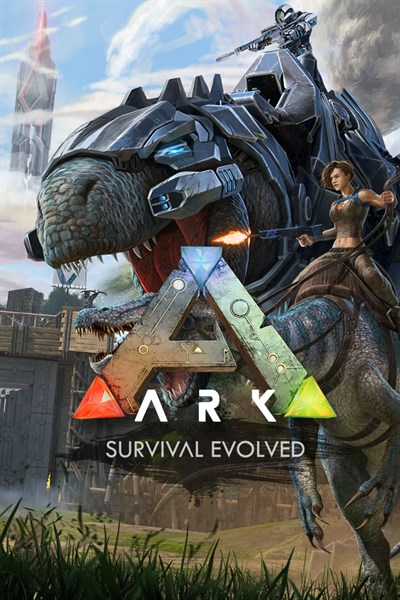
Back when Ark: Survival Evolved was first revealed to the world in 2015, we couldn’t have predicted the grand adventure that lay in wait. Now here we are five years later, and Ark continues to grow into far more than we had ever imagined. It is thanks to the Ark community and their dino-sized appetites for mythical worlds packed with primeval creatures, that the fun never ends.
Looking back on Ark’s journey over the last 5 years, we recall our own first memories playing the early game: waking up stranded on the shores of a mysterious island, with dangers lurking out in the jungle, learning how to build our first thatch home, craft our first basic weapons, surviving that first rough night, and the momentous occasion of taming our first dinosaur. What an experience it was! Fast-forward to the present where we’ve conquered the elements, constructed vast TEK fortresses, bred an army of powerful pedigreed creatures, and staked our claim as Ultimate Survivors across far-out worlds!
Today, that journey continues: in celebration of Ark’s 5th anniversary, we are excited to announce the introduction of a new real-world creature to the game, Tropeognathus!
Of course, we couldn’t celebrate Ark’s anniversary without an in-game event to accompany it! Bring out your party hats, because from June 11 to June 25, the Ark will be celebrating in grand style. Throw a surprise party for your tribe-mates with the new pop-out-surprise birthday cake structure, and cuddle-up with 5 cute new chibi pets!
Now that you know what’s being added today, let’s talk a bit about what’s next. We’ll be continuing our trend of game updates, with fresh content, free DLC, polish, addressing player feedback, and fixing issues to continue to make Ark the best it can be. Later this year, the new, free community-created “Crystal Isles” map will officially be released with a 150 sq km map with a wide variety of awe-inspiring biomes teeming with life, providing fresh opportunities for exploration, memorable challenges, and breathtaking discoveries.
And on a final note, we’d like to thank the community once more, as we truly appreciate all the passion and support you’ve shown the game. While we couldn’t have foreseen quite how the last 5 years would play out, from primitive dwellings to hyperspace whales, our vision for the Ark franchise is as strong as ever. So stick with us on this rollercoaster ride into the future, as we look forward with you to tremendously exciting years ahead for Ark, where the very definition of survival continues to evolve.
ARK: Survival Evolved
Studio Wildcard
☆☆☆☆☆1940
★★★★★
$49.99$9.99
Xbox One X Enhanced
Xbox Game Pass
Stranded on the shores of a mysterious island, you must learn to survive. Use your cunning to kill or tame the primeval creatures roaming the land, and encounter other players to survive, dominate… and escape! TAME, TRAIN, BREED & RIDE DINOSAURS, IN A LIVING ECOSYSTEM Over 50 creatures can be tamed using a challenging subdue-&-protect process. Weaken a feral creature to knock it out, and then nursing it to health. Once tamed, you can issue commands to your Pet, which it may follow depending on how well you’ve tamed and trained it. Pets continue to level-up and consume food, and carry Inventory and Equipment. Fly a Pteranodon over the mountains, race through the jungle with a pack of Raptors, or chase down prey on a T-Rex! Experience a dynamic ecosystem with its own predator & prey hierarchies. Breed Pets through successive generations to generate the best traits. Or put more simply, breed & raise Dino Babies! FOOD, WATER, TEMPERATURE AND WEATHER Eat and drink to survive, with different foods having different nutritional values (including human meat!). All actions drain food and water, and long-distance travel is draining. Inventory weight slows you down, and the day/night cycle and weather alter the environment. Craft clothing, build shelter, and use fire to protect yourself against damage & the elements. HARVEST, CRAFT, AND PAINT ITEMS Harvest trees, ore, and more to become a master crafter. Use your hands, a Smithy, or a Fabricator to craft increasingly complex and powerful gear. Build a massive base using modular pieces–ranging from Thatch, to Wood, to Stone, to Metal. Customize your base by painting it and placing signs that you can actually draw on. Weapons, clothing, & armor gear can also be painted to express your own visual style. SUMMON THE ULTIMATE LIFE FORMS Bring rare items to special Summon locations to awaken the ARK’s mythical creatures, who arrive ready for battle. These monstrosities provide an end-game goal for the most experienced Tribes and their Pets, and yield valuable items if they are defeated. RPG STATISTICS Level-Up your survivor by gaining experience through in-game actions to learn new crafting Engrams, or find higher level item Blueprints in the most dangerous parts of the ARK. Customize the look of your character with a complex character creation system. HARDCORE MECHANICS Items have durability and wear out with use if not repaired. When you leave the game, your character remains “sleeping” in the persistent world. Your inventory also exists in the persistent world, vulnerable to theft. Death means permanent loss, and you can even enslave other players for your own purposes. LARGE WORLD PERSISTENCE On the 70+ player servers, your character, everything you built, and your pets stay in-game even when you leave. Special themed events will occur in the world with corresponding limited-run items!
Insomniac Games is looking for a leader on our lighting team! The Lighting Lead is responsible for maintaining quality and artistic consistency by establishing high visual standards and cohesive project style as defined by the Art Director. This lead artist sets an example for the team via the creation of lighting assets e.g. setups/scenarios, a mastery of technology and tools pipeline, and departmental production dependencies. They should have an understanding of memory and frame budgets, production schedule, and project goals. They’ll need to consider art, animation, and design concerns, understand PBR lighting basics and material authoring, and sets best practices for bug fixing. The Lighting Lead also helps implement new production methods to improve performance and efficiency of team. If you’re interested in this role, please continue reading.
Essential Duties and Responsibilities include the following:
Develops, engages, and facilitates the success of the lighting team
Advances and improves lighting by reviewing current work with a critical eye
Troubleshoots large scale scene files and rendering issues
Troubleshoots and modifies materials when necessary for PBR compliance
Helps other departments with atmospherics and lighting setups for their environment or test level needs
Installs lighting for characters/weapons/objects and special setups for marketing when necessary
Engages with lighting artists to ensure team cohesion and develops both long- and short-term goals
Provides direction to lighting artists for aesthetic and technical considerations
Works closely with principal artists to ensure quality consistency and advanced lighting
Works closely with Art Director to keep quality and style consistent across all lighting scenarios
Works closely with the Tool and Engine team to develop new or improve upon old technologies to improve visual effect quality
Works with Project Management to maintain a clear and consistent schedule
Participates in the planning of lighting needs for the project
Works with other departments to ensure that assets are delivered in a timely manner
Supervises bug distribution and verifies critical bug fixes
Other duties may be assigned
Supervisory Responsibilities: Supervises employees in lighting discipline and is responsible for carrying out duties in accordance with the studio’s policies and applicable laws. Responsibilities include but are not limited to interviewing, hiring, and training employees; planning, assigning, and directing work; appraising performance; rewarding and disciplining employees; addressing complaints and resolving problems.
Education and/or Experience:
Master’s degree (M. A.) or equivalent; ten or more years related experience and/or training; or equivalent combination of education and experience.
Superior understanding of node-based shaders and how they relate to lighting.
Superior understanding of scripting lighting interactions.
Superior understanding of Maya and Photoshop.
Superior knowledge of modern lighting techniques.
Understands source control with Perforce or the equivalent.
Other Skills: Superior understanding of lighting aesthetic, how lighting affects gameplay and guides the player, of real-time lighting and frame/ memory optimization, how lighting affects physically based materials.
If the Lead Lighting Artist role is what you’ve been looking for in your career search please submit your application using the link provided.
Whether you’re just starting out, looking for something new, or just seeing what’s out there, the Gamasutra Job Board is the place where game developers move ahead in their careers.
Gamasutra’s Job Board is the most diverse, most active, and most established board of its kind in the video game industry, serving companies of all sizes, from indie to triple-A.
Awesome Summer days await you with the IndieGala Scratchy Summer Sale. Get huge discounts on your favorite games + a Scratch Card with a secret Steam game in it! [www.indiegala.com] [www.indiegala.com] [www.indiegala.com]
The 191st GalaQuiz will be LIVE soon, win up to $50 in GalaCredit!
[www.indiegala.com] The GalaQuiz will take place in less than 15 minutes from this announcement Today's GalaQuiz[www.indiegala.com] hints are up. The theme will be Rhino.
Posted by: xSicKxBot - 06-25-2020, 02:36 PM - Forum: Windows
- No Replies
Microsoft Defender ATP for Android public preview now available
Just a year ago, we shared our first steps on a journey to enable our customers to protect endpoints running a variety of platforms with our announcement of Microsoft Defender ATP for Mac. Knowing that each of our customers have unique environments and unique needs and are looking for more unification in their security solutions, we communicated our commitment to build security solutions from Microsoft, not just for Microsoft. Since then, we’ve announced capabilities for Linux servers, and at RSA, and we offered you a sneak peek into our mobile threat defense investments.
Today, I’m proud to announce the public preview of Microsoft Defender ATP for Android.
Protecting mobile devices from evolving threats, phishing attacks, unwanted apps
As more business is getting done on mobile devices, the lines blur between work and personal life. The threats here are unique. For example, one of the biggest and fastest growing threats on mobile is phishing attacks, majority of which happen outside of email, such as via phishing sites, messaging apps, games, and other applications, and are tricky to spot on smaller form factors. Other common mobile threats include malicious applications that users are lured into downloading, as well as increased risk introduced by rooted devices that may allow unnecessary escalated privileges and the installation of unauthorized applications.
In this rapidly evolving world of mobile threats, Microsoft is taking a holistic approach to tackling these challenges and to securing enterprises and their data with our new mobile threat defense capabilities. We’re leveraging our unique visibility into the threat landscape and the vast signal, intelligence, and security expertise we have from across domains, such as our expertise in phishing and email, our endpoint threat research on malware and attacker techniques, and our focus on identity and zero trust to bring protection capabilities to mobile. Our integrated approach to security enables us to provide more complete coverage. Leveraging these capabilities, Microsoft Defender ATP for Android will help to protect our customers and their users by delivering:
Protection from phishing and access to risky domains and URLs through web protection capabilities that will block unsafe sites accessed through SMS/text, WhatsApp, email, browsers, and other apps. We’re using the same Microsoft Defender SmartScreen services that are on Windows to quickly detect malicious sites which means that a decision to block a suspicious site will apply across all devices in the enterprise.
Proactive scanning of malicious applications, files, and potentially unwanted applications (PUA) that users may download to their mobile devices. Our capabilities and investments in cloud-powered protection and intelligence on application reputation allow us to quickly detect sophisticated malware and apps that that may display undesirable behavior.
Adding layers of protection to help prevent and limit the impact of breaches in an organization. By leveraging tight integration with Microsoft Endpoint Manager and Conditional Access, mobile devices that have been compromised with malicious apps or malware are considered high risk and are blocked from accessing corporate resources.
A unified security experience through Microsoft Defender Security Center where defenders can see alerts and easily get the additional context they need to quickly assess and respond to threats across Windows, Mac, Linux, and now mobile devices.
In the coming months we will be releasing additional capabilities on Android and you will hear more from us about our investments in mobile threat defense for iOS devices as well.
I’m also thrilled to share that our initial release of Microsoft Defender ATP for Linux is now generally available. Customers have asked us to broaden our selection of platforms natively supported by Microsoft Defender ATP, and today we’re excited to officially start our journey with Linux. This release marks an important moment for all Microsoft Defender ATP customers when Microsoft Defender ATP becomes a truly unified solution to secure the full spectrum of desktop and server platforms that are common across enterprise environments: Windows, macOS, and Linux.
We are committed to helping organizations secure their unique and heterogenous environments and we have so much more in store for you this year. We’re excited for you to join us in our journey as we continue to deliver the industry’s best in integrated threat protection solutions.
For more information on Microsoft Security Solutions, visit our website. Bookmark the Security blog to keep up with our expert coverage on security matters. Also, follow us at @MSFTSecurity for the latest news and updates on cybersecurity.






 in GalaCredit!