OpTic Gaming Makes Dramatic Run to Take Home Another Title
With a massive player pool, thousands of rabid cheering fans and some of the best Gears Esports gameplay ever, the Gears Pro Circuit Mexico City Open went down as a highlight for both players and fans alike.
OpTic Gaming proved their championship mettle with a dramatic run that ended with taking down Denial Esports in a dominating fashion to claim the $200,000 prize pool. This is the second time OpTic Gaming has come back from the “losers” bracket to steal the victory – once again showing why they are easily the most dominant force in Gears Esports history.
While OpTic Gaming took home the trophy, the story of the weekend was the newly formed Ghost Gaming roster. This top Latin American squad features some of the best players from the region led by Daniel “Identivez” Santillana. Their surprise third place showing was fueled by aggressive gameplay and the unbridled enthusiasm and constant chanting of the hometown crowd.
Season 2 of the Gears Pro Circuit will conclude this spring – stay tuned for the announcement of the season finale location and date. For more information about Gears Esports, please visit www.gears.gg and follow us on Twitter @EsportsGears.
Posted by: xSicKxBot - 02-12-2019, 05:09 AM - Forum: Lounge
- No Replies
Captain Marvel Celebrates The 1990s With Retro Website
Deadpool may be known for its meta-humor but Captain Marvel apparently knows how to poke fun at itself too. A promotional site for the upcoming Marvel cinematic universe film authentically models itself after the terrible websites that populated the earliest days of the World Wide Web.
The Captain Marvel site has it all: star wallpaper, animated gifs, rainbow Comic Sans, barely legible red-on-green font, and a non-functional guestbook. The gag will look familiar to those who saw the Internet stumble awkwardly into its current sleek and polished form. To those youngsters who don't remember this era: yes, it really was like this.
For all of its silliness, the site does function too. It hosts the trailer, a brief explanation of Captain Marvel and the Kree, and a link to buy tickets. A pop-up image even lets you get in on the fun of punching an old lady.
The 1990s setting and aesthetic serves a functional purpose in the MCU. When Thanos accomplishes his genocidal goal in Avengers: Infinity War, Nick Fury appeared to hit an emergency beacon to call in Captain Marvel--a sort of emergency last resort to face an unprecedented threat. That raises the obvious question of why she hasn't been around to handle the dozen or so other times life on Earth has been threatened throughout the MCU, and the film will probably answer what she's been up to all this time. That will set the stage for Avengers: Endgame later in the spring.
The studio also recently released a pair of spiffy Captain Marvel posters, just as promotional material showed off the new costumes for the Avengers. The two movies will be back-to-back blockbusters, with Captain Marvel coming on March 8, followed by Avengers: Endgame on April 26.
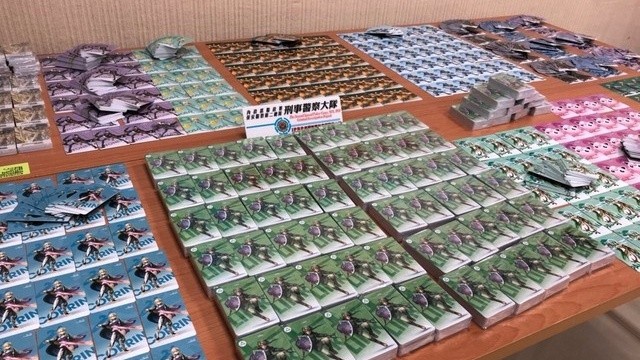
We all know that crime doesn’t pay – however, reports that a Taiwanese man has been arrested after selling fake amiibo cards suggest that the old maxim is a big fib. This unscrupulous individual had a variety of decidedly dodgy amiibo cards with full NFC functionality on sale for the tidy sum of sixteen New Taiwan dollars each (around 52 US cents). Check out the tweet from Chinese Nintendo below:
The report suggests he purchased the lot in bulk from a Chinese website. We have to say, we’ve seen far worse in terms of production values with counterfeit gear and it’s easy to see how less-knowledgeable gamers could confuse these for official products.
The man is reportedly in custody and these cards are now off the streets, but with nefarious duplication of NFC cards being so easy, it’s perhaps this more than anything else which may be the fly in the ointment of our imagined Pokémon trading card/amiibo crossover.
Have you seen any of these shady cards in the wild? Does this scupper the chances of any meaningful amiibo implementation in the future? Let us know your thoughts below.
What if a wargame transformed completely but kept the same outer shell? If it were still about squad management, line-of-sight fire, and hand-crafted scenarios but with an added dash of chaos? Hemmann Luttmann’s Invaders from Dimension X is this very game. Zany, helter-skelter, yet still relatively strategic within its own wide, permissive ruleset, I stumbled upon the game as a lark and am quite glad I did. It’s lovingly made and great fun, but the bare-bones interface and rare bugs make it difficult to recommend. Still a nice game, a bizarre yet successful twist on wargame conventions.
Marines (from the Unified Space Alliance Defense Force) square off against a strange and sudden incursion of the Kay’otz (Obligatory get it, chaos much? interjection) and seek to eliminate the hostiles and preserve their dimension. The enemies are strong but erratic, with unusual weapons, tactics and objectives. In-game this means some delightful asymmetry. Humans use plasma weapons which kill the Kay’otz but are restricted by line-of-sight and friendly fire. (You can’t fire through your own units, mountains or lava). The Kay’otz, by way of contrast, use lasers and can fire through anything and everything but will only incapacitate, never kill, their prey. (Obligatory ‘set to stun’ interjection).
The bigger chunk of variability comes from the Activation Cards, which have big bursts of activity on the enemy turn, but with a lot of conditions and uncertainty attached. Oh, and the pool of enemy Activation Cards are always the same, but the order won’t be. Especially fearsome are the AOE stun card, which randomly deploys anywhere on the map and paralyzes any nearby troops, and the frenzy card, which has the Kay’otz attack over and over until the dice roll fizzles. The chaos is iterated and compounded: events could happen anytime and once triggered can range from harmless or inconvenient, to serious and routing. While the scenarios have well-defined victory conditions for the humans, the Kay’otz instead have a grab-bag of objectives, with one triggering at the end of the game to see whether they win.
Somewhat confusingly, there are many different qualities and kinds of victories. The humans can win instantly by fulfilling the specific scenario conditions at any point, or, more commonly, the clock will run out and the game ends once the last of the Activation Cards is used. If the Kay’otz win condition is met, they win at the point; otherwise, the human evaluate whether they’ve scored an overwhelming, modest, or paltry victory based on criteria peculiar to the scenario at hand.
Everything in combat is decided by dice rolls, which in of itself is not unusual. Units have three stats, one each for movement, power and armor. The power determines the number of dice rolled, and the armor stat of the opponent qualifies which rolls count as hits. Killing the Kay’otz is rather difficult, as it should be. If the enemy scores hits, human units are either stunned or paralyzed. They don’t recover from this stasis automatically, however, and must instead use a ‘Rally’ action to regain full function. The ‘Rally’ action is itself a die roll, meaning that a laughably bad streak can leave someone effectively perma-stunned, which would be hilarious if it weren’t such a setback.
Invaders from Dimensions X is full of long-odds edge cases like this, which is more than half the fun. Everything about the Kay’otz, and by extension the game state itself, is both strong and fundamentally unpredictable. The challenge is always to ride the wave, to manoeuvre through the tumult as best you can with the weaker, yet comparably more dependable tools the humans have at their disposal. For example, rallying might whiff, but this nastiness can be mitigated by smart positioning next to HQ or Logistics units, boosting the roll. Even the enemy turns can be micromanaged with a little luck, for the Scout units have a Recon ability which gives a 50-50 chance to select one of two possible Activation Cards.
So it’s messy and potentially ‘unfair’ but never unwinnable. The unit types are just specialized enough to make for cohesive squads and a solid pay-out for good strategy and positioning. I’m probably the furthest thing from the intended audience and enjoyed it thoroughly. Caveat emptor, though. There are a few visual glitches, one of which appears to hide the win condition tab which is more-or-less essential when playing a scenario for the first time. Another fires shots from the wrong spot. These are irksome but not deal-breakers. The game’s reference materials are pretty good for in-game refreshers, but the app itself lacks a tutorial or in-game rulebook, even, choosing to skirt around this failing by redirecting inquiring minds through a hyperlink to the full rulebook. Standard answers for how to make a maximally functional game on a shoestring budget. The result is serviceable and even spirited at times but also kinda ugly.
The scenarios aren’t too long or taxing, presenting a stiff challenge in a reasonable timeframe; the player units and combat ruleset are standard, but the enemy is truly a leap into the great unknown. Dimension X is an unusual and rather fun novelty which mashes-up unlikely inspirations into something worthwhile The limited play modes, drily functional interface and various bugs mitigate this praise, so in the end give it a chance if you’re seriously curious or habituated to this type of experience.
The Division 2 Has A Big Surprise Ready For Its Endgame
Since its debut at E3 2018, the developers behind the The Division 2 have focused on the sequel's endgame. It's a recurring topic for many online looter-shooters such as Destiny and Anthem, as it's often seen as the make-or-break point for a game's long term success. That's something the developers of the original Division know all too well. Players who finished its vanilla campaign inevitably hit a slump, leading to a repetitive cycle. Ubisoft eventually overhauled much of the game's mechanics and added in new encounters--leading to an impressive post-launch life for The Division. However, many players still burned out by the original release missed out on the revival once other games came around.
With the sequel, Ubisoft is taking steps to ensure that it won't fall into the same traps as the original, while also giving the campaign a greater sense of purpose. We recently spent some time getting an early look at the game's upcoming private beta--playable February 7-10--which offers a tease for what's to come in the early hours of the campaign and the late-game content that follows. After you've established yourself in The Division 2's turbulent setting of post-outbreak Washington D.C. during the campaign, things take a more chaotic turn after the conclusion, forcing you to defend what you've built up in the expanded endgame.
During this event, the developers spent some time reflecting on what they learned from the original game and detailed their approach in the sequel.
"One of the biggest things for The Division 2 is the importance of the endgame and our focus on it," said creative director Julian Gerighty. "We launched The Division 1 with very little in terms of endgame content. It was a great campaign, you reached level 30, the endgame started, but it was lacking in activities. We were trying to operate this live game, yet we saw things that weren't working out for the long term. That's why a very tough decision was made before patch 1.4, which was to stop the development on all of the planned features and the DLCs to be able to focus on the technological debt and on the improvements to get the game to where we wanted it to be. That all fed into how we've set up The Division 2 production-wise, creatively as well."
The Division 1 is a vastly different game now than it was at launch, and all for the better. That second wind is something that the developers wanted to carry over into the sequel, which they did in a few important ways. For starters, The Division 2 will incorporate much of the existing game's content from the post-launch updates, which includes update 1.2's bounties, 1.4's world tiers, 1.6's exotic weapons, and 1.8's PvP arena. These features will also be available for all players at launch, and future DLCs for the first year will be free. This is not only to stay consistent with the current game's flow and meta but also to ensure that the community would stay engaged.
With the new game, there also comes a fresh start for all players. Whereas the original was set in Manhattan, Division 2 brings a new set of agents to the nation's capital, which introduces new systems and world events that occur in the field--presenting more moments and opportunities to leave a large footprint. At the beginning of the demo, our first mission was to retake the White House from one of the opposing factions, which becomes your base of operations soon after.
Over the course of the campaign, the White House increases in influence and followers the more you expand the Agency's reach throughout Washington D.C. In order to reassert control over the city, you'll set up new settlements and interact with key characters who will aid in your rise to power. Some NPCs are recruitable and can even be brought to the White House to upgrade the various areas--leading to new items and perks to acquire.
Exploring ruined D.C. offered plenty of opportunities to meet new characters and come across control points that are in constant dispute. Though D.C. doesn't have nearly as strong of an atmosphere and eerie vibe as the original, it does fill that void by presenting more reasons to explore and engage in the various side-missions. Much like in the original, there are ECHOs that allow you to play back moments from the lives of supporting characters. While the original's take felt one-sided since the characters were dead long before you arrived, several of the persons of interest in The Division 2 are alive and reasonably well, and the ECHOs offer more details about their connections to others throughout D.C.
Things, however, take a particularly surprising turn in the endgame. A new threat in the form of Black Tusk emerges, leading into the broader endgame that shakes things up. Similar to the Hunters from The Division's 1.8 update, who only appeared in the Survival mode and Underground DLC, Black Tusk is a roaming faction that serves as the antithesis of the Division agency. Possessing an arsenal of high-tech weapons and gadgets that match your own, this new faction invades D.C. and actively tries to retake areas of the city--and even the Dark Zones. In the two endgame missions we played, one in the Air and Space Museum and along with the Federal Emergency Bunker, the Black Tusk proved to be a powerful force to be reckoned with. Along with using robots that look like they come right out of the Boston Dynamics lab--except they actually have guns this time--the endgame faction also uses mini-drones, and have soldiers wearing heavy armor that require strategic shots to open up weak points.
During the endgame, you'll unlock new specializations that further enhance your character, which also open up power weapons like the grenade launcher, heavy sniper rifle, and the crossbow. In order to find better loot and gear, you'll have to tackle missions that are several notches more challenging than the campaign. But as is typically the case for endgame content, you'll also be repeating some older missions. The Division 2 does, however, spice things up by introducing a new tier called Invaded missions. During the endgame, all previous missions from the campaign will have a new difficulty that replaces the existing enemies with the Black Tusk. To cut down on repetition, the Invaded missions will also randomize each encounter with Black Tusk in the level, leading to different fights with enemy squads on each playthrough.
This new faction also changes the dynamic of the Dark Zones in the endgame, which actively occupies one of the areas. As we detailed in another preview, the Dark Zone's PvPvE (player-versus-player-versus-environment) dynamic has been upgraded for the sequel. In addition to three separate zones, all of which have story missions that allow you to get your feet wet, the endgame will introduce an Occupied Dark Zone. With one Dark Zone under occupation by the Black Tusk faction, which cycles to a different location every week, the occupied zones also remove certain handicaps from the base version of the PvPvE mode, particularly level-balancing and friendly fire.
The skirmishes with Black Tusk during the two missions we played were intense and required some solid communication from our team to make it through. However, the invaded missions also felt a bit exhausting as well, leading to some moments where we were trapped in a room for up to 10 minutes dropping squads of bullet-spongy enemies as they funneled in. Though this is often the case for endgame content, it definitely hurt the pacing of some otherwise thrilling missions. Granted, we were just dropped into these missions for the purpose of this demo, which came after the rather brisk early game missions we played at the beginning. They may flow better once you've invested the hours to work your way to this content.
However, this also reminded me of some of the larger issues I've felt from The Division 2, in that it comes off a bit too similar to the original. It strongly emulates much of what worked in its predecessor, almost to a fault. Though some of the new innovations make for a more engaging and interesting setting to explore, the general looter-shooter loop itself can be exhausting, and lead to those familiar moments of occasional tedium that bogged down the first game. Having said that, I do feel the new approach to the endgame, though somewhat overwhelming, does offer a more compelling hook that felt absent from the original. By tasking you to defend the place you've been actively building up and investing yourself in throughout the campaign--which can be taken by the enemy faction. It creates a greater sense of urgency in the late-game, which was lacking from the original.
Ubisoft seems to be on the right path for The Division 2. Though it's obviously building off of what came before, the new features do seem to be a natural step up that plays to the renewed strength the series saw with its revamped gameplay from the original. Ubisoft's approach with this private beta was a neat way to kick the tires from both ends, and it'll be interesting to see how players--even those that missed out on the revival of the original game--will take to it. The Division 2 is series' second chance, and hopefully it'll be able to make good on it's renewed vigor.
For more info on The Division 2, including how the new Dark Zones work and how to get into the private beta, you can check out our features and articles on here on GameSpot.
Activision Is Offering Full Refunds To Guitar Hero Live Buyers In The US
Activision has opened a refund program for US customers who purchased Guitar Hero Live on or after 1st December 2017 following the closure of the game’s GHTV service.
Originally launching back in 2015, Guitar Hero Live featured two main games modes: an offline mode which had you playing in front of a crowd of real, pre-recorded actors, and an online mode where you could play along to official music videos being streamed to you on various, in-game, TV-like channels. For hardcore fans of the peripheral-heavy series, it was a true return to form for the most part, but disappointing sales led to its early demise.
In December 2018, Activision revealed that it would be shutting down the online GHTV mode, essentially removing a huge part (and arguably the best part) of the game. To avoid any upset, and potentially any legal action from angry consumers, the publisher is now offering refunds to all US buyers who bought the game within a year of its discontinuation.
Activision is offering a voluntary refund program for customers who bought the Guitar Hero Live gaming system on or after December 1, 2017, in the United States. Customers may qualify for a refund if:
1) They purchased Guitar Hero Live in the United States during the period starting December 1, 2017 and ending on January 1, 2019; 2) They submit a completed Claim Form by the deadline of May 1, 2019; and 3) Their purchase of Guitar Hero Live since December 2017 can be confirmed by Activision
If you qualify for this refund and wish to apply, you can do so right here. Even if you don’t have proof of purchase via a receipt or credit card statement, Activision will still attempt to verify eligibility. Whether this refund process will also arrive in other regions is unknown.
Did you get Guitar Hero Live on Wii U? Were you sad to see GHTV go? Tell us below.
Here’s What Peter Molyneux’s Next Game, Legacy, Looks Like
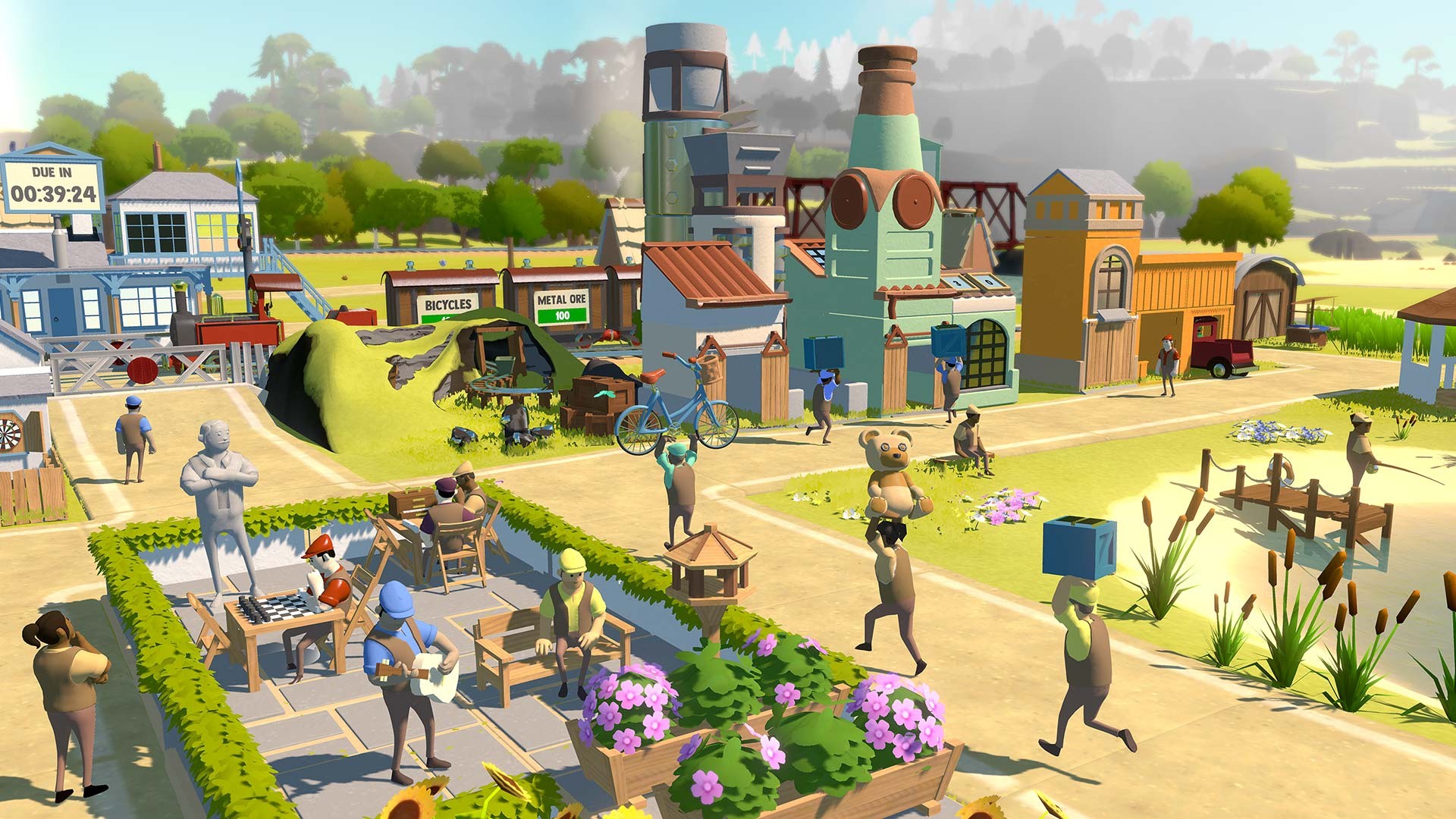
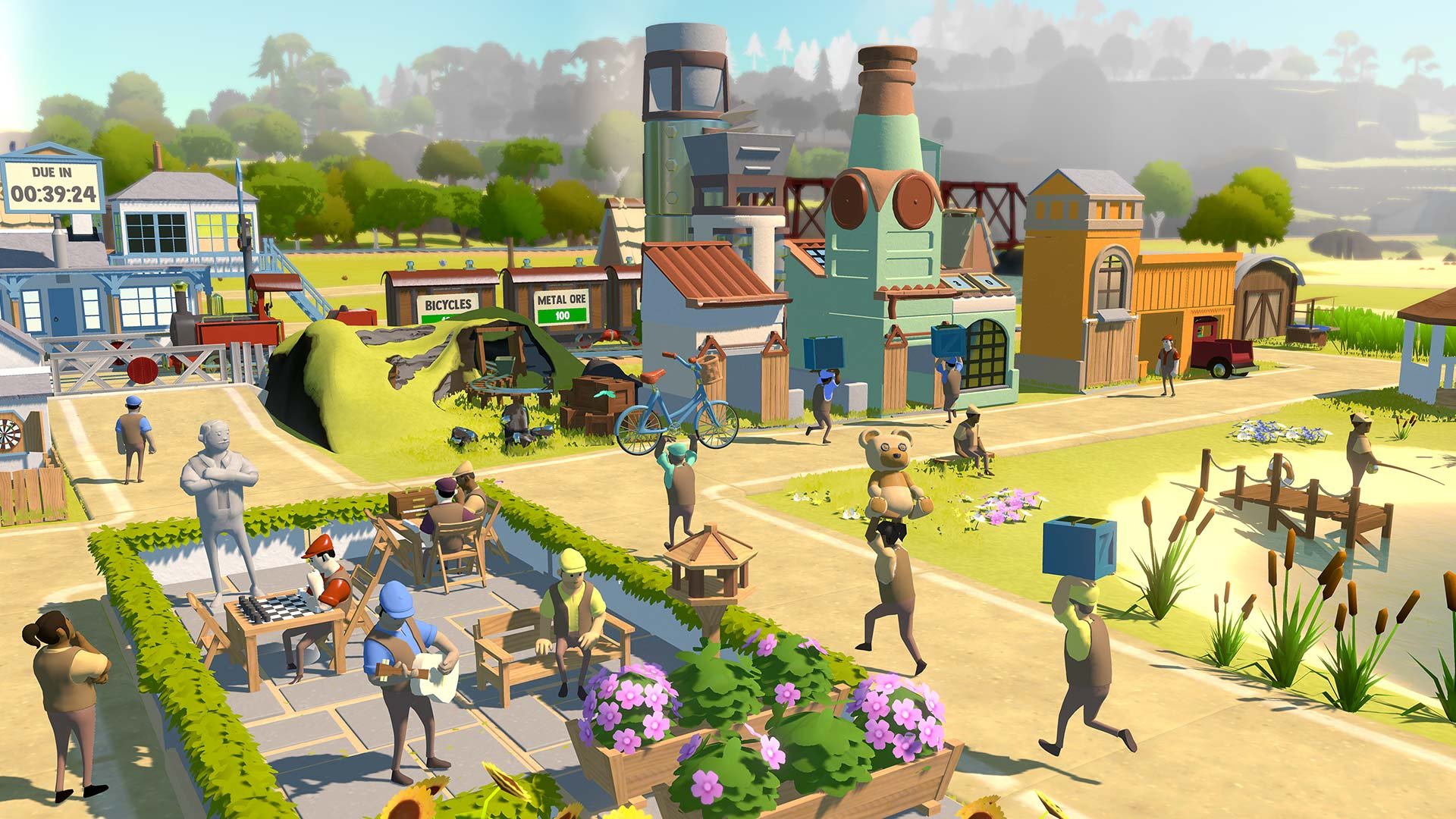
A few days ago, we published an interview with Peter Molyneux regarding his next game, Legacy, and his desire to bring it to Switch, a console he loves to bits. Now, we’re able to bring you the first screenshots of the game, which Molyneux himself says is an intentional throwback to his very first video game, The Entrepreneur, which famously sold just two copies (one of which was apparently purchased by his mother).
In Legacy, you run a business and can build almost anything. Inspired by Molyneux’s father, who would spend hours in his workshop creating all kinds of things, the game places you in the role of an inventor and tinkerer who starts off crafting unique products in their garage and selling them to the public; make enough best-selling items and you will out-grow your humble origins and turn your business into a global megacorporation, an evolution which comes with added pressures – such building factories and hiring a workforce. You’ll then face issues such as looking after your growing workforce and balancing profitability against moral and ethical concerns.
While platforms haven’t been formally announced, it is believed that Legacy will be coming to PC and smart devices initially. Molyneux’s affinity for Switch means Nintendo players could also get a chance to play it in the future.
Red Bull Gaming has run an in-depth look at Legacy as part of its excellent Levels series of short documentaries, six films which each look at a different software house and its approach to making games. We’ve Included a link below but be warned, it does contain some bad language. Let us know what you think of the game so far, and if you’d like to sample it on Switch.
In Gathering Storm, the second expansion to Civilization VI, the world around you is more alive than ever before. Chart a path to victory for your people by developing new advanced technologies and engineering projects and negotiating with the global community in the World Congress on critical issues. The choices you make in the game will influence the world ecosystem and could impact the future of the entire planet. Natural disasters like floods, storms, and volcanoes can pillage or destroy your Improvements and Districts ? but they may also refresh and enrich the lands after they pass. In addition to these new systems, Civilization VI: Gathering Storm introduces eight new civilizations and nine new leaders. Seven new world wonders can be constructed, as well as a variety of new units, districts, buildings, and improvements.
In 2005, a legend was born on the PlayStation 2 - the legend of Kazuma Kiryu, the Dragon of Dojima, in his video game debut with Yakuza. Now, 11 years after that release, a new generation of players will be able to experience the incomparable action and drama of the Yakuza series with the rebuilt-from-scratch HD remake exclusive to PlayStation 4, Yakuza Kiwami.
"Kiwami" means Extreme, and the game takes that concept to heart. It's not an HD-remaster or up-rezzing of PS2-era textures. Yakuza Kiwami was recreated from the ground up exclusively for the PlayStation 4. That means every visual element was optimized for the 1080p/60fps environment, every line of the script was re-recorded by series actors and for the first time in the West, gamers will be able to hear the original Japanese language track.
Then there's the game itself! The PS2-era brawling gameplay is refined for the current gen with Kazuma Kiryu fighting his way through the ranks of Yakuza, only to wind up protecting a young girl whose aunt (who also happens to be Kiryu's childhood sweetheart) is missing... along with 10 billion yen.
Unleash Your Inner Monster - Transform at will from a princess into a wolf to guide the blind prince towards a cure. Weave through the dangerous forest, but be careful... A blind prince has no place in an all-seeing forest. Brute Strength Meets Sharp Wit - Various obstacles will require the wolf's strength, and others will require the princess's wit. With so many traps and perilous hurdles that await, can the two make it safely to their final destination?