

Twins Miles and Malik George are almost always in sync.
They graduated at the top of their high school class as co-valedictorians.
At MIT, these bioengineering students embraced and expanded upon their love of science. They were also in multiple diverse groups on campus such as Nu Delta Fraternity, The Standard, and Laureates and Leaders.
This last program is dedicated to helping under-represented students get Ph.D.s or M.D./Ph.D.s and has a selective entry process. The two fondly remembered the program as instrumental in shaping their academic careers.
They worked with MIT Admissions as Admissions Ambassadors to increase the number of underrepresented students that apply to and attend the university. On campus and virtually, they worked in several biological engineering labs. They’re about to graduate and will be pursuing Ph.D.s in Biological Engineering at MIT.

They’re both passionate about bringing STEM (science, technology, engineering and math) to under-served communities through hundreds of funny and informative lessons posted to TikTok and other social media. Their mix of memes, dances and trivia reach all kinds of audiences. They teach what they find exciting about science.
“The more curious you are about one subject, the more you learn about that subject, the more curious you become about everything else,” Miles says. “Curiosity is the reason why people keep innovating. And so as long as people are curious, people will keep learning.”
“Curiosity leads to solutions, you know?” Malik adds.
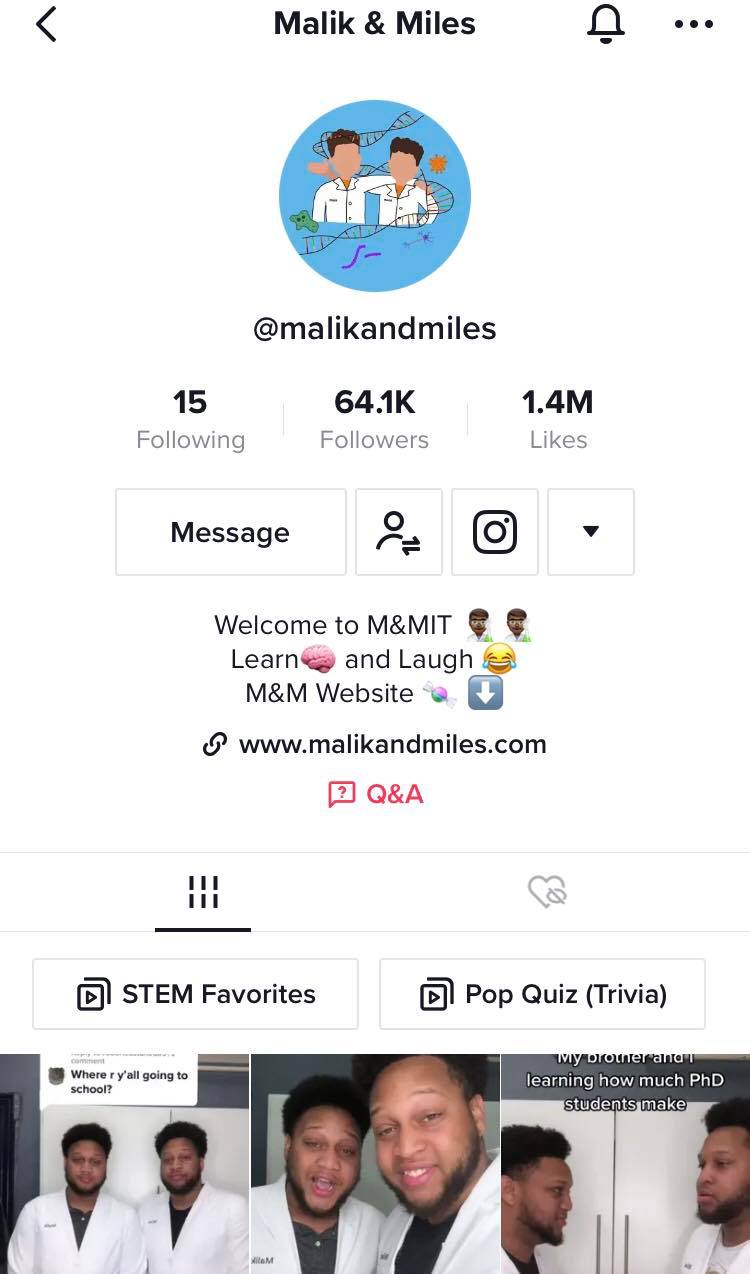
The brothers will host a private virtual education event for students May 17 in partnership with Microsoft Stores. This session will reach 10,000 students and will feature an inspirational fireside chat, STEM demonstration and interactive Q&A.
The twins strive to be role models for the next generation, to inspire them to follow their dreams.
“In high school we did a lot of science fairs. Being able to count on your hand how many people look like you in a room of over a hundred people, it’s pretty sad,” Malik says. “As we became involved in science ourselves, we wanted to make sure that people saw there are people that look like us in the field and that they can and should feel welcome to do so as well.”
They’re both PC gamers who enjoy comic book universes and socializing with their many friends.
They are part of a tight-knit family, helping their parents with gardening and jigsaw puzzles, watching movies together and doting on the senior Shih-tzu (who is the fifth member of their household).

But they are also individuals.
Malik is the “explainer.” As his brother shares, “He’s going make sure that if he’s telling you about something, you know everything that there is about the topic and he’s going make sure you understand it at the end of the day.”
“If I’m the explainer, then Miles is the convincer,” says Malik. “You know, he can summarize any topic – no matter how advanced – in a couple sentences to any age group and they’ll understand it.”
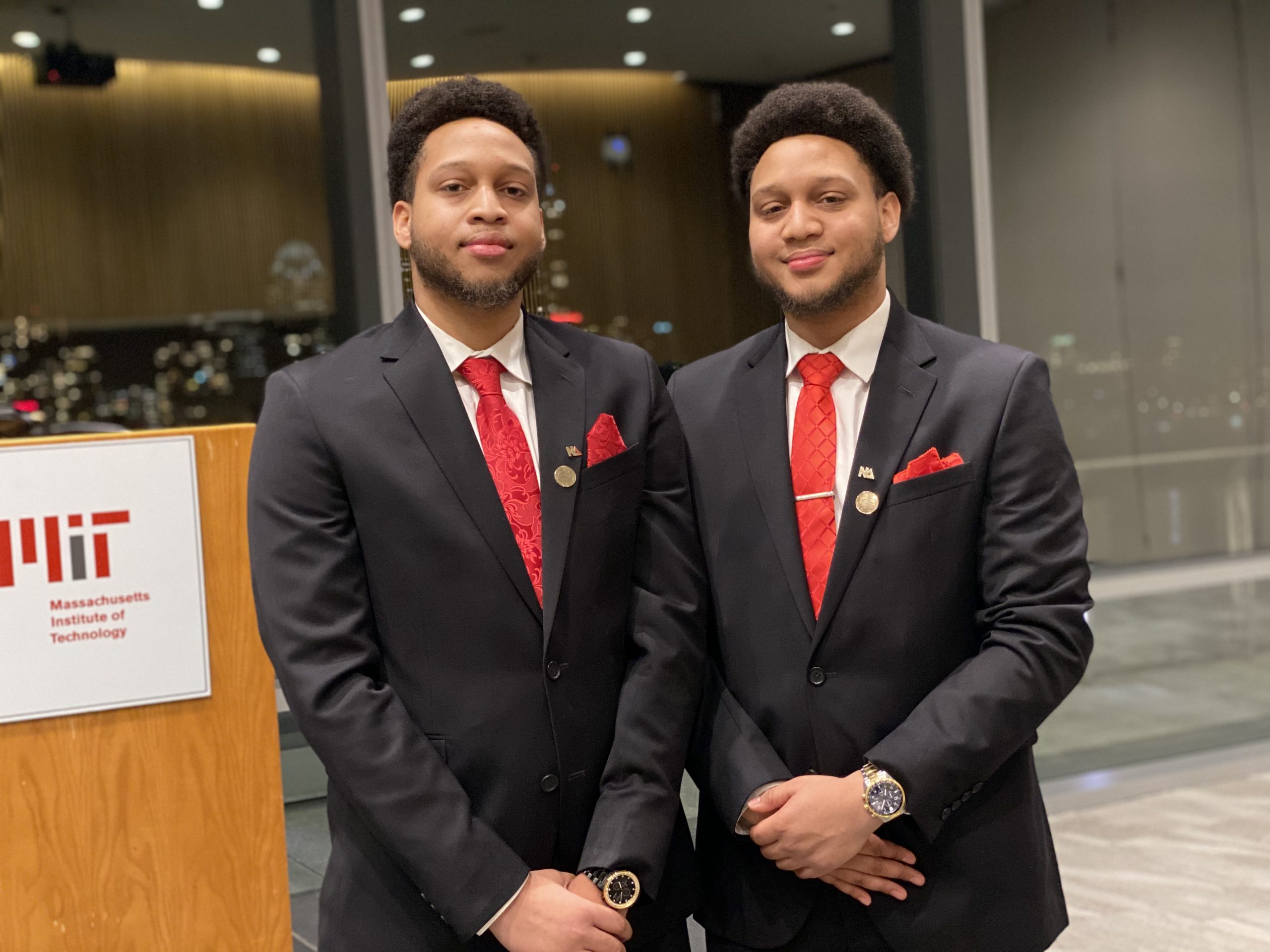
This works well when they’re doing presentations, which have reached more than 1,000 students remotely (ranging in age from late elementary school to high school seniors) since January 2021. They’ve been getting more interest about K-12 presentations and plan to continue those.
“I’ll do the intro. He does methods and results. I do the conclusion. He gives you the scientific know-how, how to learn. Then I bring it back at the end,” Miles says.
They also have different work styles – though both are also lifetime PC users. For as long as they can remember, they’ve always been on Windows, starting from their childhood.
“If you were to look at my desktop, you will see at least three applications open at once. If you look at Miles’ desktop, you’ll see one application open, but he’ll have three desktops that he’ll switch between,” Malik says.
Multiple desktops are one of Miles’ favorite Windows 11 features.
“I have one program that I’m focused on. When I’m done focusing on it, I’ll switch to another desktop and that’s what I’m working on then,” he says. “Each assignment gets its own desktop, and I will get to it when I get to it.”

They’ve discovered other Windows 11 features that make them even more efficient.
“As a student, I am constantly searching through emails, especially through keyword search,” Malik says. “I globally search by who sent it or a keyword and it will just show up right there. And I can read it or I can click it and reply from the same place. Windows 11 really takes away flipping back and forth between things. And then anything that you don’t have open, you can also just go through the Start menu.”
They also make great use of Snap Assist.
“I can have an essay snap to the right on Word. I can have some internet research article on the left,” Malik says. “And then if I need to check my email, it would just pop up in the center and I don’t have to cover what I was already working on.”
They like that they can tailor Windows 11 to what works best for each of them.
“It really feels like a personalized experience when I’m online. And it really visually is a much better experience than what I’m used to,” Miles says. “As a researcher, I’m used to a lot of diagrams, a lot of graphs. It really combines multitasking with this beautiful element of note taking and annotating directly on the screen.”
