Another step towards eliminating electronic waste and responding to the needs of our planet
Here at Microsoft, our unwavering commitment to sustainability continues with the opening of a new Circular Center in Singapore.
Microsoft’s Circular Centers enable us to reuse and repurpose decommissioned cloud computing hardware from our datacenters to find new life in schools, as resources for skills training programs, and much more. The goal of our Circular Center program is to reuse 90 per cent of our cloud computing hardware assets by 2025.
The launch of our first Circular Center in Asia located in Singapore is an important milestone towards that goal, while also creating local employment opportunities.
Intelligently executing a zero-waste solution
The Microsoft Cloud is powered by millions of servers in hundreds of datacenters around the world, and demand for cloud services is growing exponentially.
At our Centers, decommissioned servers and other types of hardware can be repurposed or dissembled by our technicians, and the components and equipment moved on to another phase of life.
Our Intelligent Disposition and Routing System (IDARS) uses AI and machine learning to establish and execute a zero-waste plan for every piece of our decommissioned hardware, at scale.
IDARS also works to optimize routes for these hardware assets and provide Circular Center operators with instructions on how to dispose of each one.
YouTube Video
Collaborating to find new repurposing opportunities
The Circular Centers are transforming the sustainability credentials of our datacenters, but Microsoft hasn’t done it alone. We work closely with partners to find new opportunities for our end-of-life parts and equipment.
That has seen repurposed servers being donated to schools or used for job training. Reclaimed memory cards have also been used by companies making electronic toys or computer games, to mention just a few examples.
While our new Singapore Center will produce ground-breaking environmental improvements, it will also create employment opportunities. At other Microsoft Centers around the globe, the processes used during repurposing have resulted in the creation of new jobs, including fresh job categories and many entry-level positions.
Contributing to positive climate action for Asia
In 2022, nations everywhere have been confronted with the need to accelerate their net zero ambitions. That includes Southeast Asia, where eight out of ten countries are already committed to net zero targets. But despite recent progress, a new study reveals that there is still a large emission gap of three gigatons to be closed by 2030 if the region is to meet its net zero goals.
The same study also found that Asia is well positioned to address these challenges and capture the opportunities that come from managing climate risk effectively. It estimates, for example, that annual green economic opportunities worth USD$1 trillion by 2030 exist in Southeast Asia alone.
Singapore, with its strong government and private sector commitments and agile policy environment, has already laid the foundations for creating an advanced recycling infrastructure that can help it take advantage of those opportunities.
The arrival of a Microsoft Circular Center in Singapore is in line with this approach. By re-using and repurposing components, our Center will help reduce waste and carbon emissions. In our pilot Circular Center in Amsterdam alone, Microsoft contributed to the goal of reducing carbon emissions by 145,000 tonnes CO2 equivalent.
Since achieving this outstanding result, Microsoft has established further centers in Dublin, Ireland, and Virginia in the US.
Along with the Singapore Center, plans are now underway to expand the program in Washington, Chicago, Sydney and to other sites.
We’re exceptionally proud of these facilities. But we also know this is only the beginning.
We have been operating in Singapore and Asia for over 30 years and are present in 23 markets in Asia today. Through this tenure, we have become a go-to partner for Asia’s businesses, governments, partners, communities, and individuals.
The Singapore Circular Center is a further testament to our commitment to Asia’s future. We will continue to collaborate and co-innovate with our partners the world over, and power towards our global goal of reaching net zero by 2050.
Achieving technological leaps forward requires more than scientific and engineering breakthroughs. A critical dependency is the cultivation of a skilled workforce that can unlock the potential of emerging technology. In the field of quantum computing, now is the perfect time for educators to get ahead of the curve and prepare their students to start their quantum journeys. Along with quantum technology being on a path to scale, platform and tool maturity and accessibility are converging to enable academic institutions to meet workforce demand.
Microsoft and Azure Quantum want to empower educators and students to do just this. In our efforts to innovate across every layer of the Azure Quantum stack, we are pleased to launch Azure Quantum for Educators: a one-stop resource for curriculum, samples, and tools to facilitate the skilling up of a quantum-ready workforce. It also includes case studies in using a practical, software-driven approach to teach quantum computing to undergraduate students and perspective on bringing hands-on use of quantum hardware to classrooms.
Azure Quantum for Educators features include:
Practical and programming-oriented quantum computing curriculum for educators: A free, classroom-tested and continuously improving curriculum appropriate for students with and without a physics background. Includes syllabus, lecture slides, programming assignments, an automatic homework grading tool, samples of final projects, and more.
Free access to hands-on quantum hardware: The Azure Quantum Credits Program provides free access for quantum hardware exploration supporting teaching, learning, and deploying quantum programs on a diverse set of quantum computers.
Python and Q# code samples: Run these samples against Azure Quantum’s diverse and growing hardware portfolio of trapped ion, superconducting, and neutral atom quantum processing units (QPUs), or against a variety of hardware simulators and resource estimators.
Case studies and white papers: Learn about ways to introduce quantum computing to a variety of academic levels and settings, including undergraduate students.
Azure Quantum office hours: We’re here to help! Drop in to request direct support for and provide input on quantum education initiatives.
Dr. Celia Merzbacher, Executive Director of the Quantum Economic Development Consortium (QED-C®) notes, “Initiatives like Azure Quantum for Educators help to build a robust talent pipeline of quantum-ready workers for the emerging quantum computing industry and the industries that will use the technology, from finance to pharma. Practical hands-on experience is highly sought-after by employers across the board.”
Join institutions, like the University of Washington, in leveraging Azure Quantum for Educators to enable new quantum computing capabilities in the classroom. Combining learning with doing in a recent course that included access to quantum hardware through Azure Quantum generated enthusiastic feedback from learners around:
Putting classroom concepts into immediate practice
“We quickly get to apply what we learned from the professors and guest lectures.”
“The Azure Quantum platform was useful and straightforward to use. Submitting jobs was also straightforward.”
Ease of use
“One of the best classes regarding quantum computing implementations.”
“We’ve enjoyed a wellspring of enthusiasm from teaching institutions globally about the Azure Quantum Educators resources,” says Kent Foster Microsoft University Relations Director. “Universities, colleges, business and vocational schools, and even high school educators are interested in integrating our materials and quantum computing hardware access into a broad range of classroom scenarios, ranging from for-credit classes and summer schools to multi-disciplinary student clubs and continuing education classes targeted at learners already in the workforce.”
Our commitment
With increasing government, private, and academic investment in quantum research, developing a skilled quantum workforce is critical to accelerating quantum computing breakthroughs in areas like chemistry, materials science, and finance. We are incredibly excited to partner with educators, learners, and researchers to close the talent gap and inspire the next generation of quantum enthusiasts with Azure Quantum for Educators resource and an invitation to join our Azure Quantum Network—a vibrant coalition working together to solve for a better future.
In 2018, Microsoft collaborated with engineers at the National Renewable Energy Laboratory in Golden, Colorado, to power a rack of computers with a 65-kilowatt PEM fuel cell generator. Then, in 2020, the team hired Power Innovations in Salt Lake City, Utah, to build and test a system that could power 10 racks – a row – of datacenter servers for 48 consecutive hours with a 250-kilowatt hydrogen fuel cell system.
After that successful proof-of-concept demonstration, the team set out to prove the viability of a three-megawatt system, which is of sufficient size to replace a diesel generator at a datacenter.
The problem, Monroe noted, was that nobody made PEM fuel cell systems that large – three megawatts is more than 10 times bigger than the system the company tested in Utah. Three megawatts is enough energy to power about 10,000 computer servers or 600 homes.
‘The coolest thing’
The challenge to build a three-megawatt fuel cell system resonated with engineers at Latham-based Plug, a pioneer in the commercial development of fuel cell and green hydrogen technologies. Today, the company offers solutions throughout the green hydrogen ecosystem — from production and transportation to storage, handling and dispensing.
“Drawing it on the whiteboard and saying, ‘Okay, we know we can do this, we know we can do this,’ was a lot of fun,” said Scott Spink, the director of engineering for Plug. “The real challenge for this project was that we didn’t get to rely on one proven technology. Every piece of that fuel cell system came through a team that was at the forefront of what they were doing.”
The 125-kilowatt fuel cells – 18 of which are packed into each shipping container – are the largest the company has ever made, and the three-megawatt fuel cell system is Plug’s biggest application. Because the system is larger than anything built before, so too are all the components, from compressors and heat exchangers to grid-scale inverters and the pipes for hydrogen delivery.
The system was assembled piecemeal on a concrete pad adjacent to a parking lot behind the company’s headquarters for research and development and manufacturing of its ProGen line of fuel cells. Exposed wires and tubes go this way and that and the hat of radiator fans overhangs the containers giving the system the appearance of a first-iteration prototype.
The engineers that Spink assembled to build the system were unfazed by the motley appearance.
“This is the coolest thing I’ve ever done,” said Hannah Baldwin, a next-generation electrical engineer for the high-power stationary group at Plug, who was hired to work on the project. “I don’t know how I’m going to top this in my career. There’re just so many pieces of the puzzle that have to come together. And seeing them all coming together and working well and stable is rewarding.”
Hannah Baldwin, an electrical engineer for the high-power stationary group at Plug, checks the health of a fuel cell in the three-megawatt hydrogen fuel cell system in Latham, New York. Photo by John Brecher.
Backup power
After the fuel cell generator hit the three-megawatt milestone, Microsoft’s James jumpstarted the testing to prove it could perform in real-world conditions.
“I’ve asked two questions,” he said. “My first one’s been answered: Can this technology all integrated together produce the power that I need? My second question is can it perform like a diesel? A diesel engine can produce a lot of power very quickly. That’s the key. So, we’re going to start simulating a datacenter duty cycle and one of those is a power outage.”
When a power outage occurs, batteries in the UPS can keep the datacenter running for several minutes, which is more than sufficient to ramp up a diesel – or hydrogen – generator. Once ramped up, backup generators, in theory, can keep the datacenter running indefinitely, as long as they have a fuel supply.
Starting that June day in Latham and for the next several weeks, Spink’s team ran the three-megawatt hydrogen fuel cell system through the tests Microsoft uses to qualify diesel generators to prove it could function reliably, including simulated power outages and hours-long runs.
“I’m just tickled,” Monroe said. “This is a continuation of the journey that we started back in 2018. And in 2020, when we announced the work that were doing on the smaller tests, we alluded to the fact that we were going to run a three-megawatt test sometime in the future. The future is now.”
With the prototype testing complete and concept proven, Plug is focused on rolling out an optimized commercial version of high-power stationary fuel cell systems that have a smaller footprint and a more streamlined and polished aesthetic than the one on the pad adjacent to the parking lot in Latham.
Microsoft will install one of these second-generation fuel cell systems at a research datacenter where engineers will learn how to work with and deploy the new technology, including the development of hydrogen safety protocols. The date of first deployment at a live datacenter is unknown, though it will likely occur at a new datacenter in a location where air quality standards prohibit diesel generators, James noted.
“I’m going to turn around when the excitement dies down and start to ask, ‘Okay, we did one, where can I get 1,000?’” he said. “We’ve got a commitment to be completely diesel free, and that supply chain has got to be robust – we’ve got to talk about scale across the entire hydrogen industry.”
The three-megawatt hydrogen fuel cell system consists of a pair of 40-foot-long shipping containers, each holding 18 PEM fuel cells. A cap of radiator fans sits on top of each container. Photo by John Brecher.
Hydrogen economy
Hydrogen is the lightest and most abundant element in the universe. It’s long been eyed on Earth for its clean energy potential. A challenge is that while stars such as the sun consist mostly of hydrogen, on Earth hydrogen only naturally occurs in compound form with other elements – think water or hydrocarbons such as natural gas and petroleum.
The high cost and technology required to separate hydrogen from these natural compounds, store it, transport it and wring power from it at scale have limited its use. Over the past decade, that calculus has begun to change, according to Darin Painter, a vice president of sales and product management for stationary power at Plug.
The change is driven by advances across the hydrogen ecosystem coupled with a growing interest in and commitment to sustainability, he said.
For example, abundant and inexpensive wind and solar energy is enabling the cost-efficient generation of so-called green hydrogen with machines called electrolyzers. These machines operate like a fuel cell in reverse – they use energy to split water molecules into hydrogen and oxygen. If the energy used to run the electrolyzer is from renewables, then the hydrogen produced is considered green.
The hydrogen used during the Latham test was a low-carbon “blue” hydrogen obtained as a byproduct in the industrial production of chlorine and sodium hydroxide. Plug is in the process of scaling up green hydrogen production at facilities throughout the US and Europe to meet the growing demand, Painter said. Microsoft plans to use only green hydrogen in production datacenters.
At the other end of the hydrogen ecosystem, technological advances have led to denser and more efficient fuel cell stacks that combine hydrogen and oxygen to generate electricity, heat and water.
“All of that has to happen before you can get to a viable solution at scale,” Painter said. “If we would have tried to build this three-megawatt system 10 or 15 years ago, I don’t think we could have.”
Monroe and his colleagues saw this change in the calculus when they ran the numbers at the start of their hydrogen fuel cell project in 2018. On a per-watt basis, Monroe said, power produced from hydrogen fuel cells is well on the way to becoming competitive with power from other sources such as diesel generators.
To accelerate breakthroughs in clean energy solutions, the US Department of Energy announced the first Energy Earthshot – Hydrogen Shot – in June 2021, with a goal to reduce the cost of clean hydrogen by 80% to US$1 for 1 kilogram within 1 decade. A kilogram of hydrogen has roughly the same energy content as a gallon of gasoline, Monroe noted.
What’s needed, he added, is a catalyst to scale up the production of green hydrogen and fuel cells, which will drive down costs and increase adoption of the technology.
Microsoft and other players in the datacenter industry are uniquely positioned to be that catalyst, according to Joppa, who in addition to his role as chief environmental officer is Microsoft’s representative on the Hydrogen Council, a global initiative of leading energy, transport and industry companies that was formed to promote hydrogen’s role in the clean energy transition.
Microsoft’s business and sustainability needs for fuel cells and green hydrogen send a demand signal into the marketplace, Joppa noted. What’s more, if Microsoft invests in hydrogen technology and the technology works, other companies will feel more confident investing in hydrogen too, he added.
“So, if we feel confident in using these to ensure continuity of our datacenter services, that’s a big measure of faith,” Joppa said.
PEM fuel cells combine hydrogen and oxygen in a chemical reaction that generates electricity, heat and water. While most of the water drains out in liquid form, a portion vents out as steam. Photo by John Brecher.
City-scale solutions
A robust green hydrogen economy could also help cities transition to 100% renewable energy, noted James. That’s because excess energy produced by wind and solar farms can be used to run electrolyzers, in effect storing this excess energy in hydrogen. Then, when the sun is not shining and the wind is not blowing, this green hydrogen can power fuel cells without generating any carbon emissions.
“We want to power our cloud off the sun – free clean energy,” he said. “Well, practically, how do you do that? You have to get really good at storing energy, and hydrogen is a great way to do that.”
James envisions a future where datacenters are outfitted with hydrogen fuel cells, hydrogen storage tanks and electrolyzers to convert water molecules into hydrogen with excess renewable energy. During periods of high energy demand or when the sun stops shining and the wind stops blowing, Microsoft can ramp up the fuel cells, taking the datacenter load off the grid, freeing up grid power for others to use.
The challenges of bringing a version of this vision to reality is what compels the next-generation electrical engineer Baldwin to stick with a career in the hydrogen economy, a career path, she admits, that was not top of mind before she worked on the fuel cell project.
“I’m excited about the idea of working on something that can make a difference in the world, and hydrogen has a ton of potential to be a huge game changer,” she said. “When a lot of people think of renewable energy, they think of wind turbines and solar panels, and they don’t necessarily think of hydrogen. I know I didn’t. I think that will definitely change.”
Top image: Microsoft tested a prototype three-megawatt hydrogen fuel cell system that can provide emissions free backup power to datacenters. Photo by John Brecher.
John Roach writes about Microsoft research and innovation. Follow him on Twitter.
Nearly 400 wind farms in Ireland today collectively generate more than 35% of the island’s electricity. These carbon-free electrons travel on power transmission lines to farms, businesses and homes, helping utilities avoid emissions of carbon dioxide and other greenhouse gases from burning fossil fuels to generate electricity.
Like everywhere around the world, the intensity of the wind in Ireland fluctuates throughout the day and over the course of the seasons, which causes variable power production. As the supply of renewable energy increases, a growing problem for electric power grid operators is created. That’s because they need to only put on the exact amount of energy that users are pulling out. No more, no less.
Banks of lithium-ion batteries at a Microsoft datacenter in Dublin will be a part of the solution to this problem later this year.
These batteries, which typically provide backup power for the datacenter in case of emergency, have been certified, tested and approved for connection to the grid in a way that helps grid operators provide uninterrupted service when demand exceeds the supply generated elsewhere on the grid by wind, solar and other sources.
Providing this grid service “is a way for us to unlock the value of the datacenter,” said Nur Bernhardt, a senior program manager for energy at Microsoft.
Grid decarbonization
Power grid operators around the world typically rely on running coal and natural gas fired power plants to maintain what is called spinning reserve, or excess capacity, that can respond quickly to provide grid services.
The ability to use the datacenter’s batteries to provide these services reduces the need to maintain spinning reserve at power plants, which lowers power sector carbon emissions, Bernhardt explained.
The batteries are part of what’s called the uninterruptible power supply, or UPS, for the datacenter. The UPS in Microsoft’s Dublin datacenter includes new technology that enables real-time interaction with the electric power grid.
If grid-interactive UPS systems replace the grid services currently provided by fossil fuel power plants in Ireland and Northern Ireland, about two million metric tons of carbon dioxide emissions could be avoided in 2025, according to Baringa, an energy advisory firm that Microsoft commissioned to analyze the potential impact of the technology.
“This is definitely moving the dial on emissions at a national level,” said Mark Turner, a partner in Baringa’s energy practice who helped perform the analysis.
Two million metric tons of carbon dioxide emissions is about one-fifth of the total emissions expected across the island of Ireland from the power sector in 2025, he explained.
What’s more, by relying on grid-interactive UPS technology for grid services, end consumers across Ireland would save tens of millions of dollars on fuel and other costs required to maintain the spinning reserve at coal and natural gas fired power plants.
“The third win is you reduce the amount you have to turn down renewables,” Turner said. “That’s because if you turn gas-fired power stations on to provide this service, you’ve got to turn something else off. Often that’s renewables. If you provide this with UPS, you no longer have to do that.”
John Byrne (right), head of operations for Enel X UK & Ireland, and Michal Frąckowiak, field operations engineer at Enel X UK & Ireland examine data on computer screens during a system test of the grid-interactive UPS inside a Microsoft datacenter in Dublin, Ireland. Photo by Naoise Culhane.
Datacenters as grid assets
People who run datacenters often talk about the “five nines” of reliability, which is shorthand for a promise to customers that the datacenter is online 99.999% of the time. To do that, datacenter operators rely in part on the batteries in the UPSs to kick on the moment a power outage occurs and provide power to the servers while the backup generators are fired up.
The main purpose of the UPS system is to provide power conditioning for the servers. The UPS system is always on, providing protection to the servers. In 2017, Microsoft started to explore the potential to leverage these assets.
“The concept was to use the UPS, which is providing continuous protection, change the controller on the UPS and provide services back to the grid,” said Ehsan Nasr, a senior design researcher who works in Microsoft’s datacenter advanced development group.
Grid frequency is becoming more volatile as the supply of variable renewable energy on the grid increases, noted Christian Belady, distinguished engineer and vice president of Microsoft’s datacenter advanced development group.
This increase in volatility, in turn, increases the value of assets such as batteries that can help maintain the balance between supply and demand, he explained.
“We have this battery asset in the datacenter that is just sitting there,” Belady said. “Why don’t we offer it to the grid and come up with a dynamic way of managing it as a dual-purpose asset and thus drive more efficiency and asset utilization? That’s what drove this win-win situation.”
To that end, his team partnered with intelligent power management company, Eaton, to develop and test a grid-interactive UPS. They performed proof-of-concept experiments in 2020 at a Microsoft datacenter in Chicago and have continued to refine the technology at Microsoft’s datacenter in Quincy, Washington.
“We are making sure that we can provide the exact functionality of the UPS and, at the same time, provide ancillary services back to the grid with secure communication between the datacenter and the utility,” Nasr said.
Christian Belady, distinguished engineer and vice president of Microsoft’s datacenter advanced development group, stands next to a two-phase immersion cooling tank at a Microsoft datacenter. Photo by Gene Twedt for Microsoft.
A business case in Ireland
With the grid-interactive UPS technology demonstrated as a viable provider of grid services, the next step was to find a market with a business case for deployment, said Mycah Gambrell-Ermak, a principal program manager at Microsoft who worked on this project and is now on the supply chain strategy team.
Microsoft found an opportunity in Ireland, where variable renewables already account for more than 35% of the island’s electricity and that figure is expected to grow to 80% by 2030. This level of variable power production requires grid-stabilization services typically provided by fossil fuel power plants.
“In areas where municipalities or utilities are trying to get away from fossil-based solutions, if there is a dip in renewable reserves, what we can do as a company is take our large amount of load and we can reduce our load by putting our own batteries to use,” Gambrell-Ermak said.
EirGrid, the transmission system operator in Ireland, runs a market for grid services that prioritizes non-carbon-emitting solutions. Microsoft is participating in this market through Enel X, an energy services and solutions provider that aggregates industrial and commercial energy consumers into virtual power plants.
“Utilities, by way of aggregators, can give us a signal that tells us to discharge our batteries to compensate for our load, which then takes the burden off of the grid,” Gambrell-Ermak explained.
John Byrne, head of operations for Enel X UK & Ireland, performs a system test on the grid-interactive UPS inside a Microsoft datacenter in Dublin, Ireland. Photo by Naoise Culhane.
Blueprint for the world
EirGrid’s market for grid services is a blueprint for how technologies, such as grid-interactive UPS systems at datacenters and other industrial facilities, can help decarbonize electric power grids around the world, according to Paul Troughton, senior director of regulatory affairs for Enel X.
“I often think of Ireland as a vision of the future of what other systems’ grids will be like,” he said.
As other countries transition to a greater reliance on renewable energy, they will encounter a similar situation.
“As you add renewables, your conventional plants will retire and you can’t call on them to provide the services they would traditionally provide,” Troughton said. “You need to do something to get better at managing frequency.”
Microsoft is exploring opportunities to provide grid-stabilization services with grid-interactive UPS technology at its datacenters around the world to further accelerate progress toward grid-decarbonization, Bernhardt said.
The grid-interactive UPS initiative is part of the company’s commitment to be carbon negative by 2030, which also includes experiments at datacenters with liquid immersion cooling for servers, hydrogen fuel cells for backup power generation, along with changes in operation to increase efficiency and design such as high-density cold plate solutions.
“The long-term vision is to turn the datacenter assets into something that can provide social benefit outside of our own operations,” Bernhardt said.
EirGrid’s grid-services market, he explained, provides an opportunity for companies like Microsoft to deploy solutions that address grid reliability concerns associated with the growth of renewables.
“We can still maintain our requirements around reliability to our customers but at the same time utilize our infrastructure to provide reliability to the grid, as well as lower CO2 emissions and reduce costs for all energy consumers.”
Related
John Roach writes about Microsoft research and innovation. Follow him on Twitter.
Top image: Top image: Nearly 400 wind farms in Ireland generate more than 35% of the island’s electricity. Microsoft’s grid-interactive UPS system helps balance the electric power grid at times when demand outstrips available supply from wind and other sources. Photo by Paul Briden, Adobe Stock.
Addressing and mitigating the effects of climate change requires a collective effort, bringing our strengths to bear across industry, government, academia, and civil society. As we continue to explore the role of technology to advance the art of the possible, we are launching the Microsoft Climate Research Initiative (MCRI). This community of multi-disciplinary researchers is working together to accelerate cutting-edge research and transformative innovation in climate science and technology.
MCRI enables us to bring Microsoft’s research skills and compute capacities to deep and continuous collaboration with domain experts. For the kickoff of this initiative, we are focusing on three critical areas in climate research where computational advances can drive key scientific transformations: Overcoming constraints to decarbonization, reducing uncertainties in carbon accounting, and assessing climate risks in more detail.
Through these collaborative research projects, we hope to develop and sustain a highly engaged research ecosystem comprising a diversity of perspectives. Researchers will offer transdisciplinary and diverse expertise, particularly in areas beyond traditional computer science, such as environmental science, chemistry, and a variety of engineering disciplines. All results of this initiative are expected to be made public and freely available to spark even broader research and progress on these important climate issues.
“As researchers, we’re excited to work together on projects specifically selected for their potential impact on global climate challenges. With Microsoft’s computational capabilities and the domain expertise from our collaborators, our complementary strengths can accelerate progress in incredible ways.”
– Karin Strauss, Microsoft
Microsoft researchers will be working with collaborators globally to co-investigate priority climate-related topics and bring innovative, world-class research to influential journals and venues.
Phase one collaborations
Carbon accounting
Real-time Monitoring of Carbon Control Progress from CO2 and Air Pollutant Observations with a Physically informed Transformer-based Neural Network
Understanding the change in CO2 emissions from the measurement of CO2 concentrations such as that done by satellites is very useful in tracking the real-time progress of carbon reduction actions. Current CO2 observations are relatively limited: numerical model-based methods have very low calculation efficiency. The proposed study aims to develop a novel method that combines atmospheric numerical modeling and machine learning to infer the CO2 emissions from satellite observations and ground monitor sensor data.
AI based Near-real-time Global Carbon Budget (ANGCB)
Zhu Liu, Tsinghua University; Biqing Zhu and Philippe Ciais, LSCE; Steven J. Davis, UC Irvine; Wei Cao, and Jiang Bian , Microsoft
Mitigation of climate change will depend upon a carbon emission trajectory that successfully achieves carbon neutrality by 2050. To that end, a global carbon budget assessment is essential. The AI-based, near-real-time Global Carbon Budget (ANGCB) project aims to provide the world’s first global carbon budget assessment based on Artificial Intelligence (AI) and other data science technologies.
Carbon reduction and removal
Computational Discovery of Novel Metal–Organic Frameworks for Carbon Capture
Removing CO2 from the environment is expected to be an integral component of keeping temperature rise below 1.5°C. However, today this is an inefficient and expensive undertaking. This project will apply generative machine learning to the design of new metal–organic frameworks (MOFs) to optimize for low-cost removal of CO2 from air and other dilute gas streams.
An Assessment of Liquid Metal Catalyzed CO2 Reduction
The CO2 reduction process can be used to convert captured carbon into a storable form as well as to manufacture sustainable fuels and materials with lower environmental impacts. This project will evaluate liquid metal-based reduction processes, identifying advantages, pinch-points, and opportunities for improvement needed to reach industrial-relevant scales. It will lay the foundation for improving catalysts and address scaling bottlenecks.
Computational Design and Characterization of Organic Electrolytes for Flow Battery and Carbon Capture Applications
Energy storage is essential to enable 100% zero-carbon electricity generation. This work will use generative machine learning models and quantum mechanical modeling to drive the discovery and optimization of a new class of organic molecules for energy-efficient electrochemical energy storage and carbon capture.
Despite encouraging progress in recycling, many plastic polymers often end up being one-time-use materials. The plastics that compose printed circuit boards (PCBs), ubiquitous in every modern device, are amongst those most difficult to recycle. Vitrimers, a new class of polymers that can be recycled multiple times without significant changes in material properties, present a promising alternative. This project will leverage advances in machine learning to select vitrimer formulations that withstand the requirements imposed by their use in PCBs.
The concrete industry is a major contributor to greenhouse gas emissions, the majority of which can be attributed to cement. The discovery of alternative cements is a promising avenue for decreasing the environmental impacts of the industry. This project will employ machine learning methods to accelerate mechanical property optimization of “green” cements that meet application quality constraints while minimizing carbon footprint.
Environmental resilience
Causal Inference to Understand the Impact of Humanitarian Interventions on Food Security in Africa
The Causal4Africa project will investigate the problem of food security in Africa from a novel causal inference standpoint. The project will illustrate the usefulness of causal discovery and estimation of effects from observational data by intervention analysis. Ambitiously, it will improve the usefulness of causal ML approaches for climate risk assessment by enabling the interpretation and evaluation of the likelihood and potential consequences of specific interventions.
Improving Subseasonal Forecasting with Machine Learning
Water and fire managers rely on subseasonal forecasts two to six weeks in advance to allocate water, manage wildfires, and prepare for droughts and other weather extremes. However, skillful forecasts for the subseasonal regime are lacking due to a complex dependence on local weather, global climate variables, and the chaotic nature of weather. To address this need, this project will use machine learning to adaptively correct the biases in traditional physics-based forecasts and adaptively combine the forecasts of disparate models.
According to United Nations projections, sixty-eight percent of the world’s population will live in cities by 2050. The migration to urban centers is accelerating the need for digital transformation as government and city leaders face increasing pressure to make cities safer, accessible, sustainable, and prosperous. Creating smart cities is not just about technology. It is about how technology improves residents’ lives, how it helps businesses thrive, and how it enables governments to provide vital services to employees and citizens.
What is a smart city?
Smart cities are urban areas that use a range of technology to improve living conditions, modernize services, increase accessibility, drive sustainability and increase economic development. Updating infrastructure, providing healthcare, and securing adequate food supplies are a few areas that could benefit from investing in sustainable practices. To make sure these investments drive actual progress, organizations and individuals must share their collective learnings. Let’s look at real-world examples of technology enabling sustainability in smart cities, with added perspectives from industry opinion leaders.
How IoT and AI revitalize infrastructure sustainably
Technology helped Miami-Dade County revitalize part of its critical infrastructure. Consistently delivering water and managing wastewater for millions of people in the seventh-most-populated county in the United States had taken a toll on the Miami-Dade Water and Sewer Department’s (WASD) system. The department turned to IoT, a cloud database, and sensors to improve overall operational efficiency.
Cities and county agencies are often overwhelmed by data and how to use it to provide efficient public services. “Technologies like IoT and AI can help sift through data to help make smarter decisions that lead to more sustainable communities,” says Glen Gilmore, a former mayor and educator. Since implementing the solution, WASD has improved service, reduced infrastructure costs, and operates more sustainably.
Smart cities improve overall quality of life
Consider various infrastructure services in your community that maintain your daily quality of life, such as water mains and sewage treatment services. The New York City Department of Environmental Protection oversees the largest combined water and wastewater utility in the U.S., delivering one billion gallons of drinking water every day and treating even more wastewater. The agency’s leaders saw potential for using AI-powered chatbots to provide quicker responses for employees calling into the department’s IT and human resources desks.
Using services from Microsoft Bot Framework, Skype for Business, SharePoint Online, Microsoft Azure, and Microsoft Dynamics 365, the comprehensive self-service tools for employees can help them reset passwords after business hours, address frequently asked questions, and manage and resolve tickets. As the department sees positive results in how employees are served by the automated chatbots, it plans to expand their use to water and utility customers as well.
“Anything we can do to collect more information out of technology will help make better decisions to drive sustainability in the long term and create a better quality of life for everyone,” comments Phil Bertolini, Former CIO of Oakland County, Michigan.
Smart city technology modernizes healthcare facilities
Human health and well-being are interconnected to the state of one’s environment, with clean air and water and quality natural areas providing for our life-sustaining needs. As the largest nonprofit healthcare provider in the greater Seattle area, Swedish Medical Center has reduced its energy consumption and carbon footprint while also achieving regulatory compliance. In partnership with MacDonald Miller Facility Solutions, the organization leveraged Microsoft technology and a partner solution, ICONICS, to modernize its facilities management through preventative maintenance, advanced fault detection, and smart energy analytics. The solution helped to achieve operational sustainability and improve efficiency with $350,000 in energy cost savings during the first year at just one of Swedish’s campuses.
Health organizations face unique challenges from disconnected and disparate data. Tracy Picon, Health & Life Sciences Industry Advisor, points to using technology to harness data and provide actionable intelligence to make real-time changes that positively and sustainably impact health organizations and their communities. A healthy society requires a healthy planet.
AI Prepares smart cities for population growth
Population growth preparation is crucial. Global food demand is expected to grow 41 percent by 2050. Smart agriculture technology, however, can help to increase food production while saving water. Land O’ Lakes and Microsoft have partnered to innovate in agriculture, improve the supply chain, and enhance sustainability practices for farmers and the food system.
Addressing population growth and global food demand is imperative, maintains Laura Edell, Chief Data Scientist at Microsoft US. “That’s where AI comes into play—creating new solutions can provide insights and intelligence to improve sustainable agriculture practices.” Land O’ Lakes, one of the largest farmer-owned cooperatives in the U.S. with 150 million acres of productive cropland, is working with Microsoft to ensure farmers have accurate output to meet food demands.
Accelerating sustainability with technology at the core
Whether it is using AI, digital twins, and IoT to update infrastructure or reduce resource use, Microsoft continues to explore innovative ways to solve the world’s sustainability challenges. With technology and data-driven insights to make better decisions, cities can prepare for growth, become more sustainable, and thrive.
Microsoft is committed to empowering people to build a more sustainable future. Having the right digital platform to measure the impact of those technologies is paramount. With the release of Microsoft Cloud for Sustainability, we’re bringing together powerful capabilities delivered by Microsoft and our partners to help organizations record, report, and reduce emissions.
Our Microsoft Sustainability Manager—a Microsoft Cloud for Sustainability solution unifies data to help monitor and manage environmental impact. Now organizations can easily record, report, and reduce their environmental impact through increasingly automated data connections that provide actionable insights.
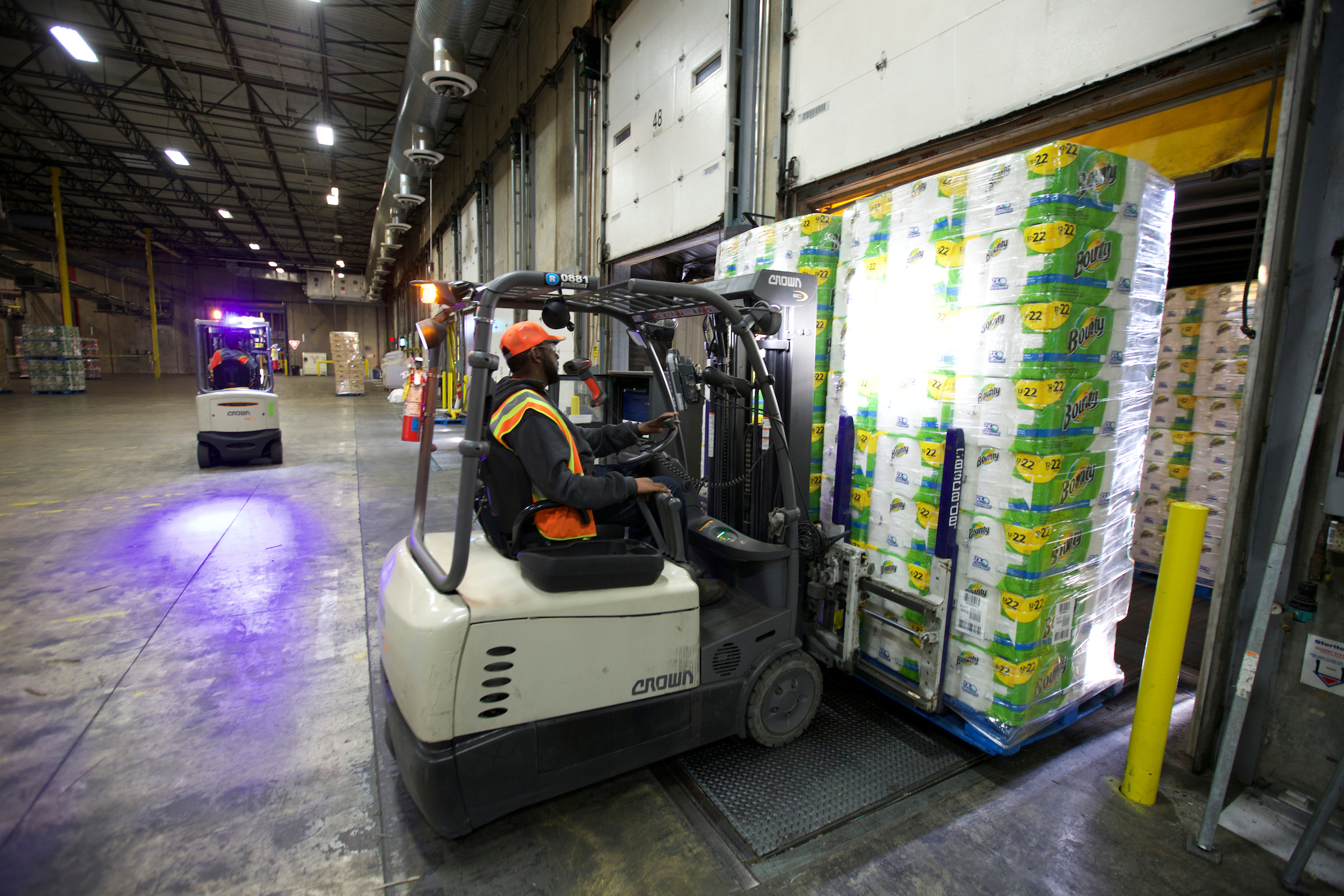
P&G and Microsoft announce collaboration to build the future of digital manufacturing. Photo courtesy of P&G
Microsoft technology empowers scalability for consumer products leader
CINCINNATI and REDMOND, Wash. — June 8, 2022 — On Wednesday, The Procter & Gamble Company (NYSE: PG) (P&G) and Microsoft Corp. announced a new multiyear collaboration that will leverage the Microsoft Cloud to help create the future of digital manufacturing at P&G.
The two companies will co-innovate to accelerate and expand P&G’s digital manufacturing platform and leverage the Industrial Internet of Things (IIoT) to bring products to consumers faster, increase customer satisfaction and improve productivity to reduce costs.
“Together with Microsoft, P&G intends to make manufacturing smarter by enabling scalable predictive quality, predictive maintenance, controlled release, touchless operations and manufacturing sustainability optimization — which has not been done at this scale in the manufacturing space to date. At P&G, data and technology are at the heart of our business strategy and are helping create superior consumer experiences. This first-of-its-kind co-innovation agreement will digitize and integrate data to increase quality, efficiency and sustainable use of resources to help deliver those superior experiences.”
“Together with Microsoft, P&G intends to make manufacturing smarter by enabling scalable predictive quality, predictive maintenance, controlled release, touchless operations and manufacturing sustainability optimization — which has not been done at this scale in the manufacturing space to date,” said P&G CIO Vittorio Cretella. “At P&G, data and technology are at the heart of our business strategy and are helping create superior consumer experiences. This first-of-its-kind co-innovation agreement will digitize and integrate data to increase quality, efficiency and sustainable use of resources to help deliver those superior experiences.”
With Microsoft Azure as the foundation, the new collaboration marks the first time that P&G can digitize and integrate data from more than 100 manufacturing sites around the world and enhance its AI, machine learning and edge computing services for real-time visibility. This will enable P&G employees to analyze production data and leverage artificial intelligence to immediately make decisions that drive improvement and exponential impact. Accessing this level of data, at scale, is rare within the consumer goods industry.
P&G selected Microsoft as its preferred cloud provider to build the future of digital manufacturing based on a four-year history of successfully working together on data and AI. The new collaborative effort will:
Allow for better utilization of data, AI capabilities and digital twins technology.
“We are excited to help P&G accelerate its digital manufacturing platform using Microsoft Azure, AI and IIoT to accommodate volatility in the consumer products industry with innovative, agile solutions that can easily scale based on market conditions. Our partnership will further P&G’s growth and business transformation through digital technology that seamlessly connects people, assets, workflow and business processes that promote resiliency.”
“We are excited to help P&G accelerate its digital manufacturing platform using Microsoft Azure, AI and IIoT to accommodate volatility in the consumer products industry with innovative, agile solutions that can easily scale based on market conditions,” said Judson Althoff, Microsoft’s chief commercial officer. “Our partnership will further P&G’s growth and business transformation through digital technology that seamlessly connects people, assets, workflow and business processes that promote resiliency.”
Empowering technicians and advancing operations with IIoT
P&G is already innovating and using Azure IoT Hub and IoT Edge to help manufacturing technicians analyze insights with greater speed and efficiency, creating improvements in the production of its baby care and paper products with pilot projects happening in Egypt, India, Japan and the United States.
Diapers and data: Quality control and process improvements
P&G is making advancements in its diaper manufacturing process to reduce manufacturing downtime, minimize scrap and lower maintenance expenses by automatically detecting and resolving the largest causes of line stops and rework using machine learning. The production of diapers involves assembling many layers of material at high speed with great precision to ensure optimal absorbency, superior leak protection and outstanding comfort. The new IIoT platform uses machine telemetry and high-speed analytics to continuously monitor production lines to provide early detection and prevention of potential issues in the material flow. This improves cycle time, reduces rework losses and ensures quality, while simultaneously improving operator productivity.
Pioneering paper towels
In a pilot with Microsoft, P&G can now better predict finished paper towel sheet lengths, improving the ability to deliver the right amount of product to the consumer. With the new IIoT platform, P&G can collect data from sensors on the manufacturing line and use technologies like advanced algorithms, machine learning and predictive analytics so it can improve manufacturing efficiencies.
Increasing sustainability and predicting equipment failure
To optimize manufacturing sustainability, P&G will use Microsoft’s machine learning and data storage platforms to improve energy utilization across its paper machines in Family Care. With the efficiency and speed of cloud computing, P&G teams can analyze large volumes of holistic data sets and pinpoint energy efficiency and machine maintenance opportunities across the manufacturing process. The Azure platform will allow P&G to easily integrate event summary data — such as production runs, downtime, changeovers and more — along with historical data.
Co-innovation with a new Digital Enablement Office and incubator
To accelerate technology integration and support pilot programs, Microsoft and P&G have co-created a Digital Enablement Office (DEO) staffed by experts from both organizations. They will jointly deploy the Azure platform, and the DEO also intends to serve as an incubator to create high-priority business scenarios in the areas of product manufacturing and packaging processes that can be implemented across P&G.
About Procter & Gamble
P&G serves consumers around the world with one of the strongest portfolios of trusted, quality, leadership brands, including Always®, Ambi Pur®, Ariel®, Bounty®, Charmin®, Crest®, Dawn®, Downy®, Fairy®, Febreze®, Gain®, Gillette®, Head & Shoulders®, Lenor®, Olay®, Oral-B®, Pampers®, Pantene®, SK-II®, Tide®, Vicks®, and Whisper®. The P&G community includes operations in approximately 70 countries worldwide. Please visit http://www.pg.com for the latest news and information about P&G and its brands. For other P&G news, visit us at www.pg.com/new.
About Microsoft
Microsoft (Nasdaq “MSFT” @microsoft) enables digital transformation for the era of an intelligent cloud and an intelligent edge. Its mission is to empower every person and every organization on the planet to achieve more.
For more information, press only:
Microsoft Media Relations, WE Communications for Microsoft, (425) 638-7777, [email protected]
Note to editors: For more information, news and perspectives from Microsoft, please visit the Microsoft News Center at http://news.microsoft.com. Web links, telephone numbers and titles were correct at time of publication but may have changed. For additional assistance, journalists and analysts may contact Microsoft’s Rapid Response Team or other appropriate contacts listed at https://news.microsoft.com/microsoft-public-relations-contacts.
NEW YORK, REDMOND, Wash. and SEATTLE; June 2, 2022 – Accenture (NYSE: ACN) and Microsoft, together with their joint venture Avanade, are joining forces to tackle climate change, one of the most critical and urgent challenges for both businesses and people. With an immediate emphasis on delivering solutions to help organizations transform their operations, products, services and value chains to help accelerate the transition to net zero, the three companies will expand their focus to broader environmental, social and governance (ESG) challenges in the future.
The companies are investing in the co-development of innovative solutions—architected and designed at the onset to emit less carbon over their life cycle—and offering advisory services to help businesses reduce carbon emissions, speed the transition to new energy sources, and shrink or even eliminate waste of finite resources such as water, food and raw materials.
With the powerful combination of Accenture Sustainability Services, Avanade’s human-centered digital experience, the Microsoft Cloud and each company’s robust data and artificial intelligence (AI) capabilities, the expanded strategic partnership will address both horizontal and industry-specific sustainability challenges to help drive impact and deliver new value.
“Increasingly, as all stakeholders look to business to move from commitment to action on environmental challenges, companies that embed sustainability across their enterprises can become a powerful force for change,” said Julie Sweet, chair and chief executive officer of Accenture. “Our partnership with Microsoft and Avanade will help organizations find new value at the intersection of technology and sustainability – from embracing green software development principles and sustainable cloud migrations, to digital twin technology adoption – to drive stronger performance and competitiveness, and make progress on their decarbonization goals and their journey to net zero.”
“Operating sustainably has become a source of competitive advantage, enabling organizations to increase efficiency, accelerate growth, and lead with purpose,” said Judson Althoff, executive vice president and chief commercial officer, Microsoft. “By combining our expertise with Accenture and Avanade, we have an opportunity and responsibility to deliver innovative solutions that will empower organizations to achieve their sustainability goals and drive lasting environmental change.”
Through the expanded strategic partnership, the companies will collaborate to extend existing capabilities and develop new joint offerings across four areas:
Digital Manufacturing Transition – Manufacturing organizations need to rapidly establish and scale the digital foundation of individual production sites and factory networks. Joint offerings will help improve asset utilization and deploy business models that enable circularity. They will also apply digital twin technology to help reduce emissions, waste, the consumption of materials, water and other resources in production and operations, and improve transparency across the value chain. The Accenture/UN Global Compact study found that globally, 44% of CEOs say that digital twins will make a significant impact on sustainability in their industry over the next five years
Low Carbon Energy Transition – Seventy-three percent of CEOs told Accenture and UN Global Compact that they feel increased pressure to act on sustainability over the next three years. To do so, businesses need to transform operations across the energy value chain. Joint offerings will help companies in the transition to a net zero economy by connecting and integrating energy infrastructure to develop carbon intelligence, and transform customer offers and business models that can support low carbon energy experiences.
Sustainable IT with Microsoft Azure and Green Software Engineering – Organizations are seeking energy-efficient infrastructure along with greater workload flexibility and business agility. Accenture research shows that shifting from on-premise data centers to the public cloud can reduce an enterprise’s energy usage by 65% and cut carbon emissions by more than 84%. New solutions on Microsoft Azure span strategy development and assessment of current IT infrastructure; architecting and piloting solutions; a carbon aware approach to migration and green software engineering; and continuous improvement and business transformation with low carbon cloud as its foundation.
ESG Measurement, Analytics and Performance with Microsoft Cloud for Sustainability – Facing increasing regulatory and stakeholder demands, organizations need insights at their fingertips to innovate and embed sustainability into the design of new products and services. Joint solutions will focus on providing sustainability intelligence for value chains by helping to break siloes and provide data-led insights so clients can not only record and report sustainability metrics, but—even more importantly—take action. Companies that consistently demonstrate high ESG performance score 2.6x higher on total shareholder return than counterparts, according to Accenture research.
“The world is at an inflection point where organizations are expected to play an active role in addressing sustainability issues,” said Pam Maynard, chief executive officer, Avanade. “Now more than ever, technology is key to accelerating environmental, social and governance goals and enabling organizations to be sustainable through continual change. We’re excited about the opportunity to help leaders leverage the power of people and technology to take practical sustainability actions that make a genuine human impact.”
Josh Matthews, industry analyst from HFS Research, added, “Sustainability technologies and services need ecosystems of partners to refine and scale solutions. They must quickly set the benchmark for others to follow given how far behind most organizations, industries, and governments are in aligning under the global sustainability context of decarbonization and addressing all 17 UN Goals. Ecosystem collaboration, like this one between Accenture, Microsoft and Avanade, will not only help to refine and scale solutions, but also help to solve the data and transparency challenges which organizations frequently cite to us as major barriers to their sustainability journeys.”
This expanded strategic partnership builds on Accenture, Microsoft and Avanade’s current joint sustainability efforts, including their pioneering role in the Green Software Foundation, a non-profit that is building a trusted ecosystem of people, standards, tooling and practices for green software development. Through a joint initiative called Project Amplify, Accenture and Microsoft have also supported dozens of start-ups focused on social impact and sustainability by providing access to emerging technology and expertise to help scale their solutions.
About Accenture Accenture is a global professional services company with leading capabilities in digital, cloud and security. Combining unmatched experience and specialized skills across more than 40 industries, we offer Strategy and Consulting, Technology and Operations services and Accenture Song—all powered by the world’s largest network of Advanced Technology and Intelligent Operations centers. Our 699,000 people deliver on the promise of technology and human ingenuity every day, serving clients in more than 120 countries. We embrace the power of change to create value and shared success for our clients, people, shareholders, partners and communities. Visit us at accenture.com.
About Microsoft Microsoft (Nasdaq “MSFT” @microsoft) enables digital transformation for the era of an intelligent cloud and an intelligent edge. Its mission is to empower every person and every organization on the planet to achieve more.
About Avanade Avanade is the leading provider of innovative digital, cloud and advisory services, industry solutions and design-led experiences across the Microsoft ecosystem. Every day, our 56,000 professionals in 26 countries make a genuine human impact for our clients, their employees and their customers. We have been recognized as Microsoft’s Global SI Partner of the Year more than any other company. With the most Microsoft certifications (60,000+) and 18 (out of 18) Gold-level Microsoft competencies, we are uniquely positioned to help businesses grow and solve their toughest challenges. We are a people first company, committed to providing an inclusive workplace where employees feel comfortable being their authentic selves. As a responsible business, we are building a sustainable world and helping young people from underrepresented communities fulfill their potential.
Majority owned by Accenture, Avanade was founded in 2000 by Accenture LLP and Microsoft Corporation. Learn more at http://www.avanade.com/.
It’s a moment we’ve been building toward — new capabilities from Microsoft Cloud for Sustainability that will enable faster, broader transformation for organizations at varying stages of their sustainability journey. We are pleased to announce the general availability of Cloud for Sustainability on June 1.
Now, a growing set of ESG (environmental, social and governance) capabilities from Microsoft and our global ecosystem of partners will give organizations the opportunity to accelerate their progress and business growth.
Turning sustainability commitments into action with better data intelligence
To stabilize our future and build more quickly toward a global net-zero carbon economy, organizations of all types, sizes and sectors are facing the need to transform common practices. This includes more effectively managing their environmental footprint, embedding sustainability through their organizations and value chains, and making strategic business investments that drive value. And this starts with solving a data problem.
Organizations need more accessible, centralized data intelligence to make the high-stakes decisions that are required right now to address complex issues, weighing both business and ESG criteria to direct capital toward investment opportunities that balance growth and impact.
Wherever organizations are in their sustainability journey, together, we can accelerate progress to reach our collective goals.
Microsoft is energized about helping our customers accelerate their progress. Microsoft Cloud for Sustainability solutions will provide the intelligence and data management capabilities organizations need to respond to changes with agility and confidence.
Building on more than a decade of work on sustainability
Our own sustainability journey began when we set our first carbon goal more than a decade ago. This led us to better organize our data and realign our company’s vision and strategy with our sustainability goals. We continue to build on our commitments to innovate and invest in technologies that address environmental sustainability and to transparently share our achievements and setbacks so that we can all learn together. We’re also considering how to deliver on our ESG commitments while continuing to grow our business and drive shareholder value — not an easy challenge!
Now, with the release of Microsoft Cloud for Sustainability, we’re bringing together powerful capabilities delivered by Microsoft and our partners to help organizations:
Unify data intelligence. To effectively drive sustainability reporting, sustainability efforts, and business transformation, organizations need better visibility into activities across their enterprise and value chain. Collecting and connecting IoT data from devices using sensors — combined with rich services at the edge or in the cloud — provides the basis to monitor and measure activities at scale. And now, Microsoft Sustainability Manager will empower organizations to more easily record, report and reduce their environmental impact through increasingly automated data connections that deliver actionable insights.
This extensible Microsoft Cloud for Sustainability solution centralizes previously disparate data in a common data format and offers organizations an increasingly comprehensive view into the emissions impact of their entire operations and value chain.
Sustainability Manager is available for a free test drive or to purchase June 1.
Build more enduring IT infrastructures. Organizations can reduce their environmental impact and increase business value when they replace tools, systems, or activities with more efficient options. Moving workloads to the cloud, for example, can increase both carbon and energy efficiencies. Emissions Impact Dashboard applications provide Microsoft customers with transparency into emissions produced from their use of Microsoft cloud services. Devices also contribute to an organization’s environmental footprint. Surface devices maximize sustainability of materials and extend product life while minimizing product carbon footprint and energy consumption.
Reduce the environmental impact of operations. With digital solutions delivered through Microsoft and our growing partner ecosystem, we’re already helping organizations maximize asset and production efficiencies, reduce the environmental impact of their buildings and spaces, and advance their transition to clean energy.
Create moresustainable value chains. Digital technologies are also helping organizations facilitate greater transparency and accountability through their value chain, from raw materials to product creation to distribution. A data-first approach can help organizations achieve data integrity and gain the visibility they need to drive efficiencies, reduce emissions and design out waste.
Global partners, a critical piece to extending impact
Much of this important work is being achieved through collaboration with our global ecosystem of partners who have helped us land our ambitions and transform our business. Today, they’re also pivotal to helping customers advance sustainability through robust, innovative solutions powered by the Microsoft Cloud.
Microsoft Cloud for Sustainability partner solutions span industries, from transportation to real estate to manufacturing, such as these early solutions that are already in market:
There are many more solutions coming. Our sustainability partner ecosystem also includes trusted advisers like these, who are actively helping organizations plan, design and implement strategies to enable sustainable growth:
Learn more about breakthrough work being done by our sustainability partners on Microsoft AppSource.
What’s next? Microsoft Cloud for Sustainability availability coincides with Hannover Messe 2022. Watch for news and announcements around this keystone industry event — and stay tuned for additional solutions and capabilities.
Millions of tons of plastic trash float down polluted urban rivers and industrial waterways and into the world’s oceans every year. Now a Hong Kong-based startup has come up with a solution to help stem these devastating flows of waste.
An early prototype navigates Hong Kong harbor. Photo: Clearbot.
Open Ocean Engineering has developed Clearbot Neo – a sleek AI-enabled robotic boat that autonomously collects tons of floating garbage that otherwise would wash into the Pacific from the territory’s busy harbor.
After a long developmental phase, its creators are planning to scale up and have fleets of Clearbot Neos cleaning up and protecting waters around the globe.
And there are fears that the volume of plastic trash flowing into marine environments could nearly triple by 2040, adding 23 to 37 million metric tons into the oceans per year. That would be equivalent to about 50 kgs of plastic garbage per meter of coastline worldwide.
“If we clean up our rivers and harbors, we are helping to clean up our oceans,” says Clearbot Neo’s co-creator Sidhant Gupta.
At just three meters long and pushed along by a solar battery-powered electric motor, the Clearbot Neo systematically moves up and down designated sections of water – much like how a household robot cleaner moves across a living room floor.
Unlike other and much larger marine trash collection solutions that are tackling pollution on the high seas, the compact nature of the Clearbot Neo makes it ideal for harbor, canal and river use.
It skims the surface and scoops up floating trash onto an on-board conveyer belt fitted near its bow between its dual hulls and into a holding bin near its stern.
Clearbot Neo uses AI to recognize and log the types of trash it collects and were.
It can bring in as much as a metric ton of refuse per day for recycling or disposal. And when fitted with a bespoke boom, it can tackle localized oil and fuel spills by collecting up to 15 liters of pollutant a day.
But this is more than just a simple clean-up machine. It also collects masses of data in the cloud using a two-camera detection system.
One camera surveys the water’s surface so the bot can identify rubbish and avoid marine life, navigational hazards and other vessels – making it safe and versatile for river and harbor work.
With AI, Clearbot can identify and log the trash it collects. Photo: Clearbot.
The second camera photographs each piece of trash that lands on the conveyor belt and transmits its image and GPS location to the company’s data compliance system, which is hosted on Microsoft’s Azure platform.
When this data is put together with variables, like sea current and tide information, environmentalists and marine authorities have a head start on identifying the sources of the trash. Water quality data is also fed into the cloud.
Computer engineers Gupta and Utkarsh Goel founded their startup and began working on their Clearbot solution shortly after graduating from Hong Kong University in 2019.
Their inspiration came during a trip to the Indonesian vacation island of Bali where they witnessed how local workers would take to the water every day in small boats and even on surfboards to manually fish trash out of the sea to keep the shoreline and beaches safe and clean for tourists.
That got the two partners thinking: How could this slow and cumbersome process be automated?
Gupta and Goel developed a basic aluminum prototype in Bali and upon their return to Hong Kong, upgraded to a fiberglass version. A series of prototypes followed with the sleek Clearbot Neo being the latest model.
The most challenging part of the project was developing an AI model that could detect and identify waste in the water.
“We simply didn’t have the computing power available to train, run and test the models,” Gupta says. “This is exactly where Azure comes in. We ended up getting an AI for Earth grant from Microsoft in Spring 2020, and over the next year developed the AI model entirely on the Azure platform.
“It took a while because initially we didn’t have enough data to reasonably train it, but very quickly we ended up building out a model. We then put it on the robot and started training it for path planning, collecting waste and generating data.”
With the aid of GPS, Clearbot Neo can simultaneously clear the trash and produce a data point for each and every item collected — information that includes location, size, type, material and weight. After every mission, Azure’s AI capabilities have already classified the Clearbot Neo’s haul and added it to a growing database.