Posted on Leave a comment

Work up a sweat with the Nintendo Switch Sports towel

It’s not often we sweat when playing video games, but I perspire whenever I have to make a narrative decision in a game, or when I’m knocking back fastballs in Nintendo Switch Sports. Well, up until now I’ve had to deal with my sweat in incredibly generic ways, but it seems Nintendo has decided to solve the problem I didn’t know I had with the Nintendo Switch Sports towel reward.

Players with a Nintendo Switch Online account and a My Nintendo Store UK account can wander on over and peruse the My Nintendo Store exclusive rewards. For the princely sum of 500 platinum points, this lovely piece of merch can be yours, and you can live out the ultimate tennis fantasy of throwing in the towel for real when you lose.

This new reward is another great piece for collectors on top of the recent Rabbids keyring, and other great physical selections like the Nintendo hanafuda postcard set. It’s a great way to actually spend all those platinum points, and like other rewards, you simply have to cover the cost of postage to claim these fun little goodies. With the Nintendo Switch Sports golf update about to drop, this could be the perfect way to cool down after nailing all those…birdies? I don’t know, I don’t play golf.

If you’re a huge Nintendo Switch Sports fan then get a glimpse of the upcoming golf update with the latest trailer below.

YouTube Thumbnail

Well, that’s it for today, sports fans. We love this reward and will bat-tle to grab one ourselves later on, and of court-s we hope you get one too. If you want to find another way to share a game with pals, be sure to check out our guide to the best Switch sports games next.

Posted on Leave a comment

Resident Evil characters

After its initial launch in the 90s, Resident Evil has become an icon of the horror genre, a landmark for spooky games on consoles, and simply one of the most endearing entries in the genre. After a stellar remake for the Gamecube a few years later, the classic was even better, and now nobody has an excuse not to play this incredible game. If you’re dipping in, then you might want to get to know the Resident Evil characters first.

This guide covers the main players from the original Resident Evil title and its remake, but we’ll also delve into the primary characters from the many other titles over the years. Anybody recurring and important to the Umbrella story, we’ll pop them in here. It’s a big old series with a lot of characters, so do forgive us if we miss your fave, but we’ll be coming back to add more to this guide over time.

Let’s dive into our Resident Evil characters guide.

Resident Evil characters

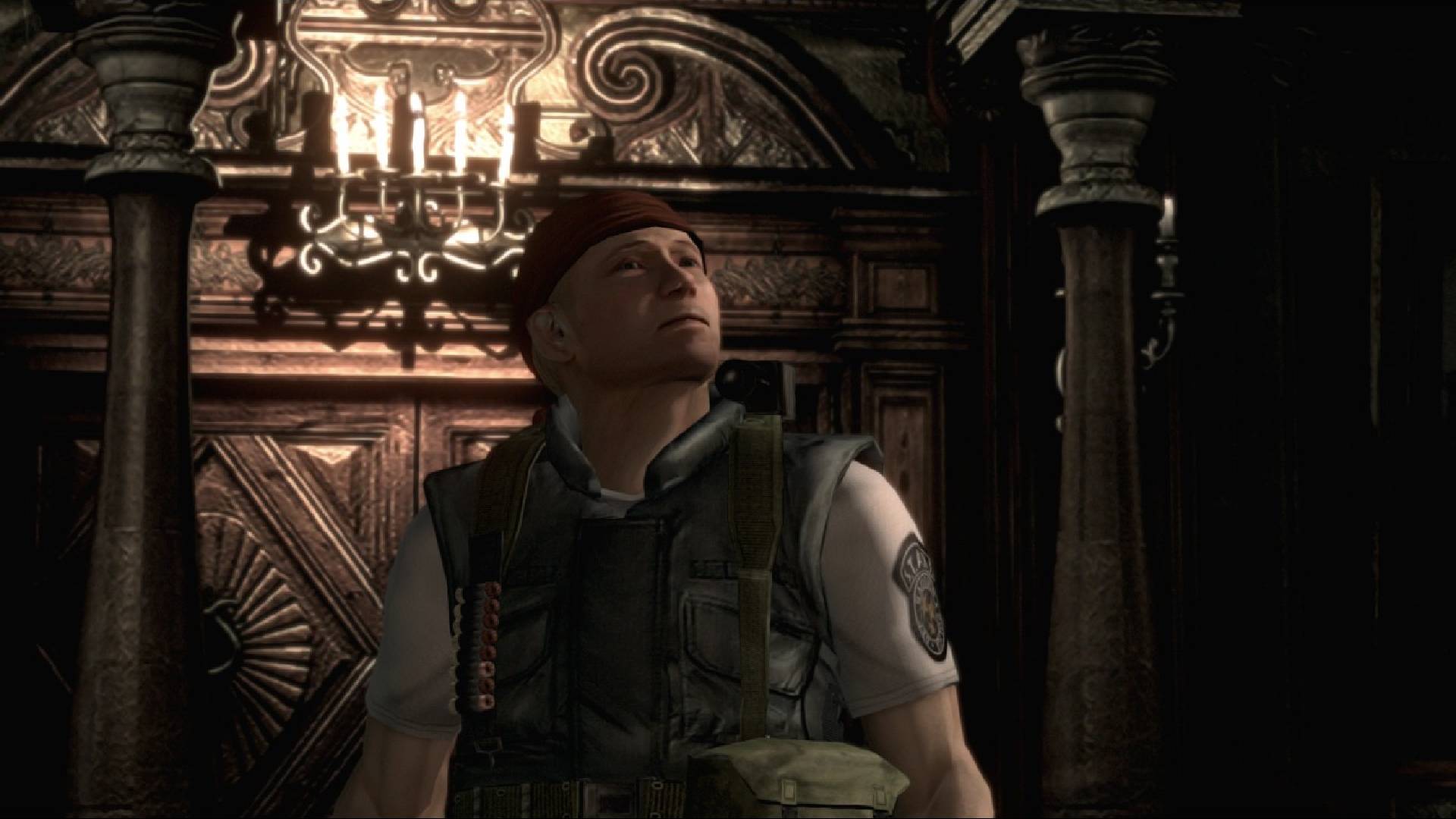
Resident Evil characters: a screenshot shows several Stars members in the Spencer Mansion

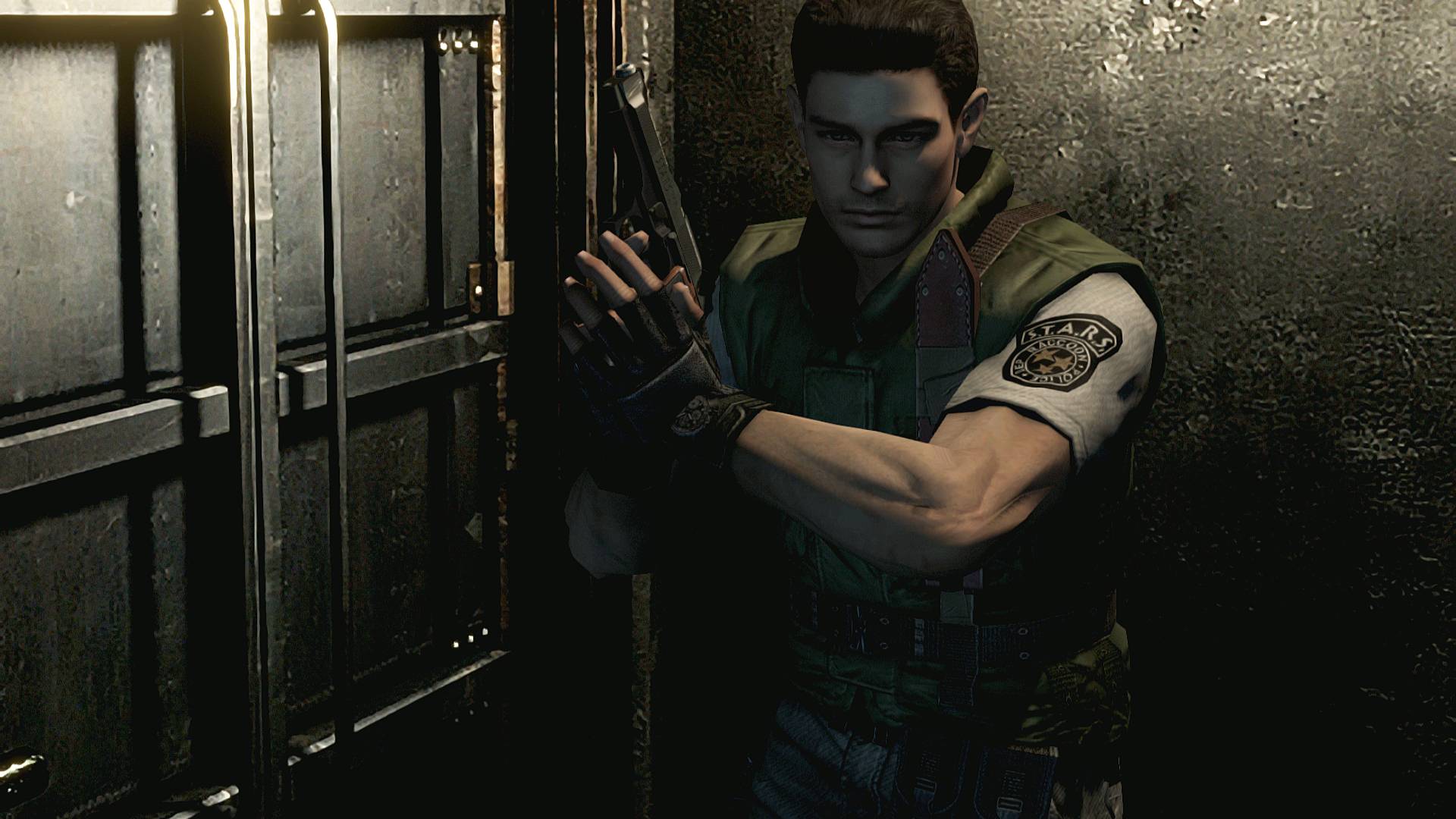
Chris Redfield

Born in 1973, Chris Redfield is one of the two playable characters in the first Resident Evil game, and one of the most important characters in all of the events preceding it. Chris is a huge fella that uses his power and speed to get through. In Resident Evil (1996), Chris has to deal with more enemies, each of which is more powerful than in Jill’s playthrough. So while he may be tougher, the game balances this out with a rougher ride. Players also only unlock the flamethrower in Chris’ story path.

Chris originally worked for the Air Force before STARS (Special Tactics and Rescue Service) recruited him in Raccoon City. After the Spencer Mansion incident, Chris appears and is playable in Resident Evil: Code Veronica, Resident Evil; The Umbrella Chronicles, Resident Evil 5, Resident Evil: The Darkside Chronicles, Resident Evil 6, Resident Evil Revelations, Resident Evil 7 DLC, and Resident Evil Village.

If you want to know even more about this iconic character, make sure you check out our Resident Evil Chris guide.

Resident Evil characters: a screenshot shows several Stars members in the Spencer Mansion

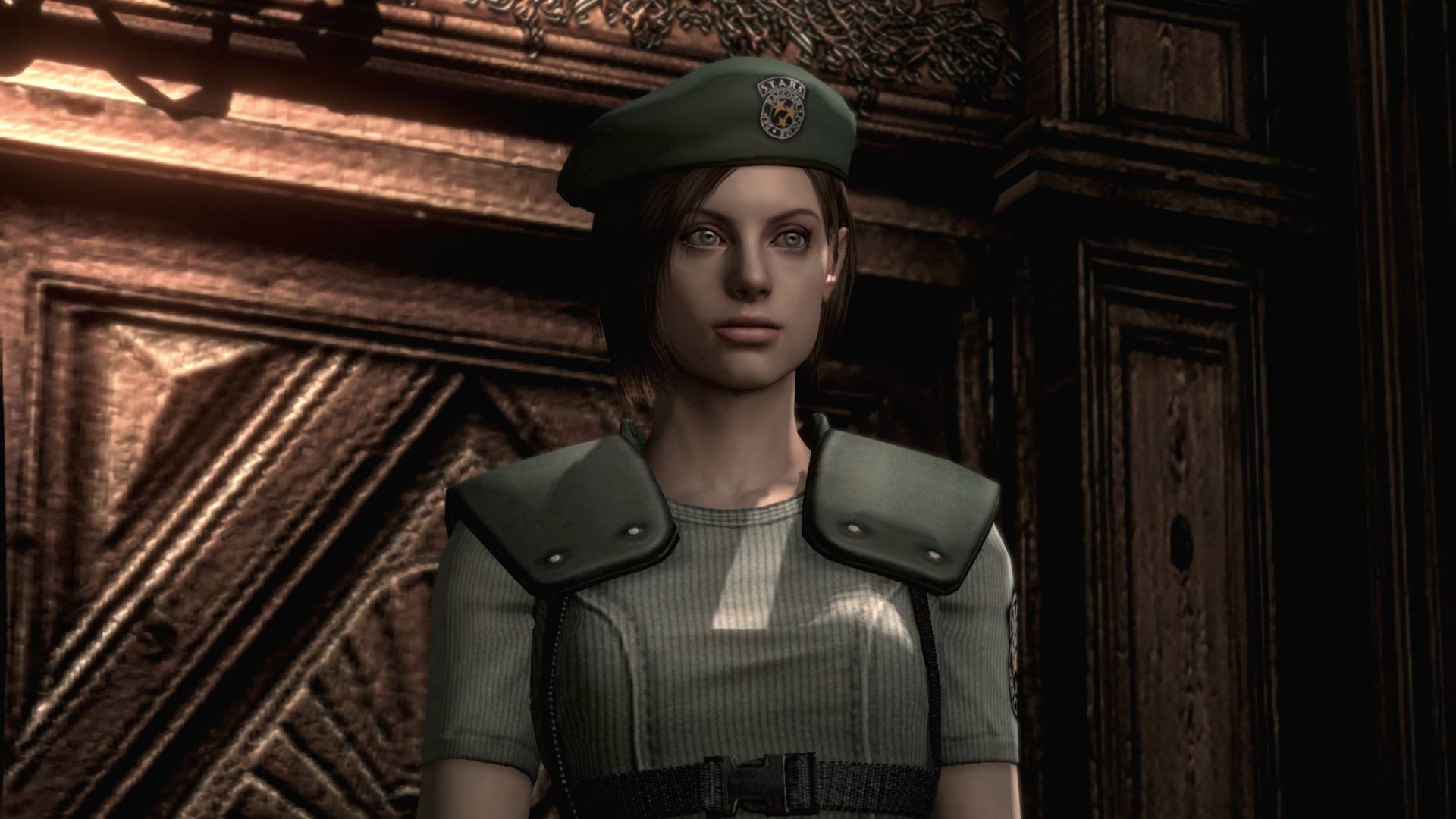
Jill Valentine

Born in 1974, Jill Valentine is one of the two playable characters in the original Resident Evil and is one of the most important characters in the series. She was recruited to STARS by Albert Wesker in 1996, shortly before the Spencer mansion incident, and so has been at the heart of most bio-weapons and bio-terrorism events ever since. She’s smart, strong, and has repeatedly shown that she has a good heart and will go out of her way to protect people when she can.

Appearing over multiple titles, Jill Valentine is at the heart of everything going on. After Resident Evil (1996) and its remake, she appears as a playable character in Resident Evil 3 (and its remake), she pops up in Resident Evil: The Umbrella Chronicles, and is playable in Resident Evil: Revelations as well. While not playable, she’s also an important part of Resident Evil 5. She hasn’t been seen canonically for some time, unlike Chris Redfield, so here’s hoping future titles finish her story.

To discover even more about this badass heroine, check out our Resident Evil Jill guide.

Resident Evil characters: a screenshot shows several Stars members in the Spencer Mansion

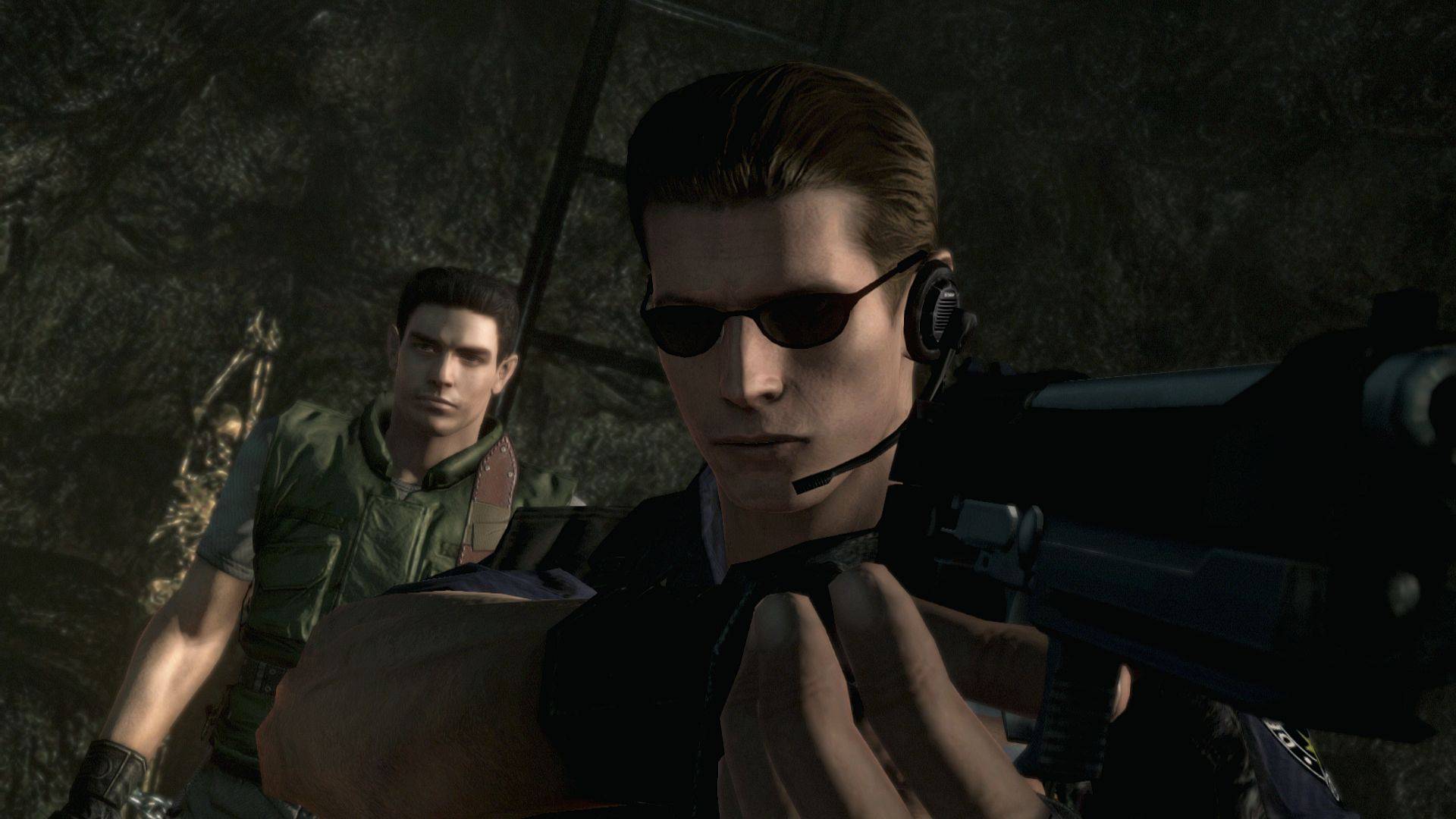
Albert Wesker

Born in 1960, Albert Wesker pops up in the original Resident Evil as a member of STARS, though it’s quickly apparent that there’s much more to him than it seems. Wesker has deep ties to the Umbrella Corporation and was picked up as a child to serve the company, being groomed as a child protege with the intention of serving Umbrella forever. He’s been behind the scenes of many different bio-weapon events ever since, and he even experiments with the effects of bio-weapons like the T-Virus on himself to give him superhuman powers and abilities.

While rarely playable outside of mercenaries mode, Albert Wesker still pops up more often than toast, making an appearance in Resident Evil (1996), Resident Evil 2, Resident Evil 3: Nemesis, Resident Evil: Code Veronica, Resident Evil 0, Resident Evil 4, Resident Evil 5, and Resident Evil 6. He has also appeared in nearly all adaptations of Resident Evil to screen, recently being played by Lance Reddick for the Netflix show also called Resident Evil.

Find out more about this shady villain in our Resident Evil Wesker guide.

Resident Evil characters: a screenshot shows several Stars members in the Spencer Mansion

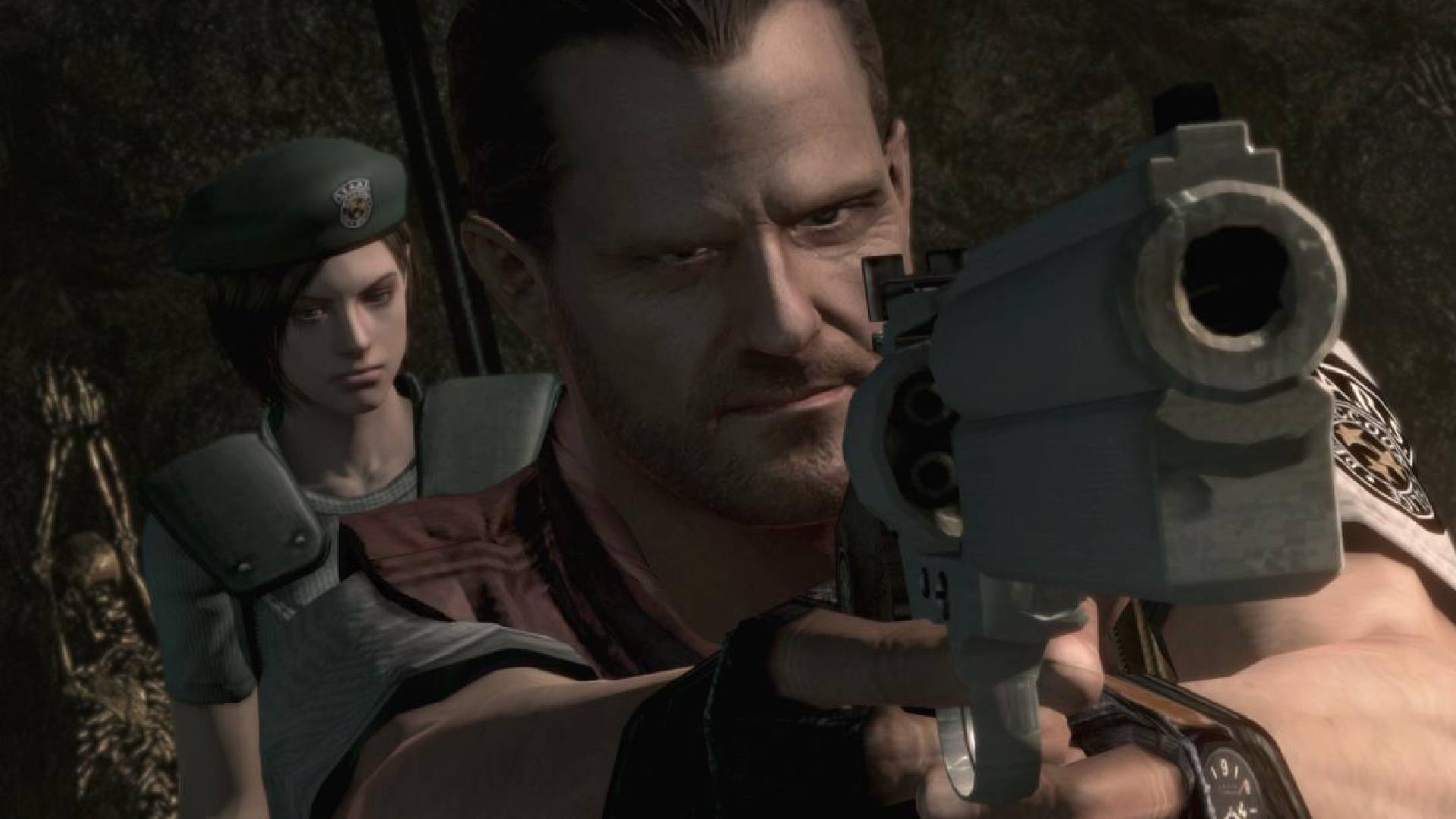
Barry Burton

Born in 1960, Barry Burton joined STARS in 1996. Previously serving in the Air Force, Barry has a wife called Kathy, and two daughters named Moira and Polly. Moira herself later pops up in Resident Evil Revelations 2. When Barry was working in STARS, he became good friends with Chris Redfield, eventually becoming a weapons expert, and finally moving onto another military operation known as the BSAA (Bioterrorism Security Assessment Alliance).

While not quite as prolific as some characters, Barry does turn up in a few other Resident Evil projects, namely Resident Evil 5, and as a playable character in Resident Evil Revelations 2. RER2 sees Barry searching for his daughter Moira who is kidnapped by a terrorist organisation, but upon arrival, teaming up with a young girl with mysterious psychic powers to track her down.

Resident Evil characters: a screenshot shows several Stars members in the Spencer Mansion

Brad Vickers

Born in 1963, Brad Vickers is one of the STARS members initially involved in the Spencer Mansion incident. There’s little information on his training or combat skills, but we do know he was a skilled pilot and a computer expert. Upon arriving at the mansion in search of missing STARS members, Vickers was quickly overwhelmed by the situation and took off in the helicopter, leaving the remaining members without their equipment.

Eventually, he composes himself, and after flying around the areas until daybreak, Vickers drops down a rocket launcher to help the STARS team in their battle with the superhuman zombie known as the Tyrant. Brad Vickers briefly turns up again in Resident Evil 3, but he doesn’t last very long…

Resident Evil characters: a screenshot shows several Stars members in the Spencer Mansion

Joseph Frost

One of the original STARS members at the Spencer Mansion incident, Joseph Frost was born in 1971, and was a bright and optimistic man who enjoyed danger. Upon arriving at the scene, Joseph is the person to discover the body of Kevin Dooley, the STARS pilot of the previous mission. Shortly afterwards, Frost runs off into the forest to try and find out more information, only to be attacked and viciously mutilated by a pack of zombie dogs known as the Cerberus. He doesn’t show up in any other resident Evil games.

Ok, folks, that’s all we have for now, but do come back for even more Resident Evil characters in the future. If you just can’t wait and want more great content now, be sure to check out our articles covering Resident Evil Ethan, and Resident Evil 2 characters next.

Posted on Leave a comment

The best Witcher 3 maps

The Witcher 3’s map holds within it one of the best open-world videogame experiences ever. From a wide variety of excellently written side quests to the beautiful, red-hot graphics, it’s just one of the best videogames ever. Fact.

Anyway, if you love it as I do, you probably want to do as much as you can in its world. When something is this massive, it can be a little hard to keep track of everything, so why not use one of these handy maps? Once you’ve picked your favourite, check out our The Witcher 3 endings, The Witcher 3 best armour, and The Witcher 3 wallpaper guides.

Here are our three favourite The Witcher 3 maps.

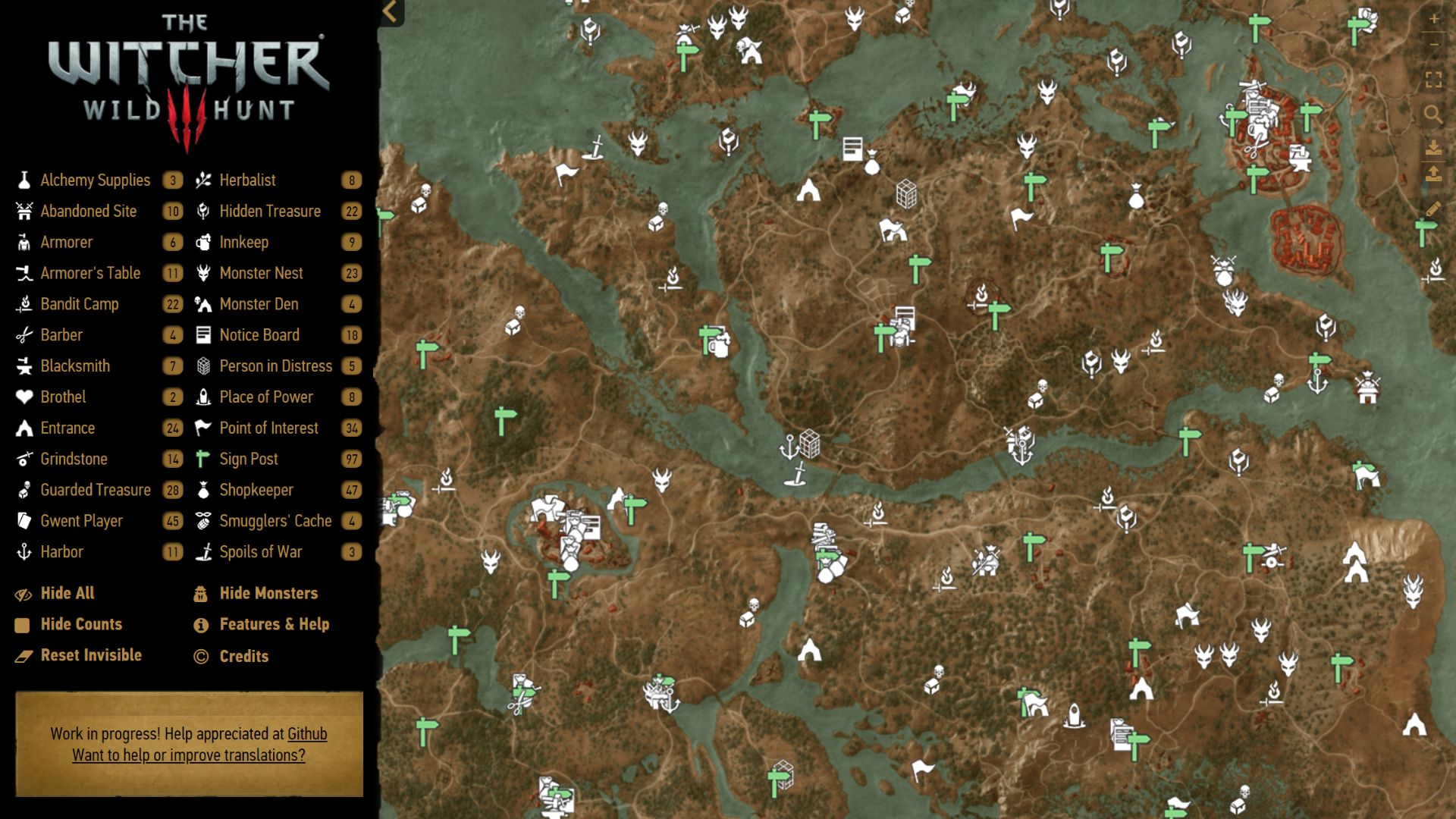
A The Witcher 3 map showing thousands of icons littered on land and sea with a legend on the left and categories on the right.

Witcher3Map.com

The Witcher3Map.com interactive map is super simple to use. A clean user interface, stark colour choices, and quick loading times make it an easy first choice. You can also do the expected filtering by different categories, which is nice. There’s not much more to it, but clean and simple takes the cake for me.

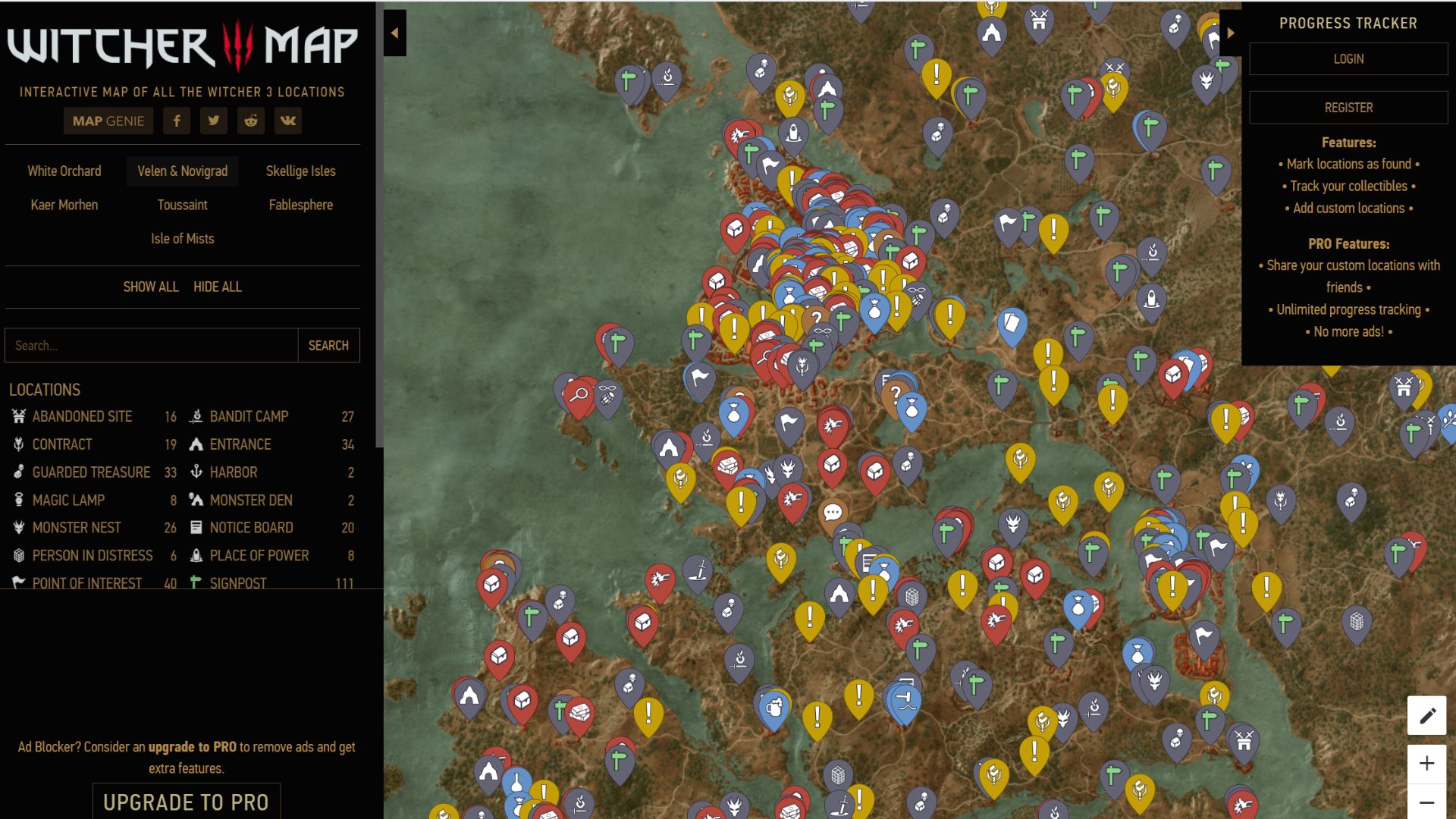
A The Witcher 3 map showing thousands of icons littered on land and sea with a legend on the left and categories on the right.

MapGenie.io Witcher 3 map

The MapGenie.io Witcher 3 map is a little heftier than the previous one, but with it comes what some may think of as clutter. If you don’t care about the slightly overbig icons, then you’re in for a treat. All the basics are here and cleanly, then there’s the ability to mark locations as found and keep track of your adventure. Lovely stuff.

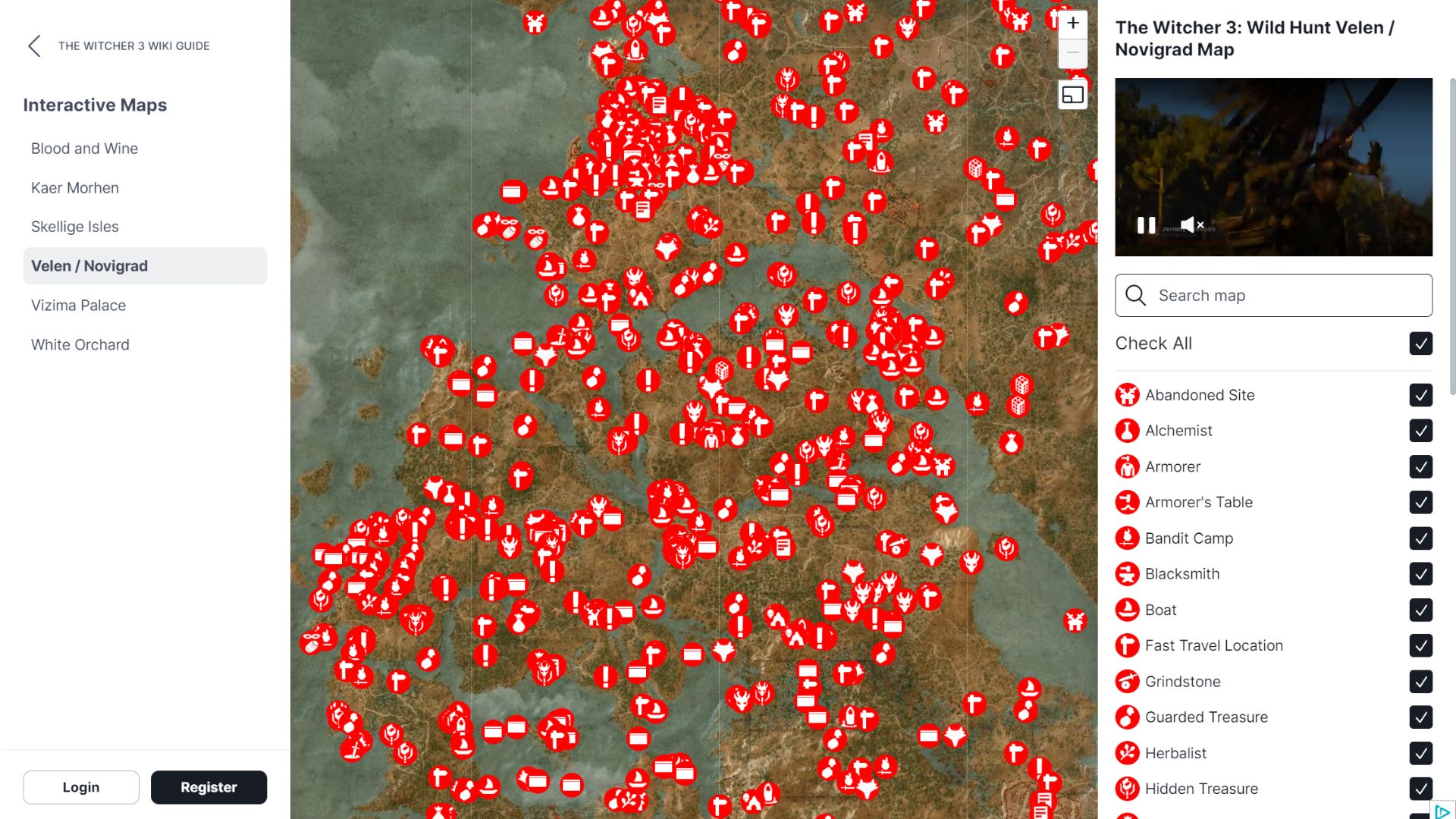
A The Witcher 3 map showing thousands of icons littered on land and sea with a legend on the left and categories on the right.

IGN Witcher 3 maps

IGN’s interactive maps are always rock solid, and so too is its Witcher 3 map. If you’ve become used to the layout IGN uses, it’s nice that everything is the same as elsewhere. Expect all the usual features, like filters and marking things as found. Choosing between this and the others really comes down to little else other than personal preference. They’re all great!.

There you have it, a handful of The Witcher 3 maps out there. For more RPG magic, check out our games like The Witcher 3, Skyrim marriage, and Skyrim wallpaper guides to stay up to speed.

Posted on Leave a comment

Harvestella crops, prices, and more

Though it has more JRPG DNA in its blood than anything, Harvestella crops are still an important part of gameplay – it wouldn’t have ‘harvest’ in the name, if not. Whether you sell ‘em, process ‘em, or stick ‘em in a stew, you’d be wise to get to grips with the variety of voluptuous veggies and fantastic fruits you can grow. So let’s take a look at all the different crops on offer, their sell prices, and more, while we also tackle the tough task of answering what Harvestella’s best crops are.

If you’re wondering what you can use all this perfect produce for, check out our Harvestella cooking and Harvestella crafting guides. Or, for a different kind of fieldwork, head over to our Harvestella jobs and Harvestella bomb recipe guides.

What are Harvestella crops?

As you may have guessed, Harvestella crops are plants and trees that you tend to on your farm. Each crop has set seasons in which it can grow, and several require special biomes in order to flourish. Most crops need watering every in-game day, and each of them take a specific amount of days to bear produce.

Some crops, like cucumbles, yield more than one item per harvest, and others stick around for a while, allowing you to harvest them multiple times. When Quietus comes around between seasons, all crops except trees, saplings, and shrubs die, and you start again with a fresh slate.

While the main game may focus more on the RPG features such as narrative and combat, farming is still an important part of Harvestella. Planting and harvesting crops not only nets you money when you ship them, but also allows you to produce animal feed, processed ingredients, and meals and drinks that offer stamina, health, and buffs. Becoming a savvy, well-equipped farmer takes some time and patience, but it’s certainly worthwhile.

Harvestella crops - the game introduction to farming mechanics

All Harvestella crops

Below, we list all the Harvestella crops we’ve come across in each location so far, along with their seed/sapling/shrub price, what seasons they grow in, and how much money they sell for. The sell prices are for one standard piece of produce from each crop. We’re still investigating the high-quality produce sell prices at the moment, but we’ll update this guide when we know more. For growth times, check the in-game description of the seeds or saplings.

You may notice that certain crops are listed in more than one location, with different seed costs attributed to them. That’s because these seeds appear in both the locations’ general good stores at different prices. So, if you want to buy some seeds as opposed to picking them up from dungeons or quest rewards, be sure to check that you’re going to the store selling them for the lowest price.

All information here is gathered from my personal playtime in the game, and backed up by the research of the extremely helpful and dedicated community over at r/Harvestella. A big shoutout goes to this post by u/Odeus1019, and this comprehensive spreadsheet by u/iArkeus, both of which helped me solidify my data.

Lethe Harvestella crops

All of the Lethe crops grow in the field, except curry herbs which require the cave biome.

Crop Seed cost Season Sell price
Carrop 105 Spring, summer 115
Cucumble 370 Spring 200
Curry herb 270 Spring, summer, fall 350
Dress lettuce 55 Spring, summer, fall 85
Grass 30 Spring, summer, fall 35
Grouply grape 2,000 Fall 85
Lantern pumpkin 1,800 Fall 3,750
Lumpotato 90 Fall, winter 120
Morrocorn 230 Summer, fall 400
Princess chestnut 2,200 Fall 60
Rainbow bean 180 Fall 40
Royal eggplant 780 Fall 480
Stellar wheat 40 Spring, summer, fall 55
Unionion 130 Spring, fall 195

Nemea Harvestella crops

All Nemea Harvestella crops grow in the field, except the nectarcane sapling, which only grows in the water biome.

Crop Seed cost Season Sell price
Carrop 95 Spring, summer 115
Nectarcane 370 Spring, summer, fall 250
Nemean tomato 170 Spring, summer 65
Strawbuddy 220 Spring 130
Tingle radish 390 Spring 530
Unionion 105 Spring, fall 195
Wisty peach 4,200 Spring 115

Shatolla Harvestella crops

The islet watermelon, lococonut, netarcane, and honey flower crops all require the water biome to grow. You can plant the rest of the crops in your field.

Crop Seed cost Season Sell price
Bellhop 560 Summer 45
Honey flower 380 Spring, summer, fall 795
Iset watermelon 2,500 Summer 4,600
Lococonut 3,200 Spring, summer, fall 35
Morrocorn 200 Summer, fall 400
Nectarcane 370 Spring, summer, fall 310
Numblemon 2,200 Summer 95
Seatide garlic 650 Summer 1,000
Shatollan paprika 250 Summer 110

Argene Harvestella crops

You can only grow sudor peppers, revol peppers, and curry herbs in the cave biome. You can plant the rest in the field.

Crop Seed cost Season Sell price
Argene cabbage 220 Winter 320
Chilly plant 800 Winter 1,300
Curry herb 240 Spring, summer, fall 350
Lumpotato 80 Fall, winter 120
Revol pepper 560 Spring, summer, fall 265
Snowcap mikan 2,300 Winter 65
Sudor pepper 400 Spring, summer, fall 250

A player watering their Harvestella crops

Harvestella best crops

Working out which is the best Harvestella crop is subjective based on what you’re looking for, and how much you want to invest into farming. If you’re after pure profit, there are a few things to take into consideration. Naturally, some crops sell for more grilla than others, but they can also take many days to grow or, in the case of tree saplings, take up more room on your farm.

Through scouring Reddit and playing the game myself, I’ve found that, so far, these are some of the most profitable crop hustles per season. There are likely plenty of others, so hit us up on the official Pocket Tactics Twitter if you know any gooduns!

Spring

  • Wheat and dress lettuce – seeds for these are cheap and readily available, and turn a great profit when turned into picnic sandwiches, making them great early-game crops. However, to cook the sandwiches you need the kitchen counter, and each sandwich takes valuable in-game time to make
  • Cucumbles – the best of the spring crops by a large margin, especially if you manage to find or earn seeds as opposed to buying them. The plant takes four days to initially grow, the three days between each harvest. This means you get a total of six cucumbles per plant, selling at 200 grilla each – over time, that’s 1,200 grilla per plant

Summer

  • Islet watermelon – as much as its long growth time (12 days!) and water biome requirement is a bit of a turn-off initially, islet watermelons offer a massive profit. Even if you buy the seeds at 2,500 grilla, you still earn over 1k in profit a piece, so you should cherish any watermelon seeds that you snag for free
  • Moroccorn – with a short, four-day growth time, morrocorn has a quicker turnover rate and, if you can purchase the seeds from Shatolla as opposed to Lethe, doubles the money you invest into them (200 grilla seed, 400 grilla per crop)
  • Seatide garlic – though it has a six-day growth time, seatide garlic nets you a profit of 350 grilla if you buy the seeds, or 1k grilla straight in the pocket if you find the seeds for free

Fall

  • Lantern pumpkin – like in Disney Dreamlight Valley, pumpkins are king in Harvestella’s fall. If you purchase a seed for 1,800 grilla, you get a whopping 1950 grilla profit in 11 days’ time, or 3,750 grilla if you find a free seed while out and about
  • Moroccorn – just as handy in fall as it is summer (see above)

Winter

  • Chilly plant – crop options are pretty limited in winter, and I’ve not fully explored them yet. However, you can buy a chilly plant seed for 800 grilla, and turn a 500 grilla profit after seven days by selling it for 1,300 grilla

That’s all we’ve got on the Harvestella crops so far, but we’ll be sure to update this guide as we crunch more numbers and sell more produce. Next stop, investigating juice and cooking vs raw produce profits! In the meantime, be sure to check out our Harvestella romance guide to see who you can woo with your extensive knowledge of crop rotations.

Posted on Leave a comment

Harvestella review in progress – time travel, tears, and turnips

As a massive fan of Square Enix, JRPGs, and farming sims, it’s safe to say that Harvestella is one of my most highly anticipated games of 2022. So, naturally, I jumped at the opportunity to dive into this exciting new experience on Nintendo Switch. Unfortunately, we weren’t able to get our paws on a copy until roughly two days before launch, and, as you can expect from such a colossal title, that’s nowhere near enough time to truly get to grips with its wonderful world.

So far, I’ve completed the first three chapters of the game and have played for roughly seven to eight hours (pretty much every free moment I’ve had between work and sleep). And, in typical JRPG style, I feel as though I’ve barely gotten past the tip of the iceberg in all that time. Tutorials are still popping up left and right, new mechanics are shimmying their way into my daily routine, and I still feel that sense of tutorial-esque limitation, with my freedom being finite and dependent on where the game wants me to go.

That doesn’t in any way mean that I’m not thoroughly enjoying my time with Harvestella so far. I’ve been wholly sucked into its world and can’t wait to see where it takes me. However, with so little time to explore the bountiful mechanics, dungeons, and stories on offer, I can’t provide a definitive review just yet. As such, I’m only going to share my initial impressions with you today, and will develop this into a full review with a score when I’ve had a solid weekend of donning my farming overalls and sharpest sword.

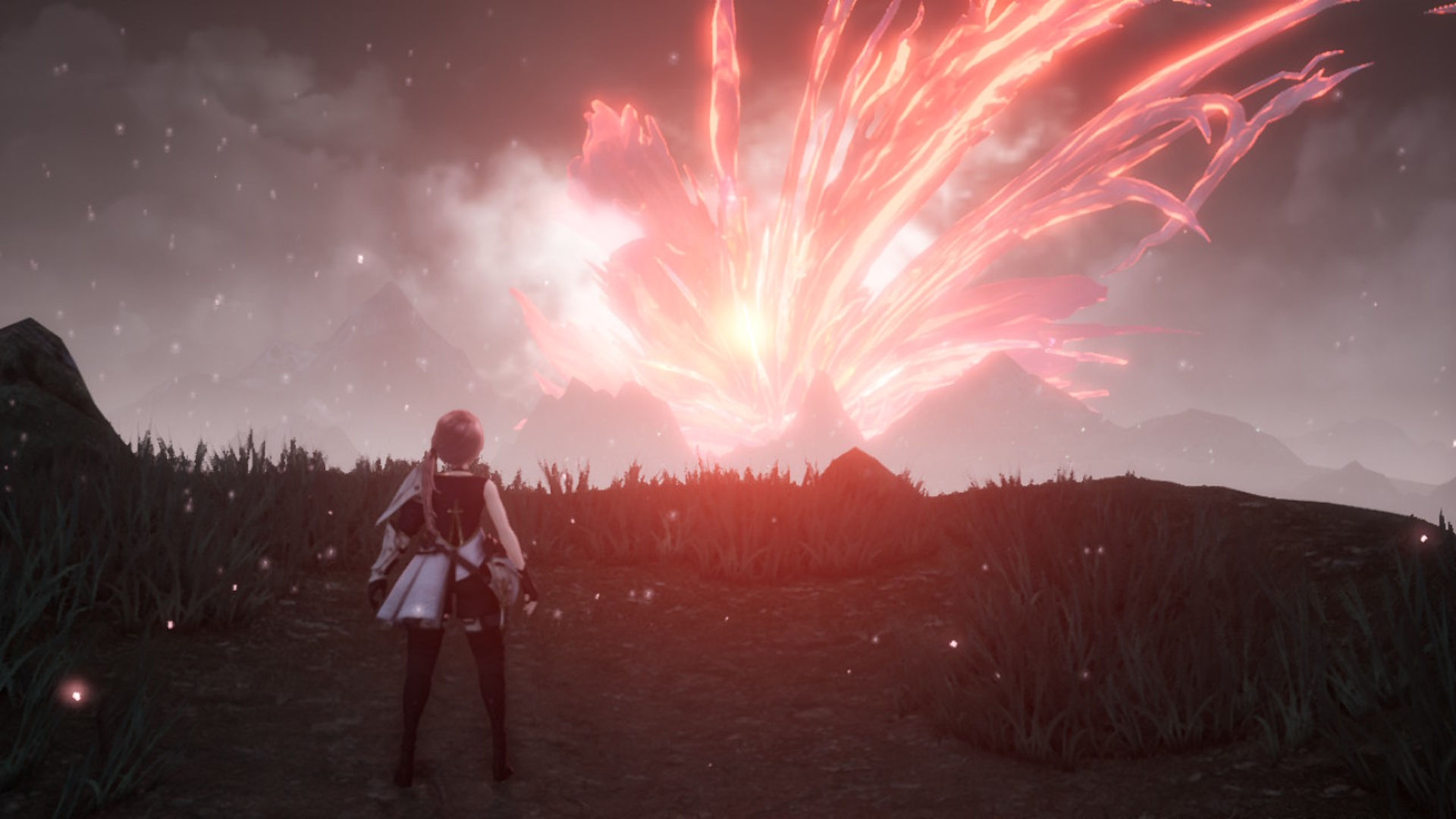
Harvestella review - the protagonist facing a large red meteor

To start off with, Harvestella has a unique narrative that takes some of the familiar tropes JRPG and Square Enix aficionados should be very familiar with, while also applying its own twist. It begins with probably the most common trope from the RPG genre – you’re an amnesiac, and you don’t remember how you got here. What a surprise.

However, as you begin to piece together this unfamiliar world, you discover that you’re pretty darn special. Somehow you managed to survive being outside during a phenomenon called ‘Quietus’, which comes about between every season and kills just about everything in its path. The townsfolk blame this phenomenon on creatures they call ‘Omens’, so when one crash lands in the village along with a giant shiny meteor, you naturally go inside and save them (much to the chagrin of your new acquaintances).

From here, you’re sucked into a grand, heartfelt narrative so complex that nobody seems to have a clue what’s going on. Tangled up in a tale of war, death, and new life, you find yourself at the heart of some pretty big conflicts while still trying to remember to water your cabbages every morning.

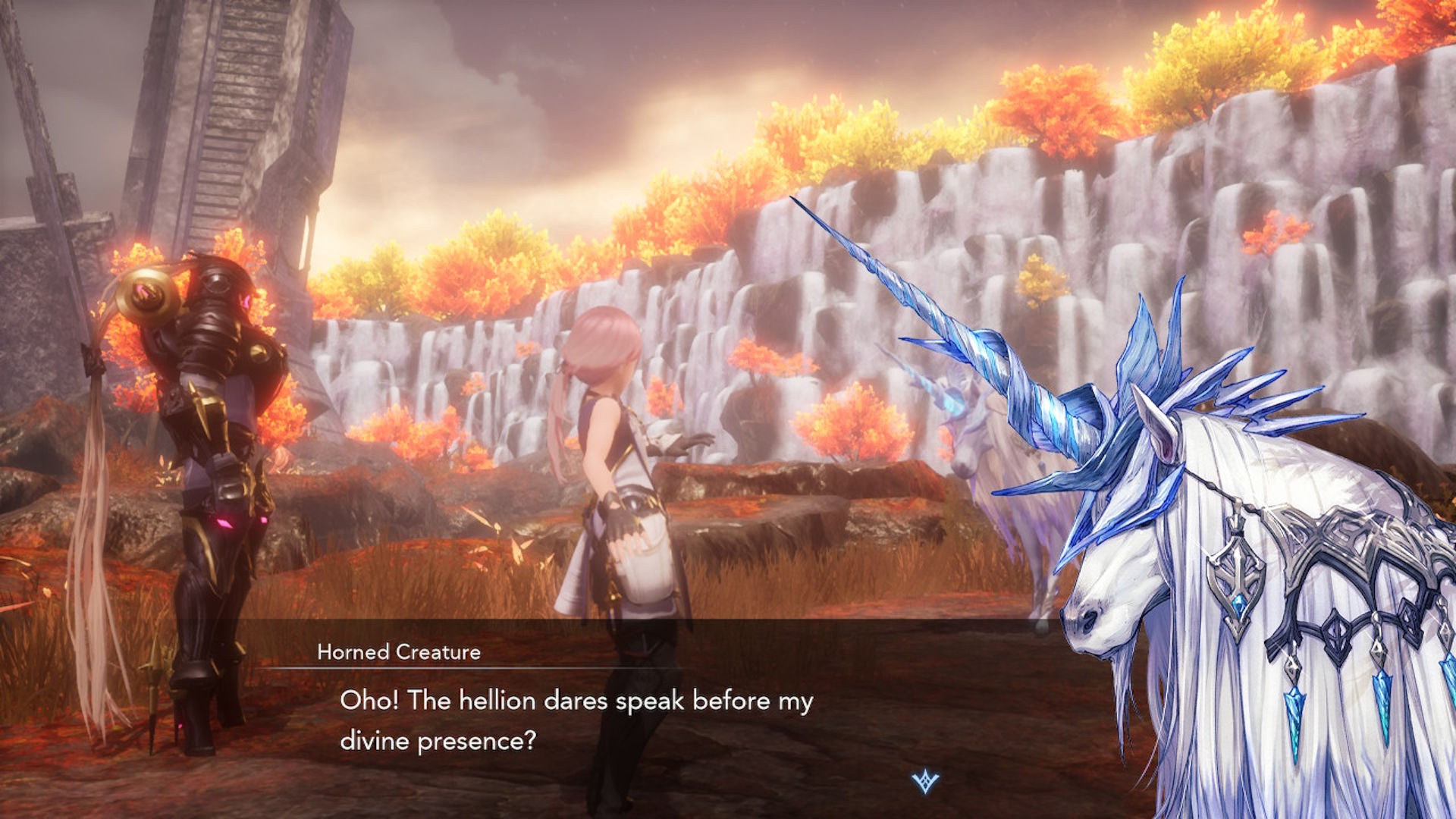
Harvestella - a unicorn talking to the player

Honestly, the story is so over-complicated and off the wall at this point, introducing new characters, cryptids, fairies, time travellers, and more in every other scene, that I genuinely have no idea what’s going on. What I do know, however, is that I absolutely love it.

One thing that does disappoint me about the narrative, though, is the lack of voice acting. The only audible dialogue comes in fleeting, non-committal lines, such as a party member informing you that their health is low, or a shopkeeper greeting you. This leaves hours of walls of text in cutscenes, with nothing but the (admittedly lovely) background music to fill the silence.

While I understand that, given the amount of dialogue and story in the game, getting a team of actors to fully voice it would be a colossal task, the absence of voice acting in even the most important cutscenes feels a little cheap, especially for a full price, triple-A game.

Harvestella review - a group of villagers talking in Lethe

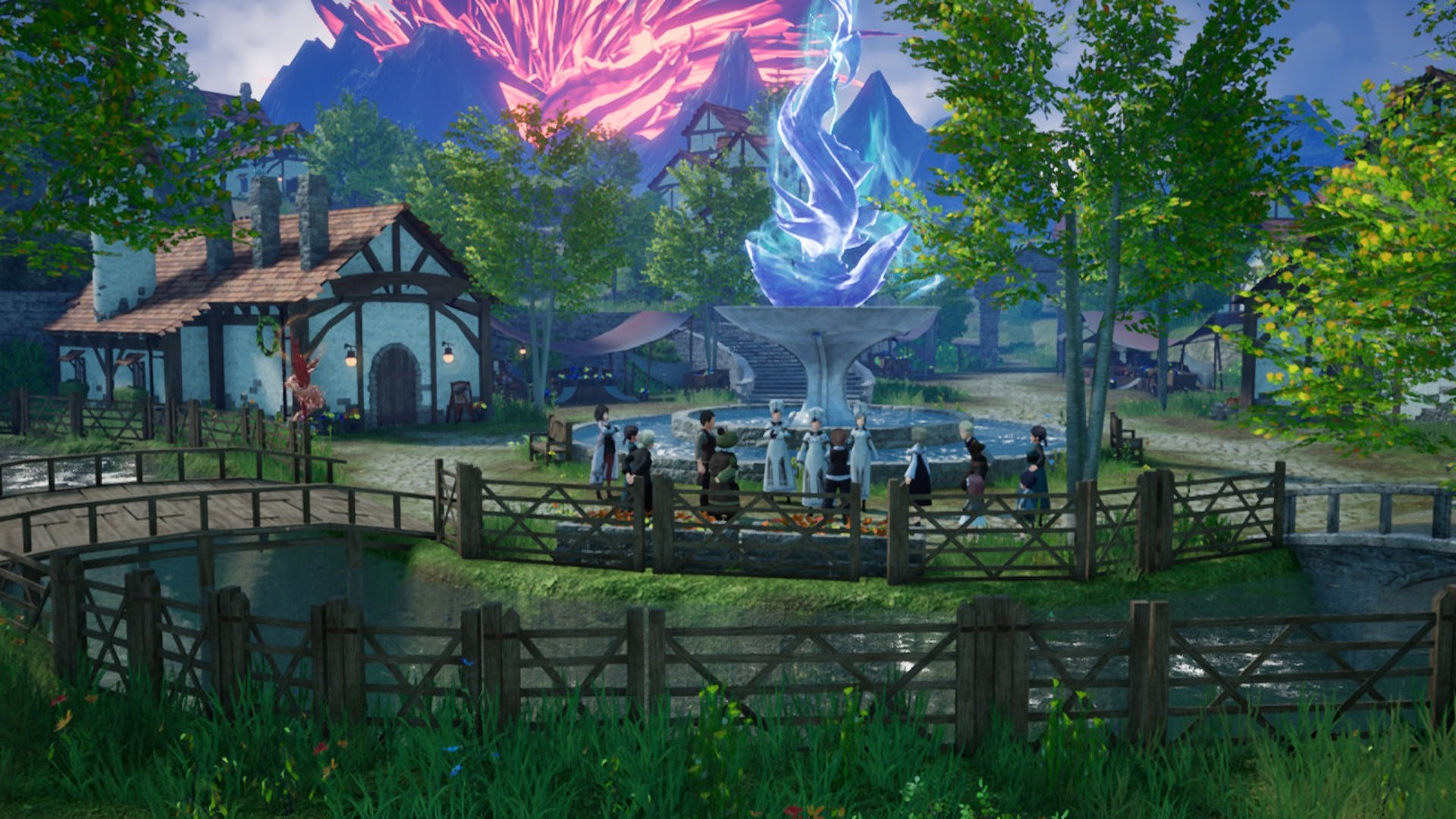
Okay, so let’s talk about the most obvious factor – Harvestella is beautiful. In fact, it’s downright stunning. The environmental design sets up breath-taking landscapes, idyllic towns, and cosy interiors, all of which truly capture the essence of Square Enix’s signature style, while still offering enough individuality and variety to nurture your desire to explore. This is all backed up by a stellar orchestral soundtrack that really fits the vibe of every scene.

The character and enemy designs are also wonderful. There’s a great breadth of variety, from the normal townsfolk and their wizardly mayor, to the heavily armoured Omens, and even an absolutely delightful unicorn adorned with jewels. I’ve not come across a particularly wide range of enemies yet, but those I have seen fit perfectly into the world, with designs that complement their elements and combat styles well.

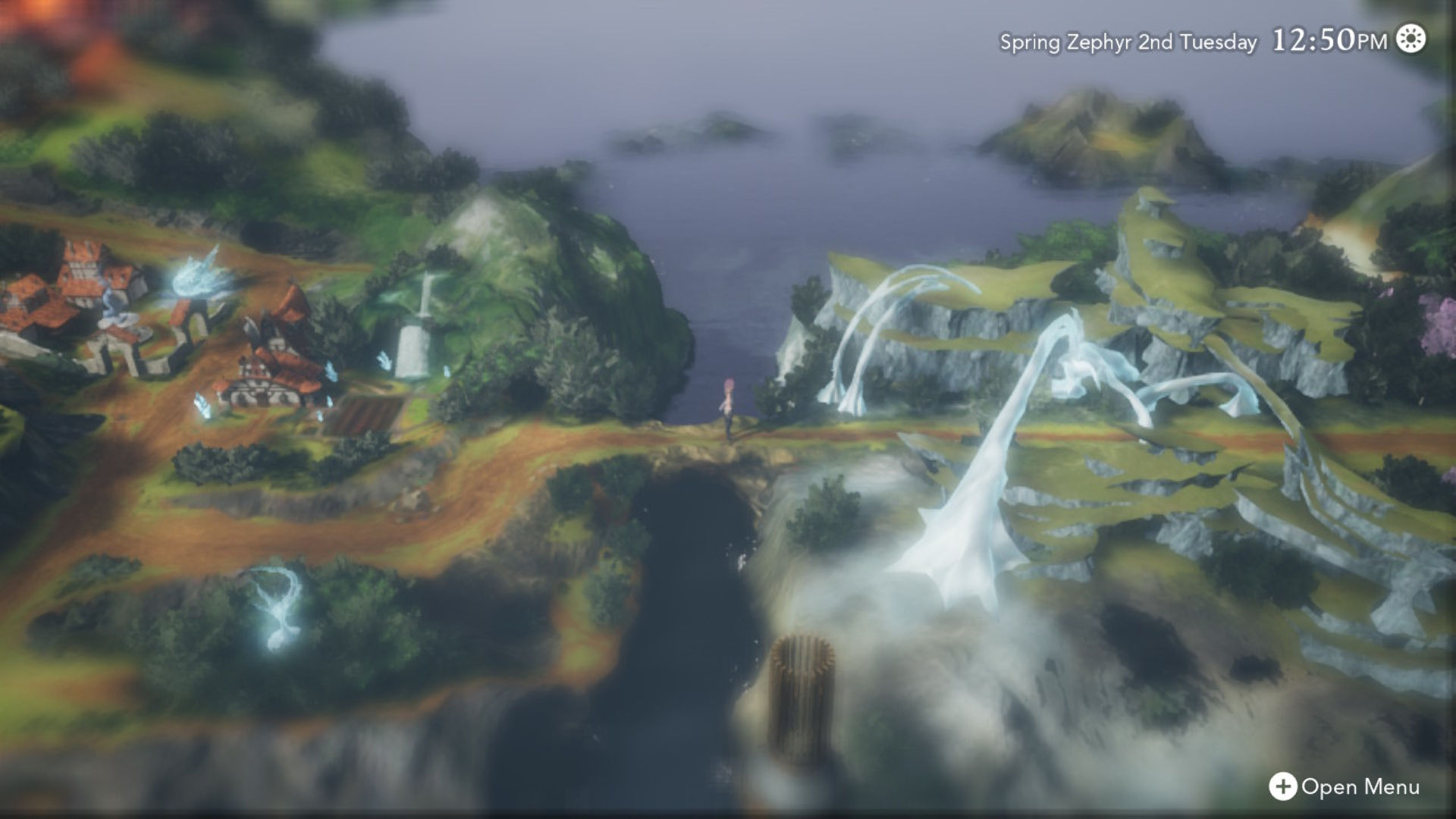
Additionally, the overworld map is a delight. Harvestella isn’t an open world game, instead consisting of different locations such as Lethe Village, your farm, Njord Steppe, and Jade Forest. You access each of these easily by running from location to location in a beautiful overworld map, which you can later traverse quicker by purchasing absolutely adorable mounts.

Harvestella review - the overworld map

Admittedly, you’re pretty restricted when it comes to what locations you can visit and how much you can explore them up to (and likely beyond) the point I’ve reached in the game. Still, I have high hopes that, as the overworld map expands and new locations unlock, Harvestella will continue to meet these high standards.

Locations are often relatively linear, with some twisting paths and hidden treasures dotted along the main route. When exploring places like Njord Steppe or Higan Canyon (which the game, for some reason, refers to as ‘dungeons’), you must remain mindful of the passage of time, as if it gets to midnight and you’ve not yet made it to your bed (or you get slain by an enemy), you pass out from exhaustion and have to pay a fee for your medical treatment.

Luckily, you can activate waypoints which allow you to save and teleport within the location you’re currently exploring, or back to your home. You can also fix ladders and bridges to open shortcuts you can use the next time you visit the area. This means that, should you need to go back to your home for a nap, or run to the store to get some items, you don’t have to do as much legwork to get back to where you left off.

This mechanic took me a little while to get into the rhythm of, as a fast-moving in-game clock feels common in a life sim, but a little out of place when you’re exploring new lands and felling foes. However, with a little trial and error, I’ve come to love being able to freely break up my adventures, popping back home to tend to my crops or have a chat with a villager.

Harvestella review - the player fighting two enemies

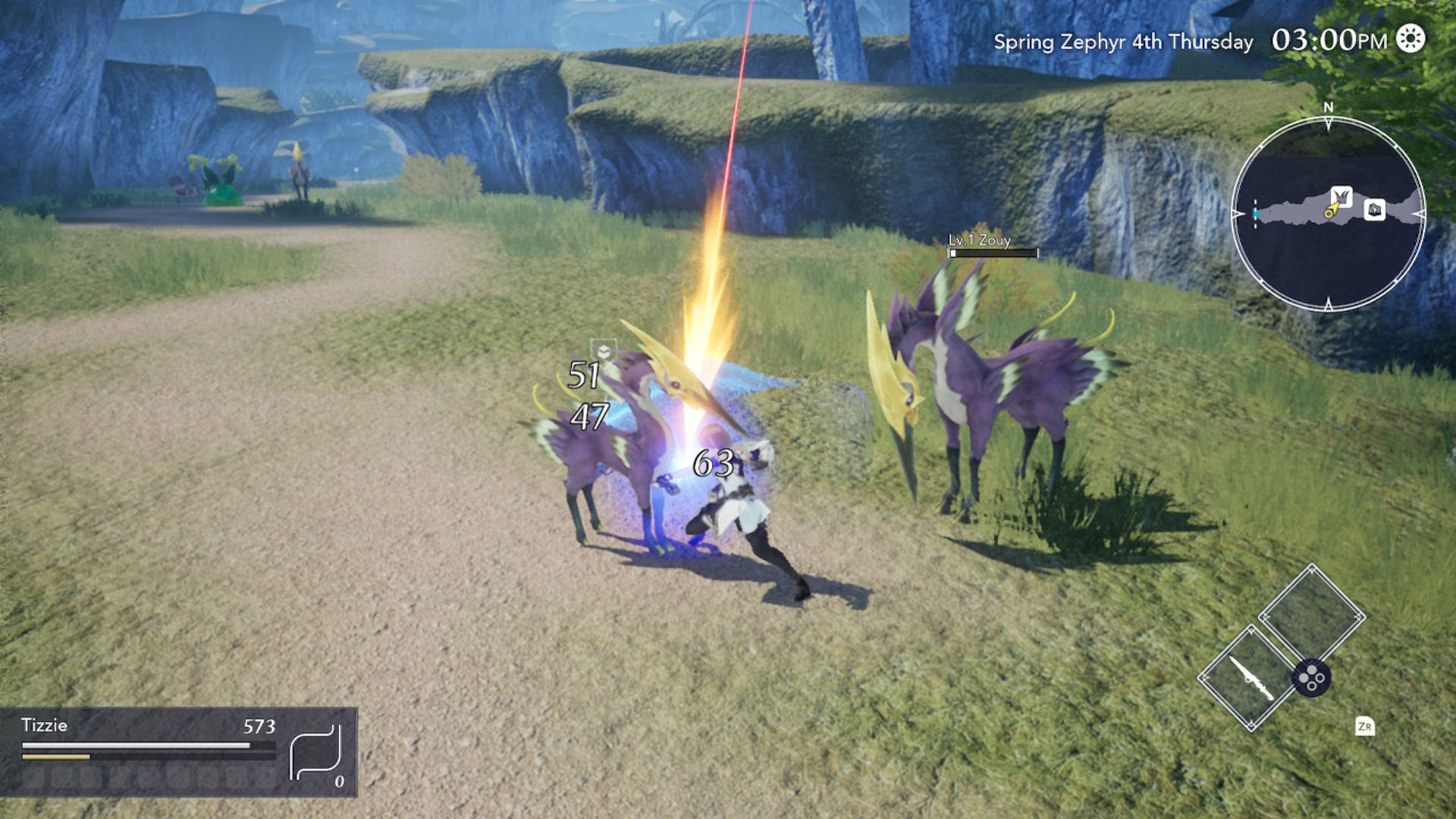
Harvestella’s combat is very interesting, if not a little limited to begin with. Following the classic real-time action combat formula as opposed to turn-based, you’re free to run around attacking monsters or running out of range if you’ve bitten off more than you can chew. Your combat style is dictated by which job you have equipped, with a variety of new abilities opening up later.

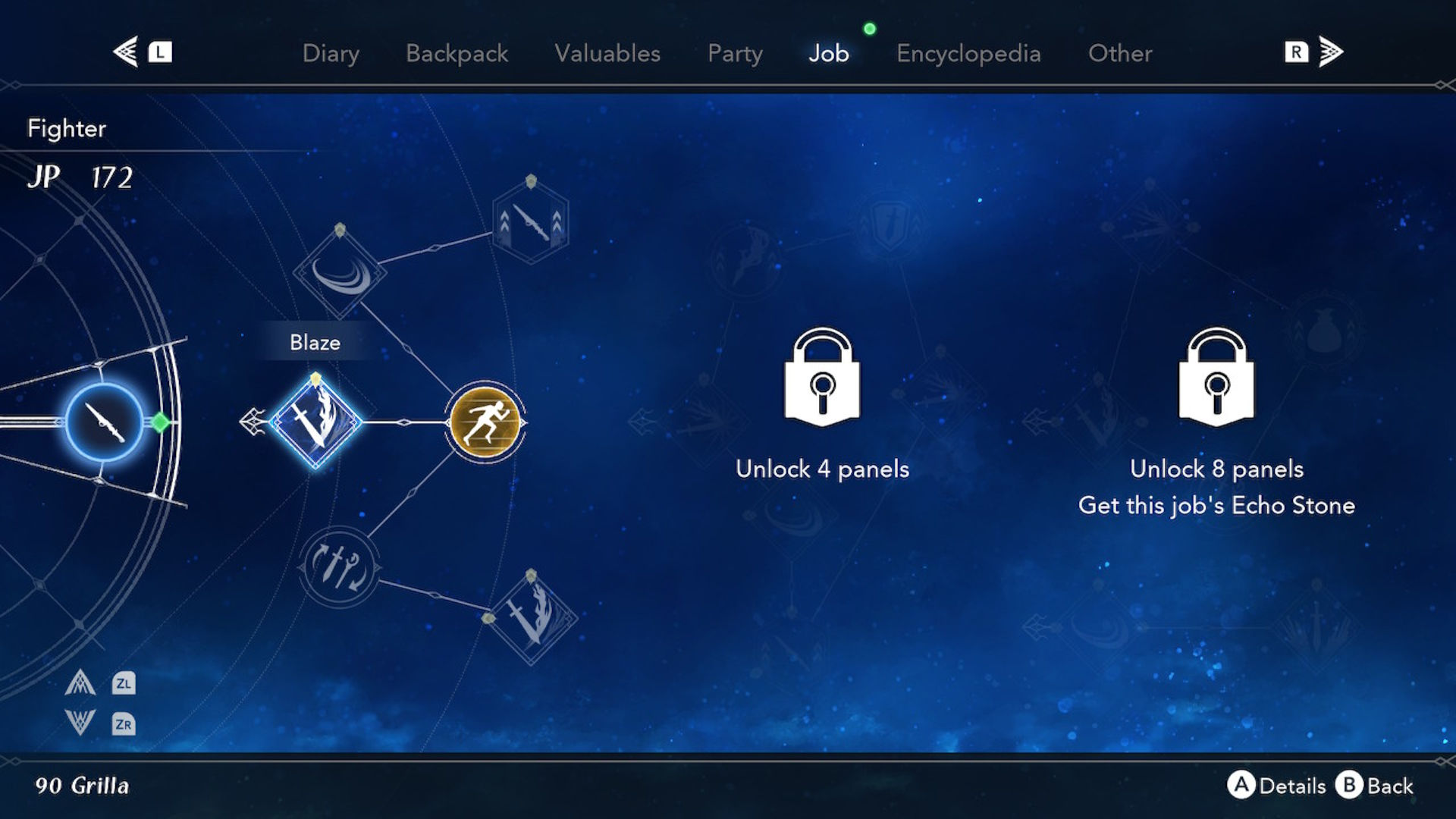
You start with the fighter job, with your offensive abilities relying solely on smashing one button to swing a one-handed sword, and no combos in sight. As you continue to fight, you earn job points, which you can use to unlock new skills and passives. To use a skill on Switch, you have to hold down the ZR trigger, then hit the corresponding button. This feels a little clunky, and I would prefer having skills tied to specific buttons to fit in with the action style of the combat, but you get used to it with time.

Harvestella review - Job skill tree for Fighter

Throughout the game, you gain access to new jobs, which are essentially classes. The second one you get your hands on is the mage, which offers a bit more range than the fighter at base level, and applies elemental damage instead of physical. You can switch jobs on the fly during battle by holding the TZ trigger and pressing the corresponding directional arrow.

Once again, this feels clunky at first, but it does offer some interesting flexibility in battle and encourages you to strategise as you move between targets, exploiting their weaknesses. However, each job has its own job points, which you can only earn by defeating enemies with that specific job, and unlocking a skill or passive for one job doesn’t unlock it for the others. This isn’t a problem most of the time, but having to unlock a very basic combat staple like dodging in each class is quite frustrating when you’re starting off.

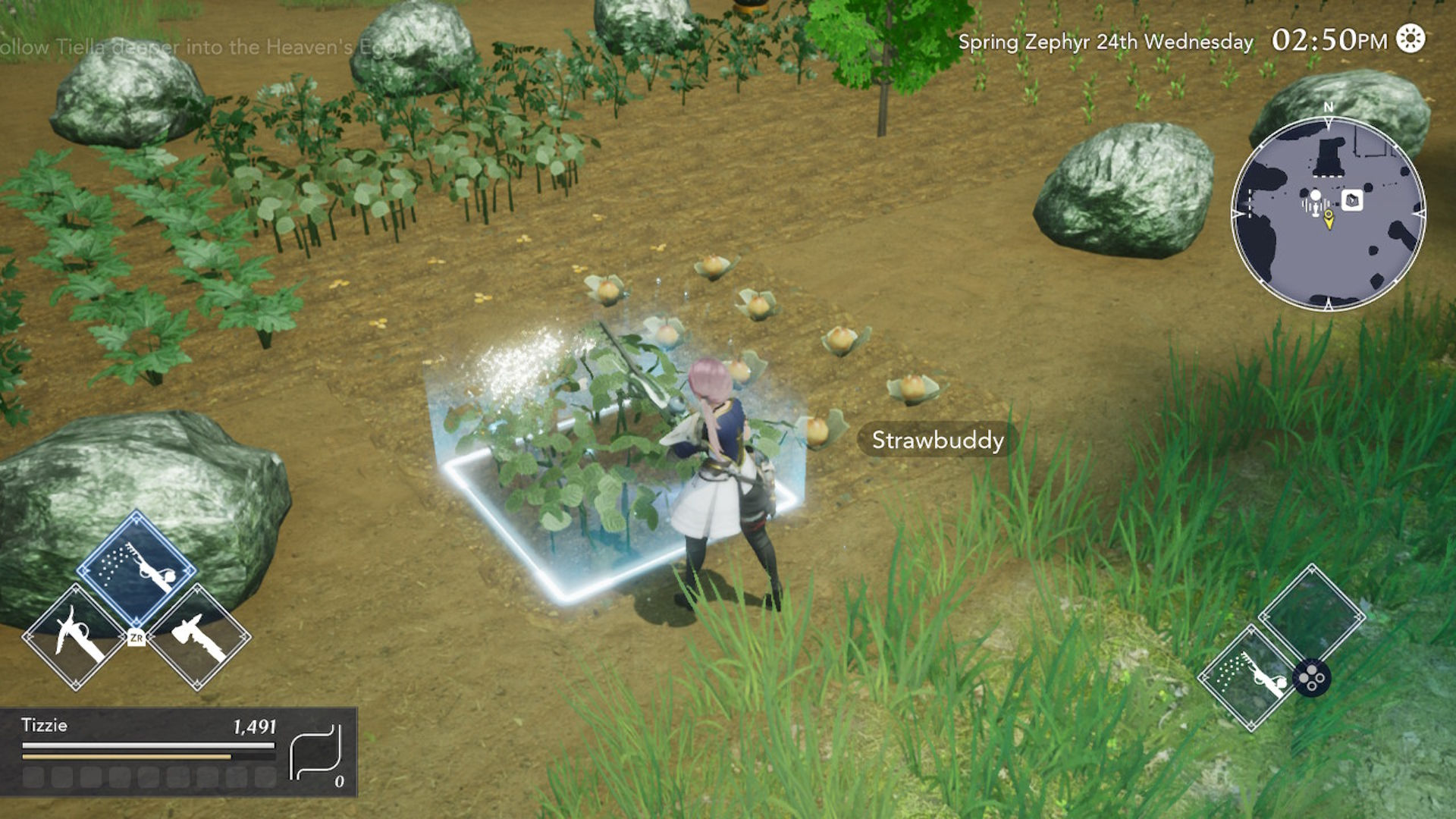
Harvestella review - the player watering crops

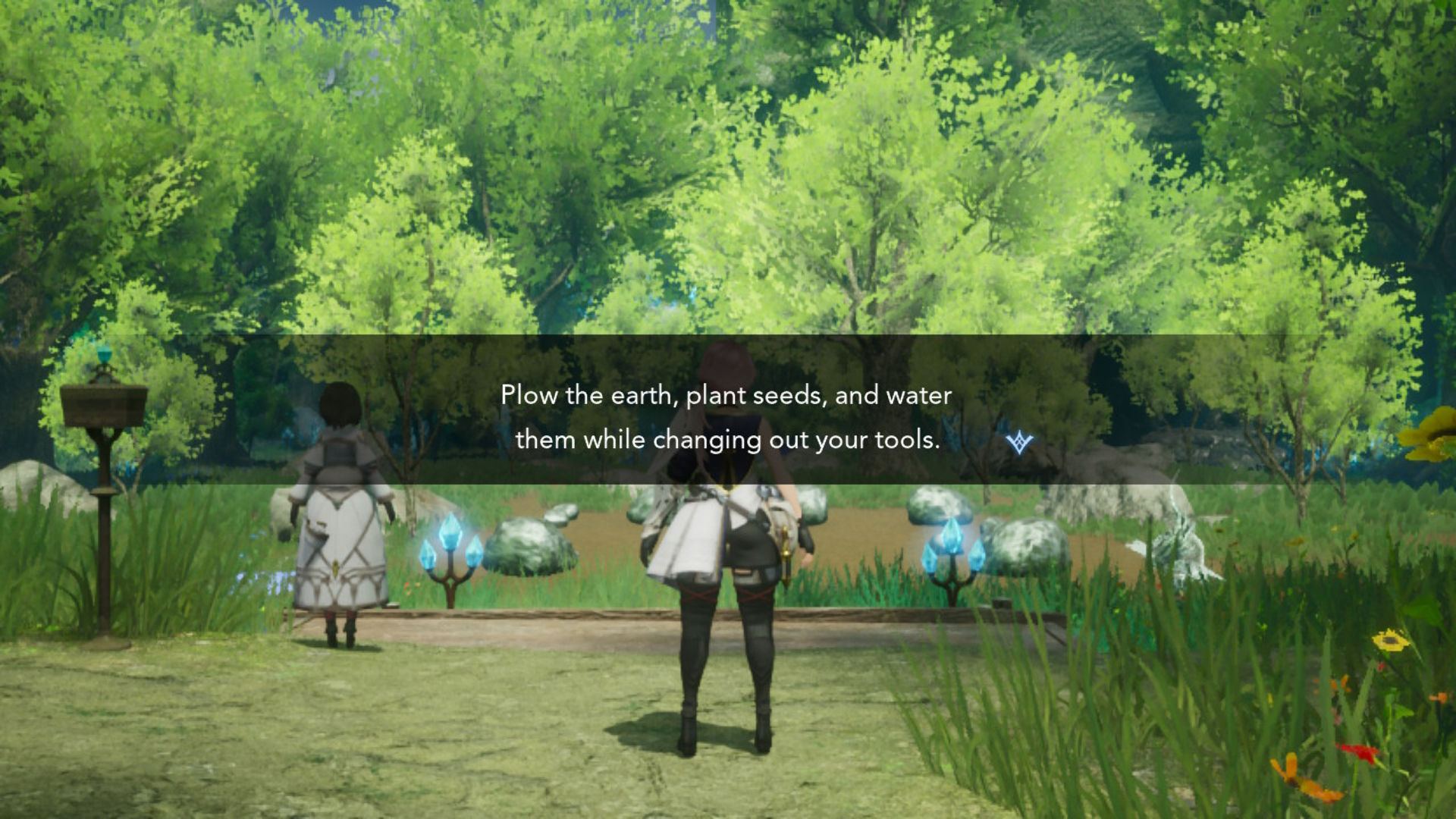
Outside of exploring these locations and fighting enemies, there is, of course, the farming and life sim side of Harvestella. At the beginning of the game, you’re given your own home with a plot of land outside, which becomes your centre of operations. Inside the house, you have stations to unlock for crafting, cooking, and more. Outside, you’ve got a small field where you can grow and harvest crops, and two pens which you can later upgrade and use to keep livestock.

As with combat, farming controls initially feel a bit odd, and take some time to adjust to. Your staple tools are a hoe for tilling the ground, a bizarre water gun contraption used for hydrating your crops, and, once you craft it, a hammer for breaking up rocks that get in your way. You cycle between tools by, once again, holding the trigger, then pressing the corresponding button, then planting the seeds you have equipped by pressing X.

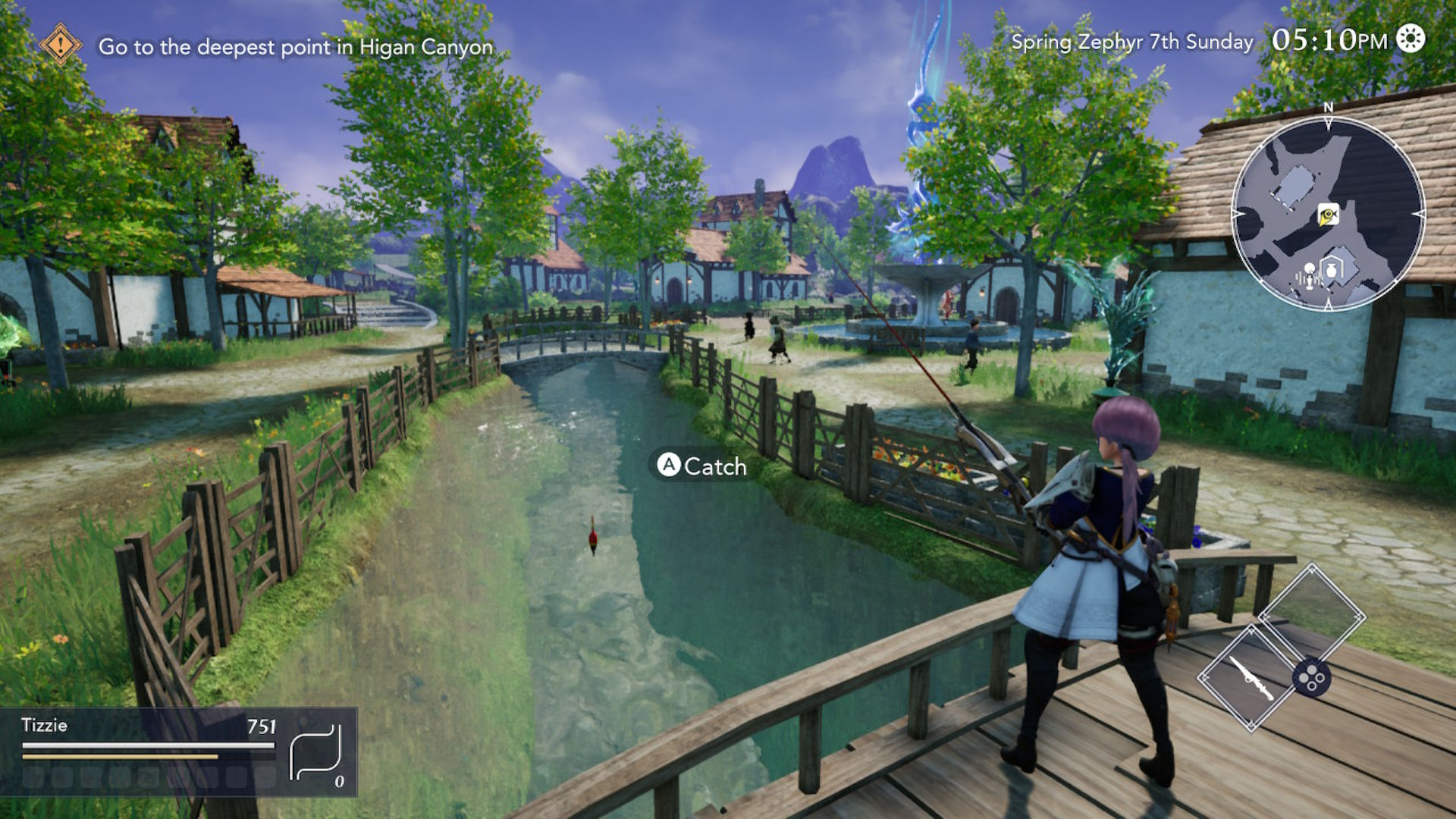
Harvestella review - the player fishing on a bridge

Outside of that, the crafting, fishing, and cooking mechanics are a nice addition, and can be very useful at times, but they’re very simple and formulaic. Additionally, all three can be quite costly to upgrade and fully explore, plus recipes are pricey and hard to come by so far. This is especially painful considering your satiety level and how the stamina system works. If your stomach is empty, your stamina doesn’t replenish by itself. You use your stamina when farming, running, fighting – well, when doing just about anything other than sitting there staring at your surroundings.

Sure, you can eat some of the crops you grow, but they offer such minimal health and stamina restoration that you’re better off selling them to bring in some cash. As a result, I found myself desperately rationing the sandwiches Cres sent me in the post while scrimping enough cash and ingredients to purchase the kitchen counter upgrade and make myself a couple of stir fries. I’m sure this won’t be so much of a problem as I progress through the game, but it was a pain in the first few hours of my playtime.

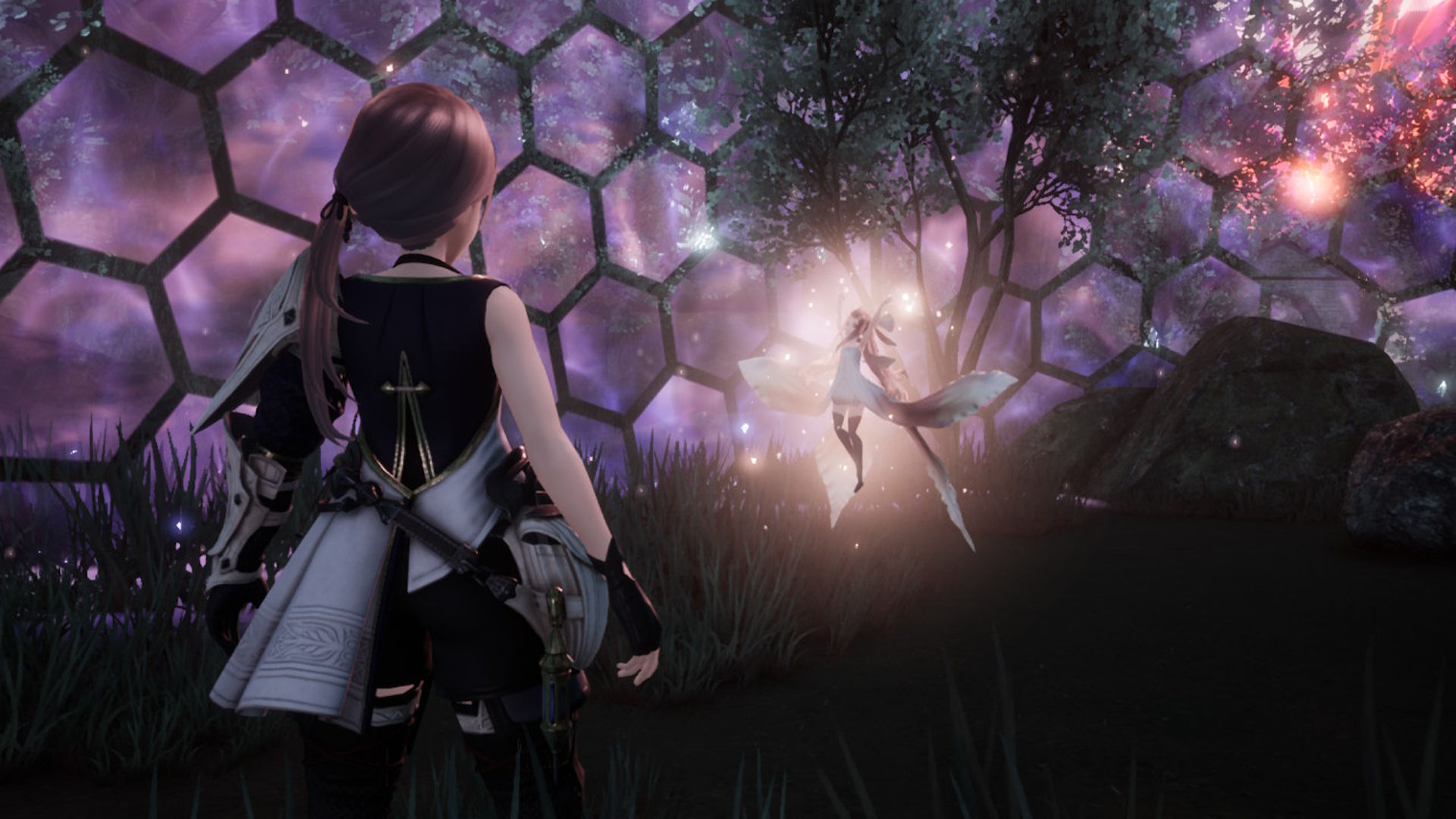
Harvestella review - the player looking at a glowing fairy

So far, the farming and life sim elements certainly feel as though they take a backseat to the narrative, exploration, and combat. For those of you who have spent many hours on pure farming sims like Wylde Flowers, Stardew Valley, and others, you’ll likely feel quite restricted, especially in the early game.

However, I’m still enjoying expanding my farm, and am looking forward to further exploring these mechanics as the game progresses – I only hope they get a bit more development as time goes on, rather than devolving into a tacked-on time sink to stress about at the start of every in-game day.

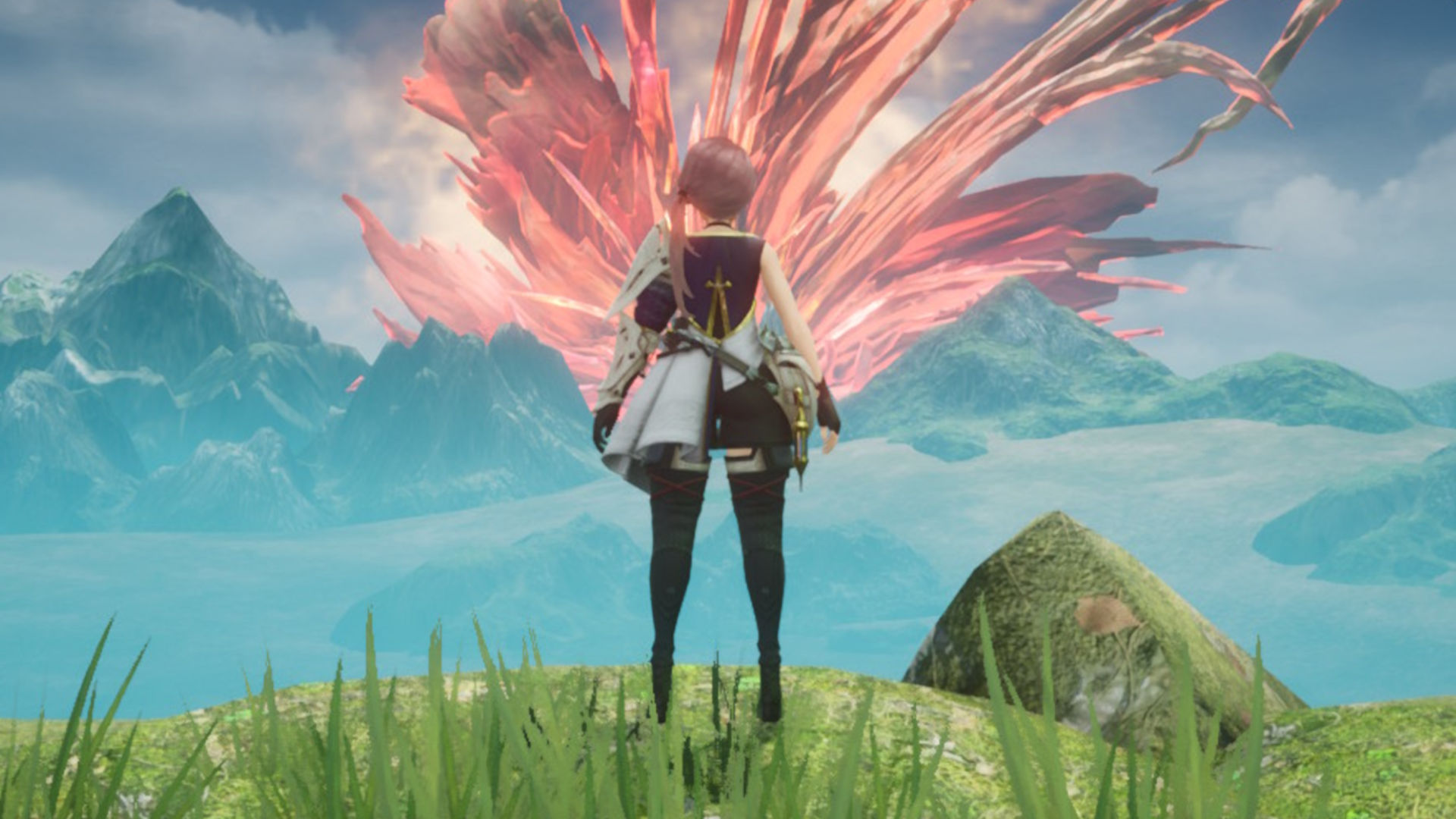
Harvestella review - the player looking at a large red metorite-like structure

And that’s all my thoughts on Harvestella so far. Despite some shortcomings and clunky mechanics, it’s shaping up to be a truly memorable experience, and I’m very excited to see where it goes. Be sure to check back next week, at which point I intend to be a true farmin’ and fightin’ expert. But, if you can’t wait until then, be sure to check out our Harvestella characters, Harvestella cooking, and Harvestella romance guides to start your adventure on the right foot. I wish you a happy harvest.

Posted on Leave a comment

FIFA 23 Ultimate Team – FUT web app and errors

FIFA 23’s Ultimate Team is arguably the main draw for many players. Sure, there are a bunch of different game modes, like FIFA 23’s career mode, but FUT has the magical card-collecting draw of a classic Panini sticker book. Well, it’s magical to an extent – it is, of course, also a money-making machine, pulling billions from its devoted players.

But, whatever, this ain’t no microtransaction soapbox. I’m here to help all you FIFA 23 Ultimate Team players get around any issues you may find, as well as a couple of FUT Ultimate Team tactical tips. Most important of all, I’ll help you understand the FUT web app, a pretty essential tool for any fan not too familiar with FUT.

Anyway, that’s enough effs in a sentence to turn anyone blind. Head downstairs article-wise for some of FUT Ultimate Team’s top tips, tricks, and tribulations. Or, if you think you already know it all, check out our guides to FIFA 23 crossplay, FIFA 23 ratings, and FIFA 23’s Switch version. Or maybe you’ve got a nose for numbers? That’s where our FIFA 23 launch news might be of interest.

FIFA 23 Ultimate Team web app

The FUT web app is a great little tool to use on the go, and it’s absolutely essential if you’re going to turn into a FIFA 23 Ultimate Team pro. You can either head to the FUT web app page through a web browser or download it from one of the links below.

Once you’re in, you can participate in FUT events, complete squad-building challenges, and build and manage your squads, helping you stay on top of your game and even earn rewards while away from your console.

YouTube Thumbnail

FIFA 23 Ultimate Team errors

There are, as always with big online games, possible technical issues that can arise. Check out some of the most notable FIFA 23 Ultimate Team errors below, and how to fix them.

FIFA 23 Ultimate Team not connecting error

Here are a few possible solutions to FUT 23 Ultimate Team connection errors:

  • Close and reopen FIFA 23
  • Restart your console
  • Reboot your router
  • Check your local service provider for any net issues
  • Head to Downdetector to see if others have reported issues

If other people are also reporting connection issues, the likely remedy is to wait around. It’s almost definite the issue is on EA’s side.

Are the FIFA 23 servers down?

As with above, there are a few things you can do to see if the FIFA 23 servers are down or if the issue is on your end. If none of the above steps work, head again to Downdetector to see if others have reported issues. If they have, that’ll be why you can’t connect.

That’s all we’ve got on FIFA 23’s Ultimate Team for now. For more, check out our Football Frontier codes for some free goodies. Or for some tech help for virtual meetings, check out our Skype download and Zoom download guides.

Posted on Leave a comment

Where to pre-order Fire Emblem Engage

During the Nintendo Direct September 2022, Nintendo confirmed that a brand new entry in its long-running strategy franchise is incoming, in the form of Fire Emblem Engage. With an energetic and colourful new visual style, as well as a different style of battle that pays homage to the many games in this legacy series, we already can’t wait for the Fire Emblem Engage release date.

Of course, you can’t play the game if you don’t buy it, and that’s where our Fire Emblem Engage pre-order guide comes in. We’ve scoured the internet to find you the best deals, including the majestic divine edition and all its juicy goodies. Players can explore the region of Elyos and summon the power of previous heroes in this thrilling new entry to the strategy franchise.

We’ll keep our eyes out for any deals and pre-order bonuses that become available, but if you see anything we haven’t listed, be sure to get in touch with us over at the Pocket Tactics Facebook page, and we’ll update the guide ASAP. While we wait though, you can tide yourself over by reading our Fire Emblem: Three Hopes review to see why this action-orientated entry is still worth your time.

Let’s dive into our Fire Emblem Engage pre-order guide.

Fire Emblem Engage pre-order

Fire Emblem: Engage pre-order: key art for the game Fire Emblem Engage shows a series of fantasy characters with red and blue hair, ready for war

Regular Edition

Divine Edition

What is included in the Fire Emblem Engage: Divine Edition?

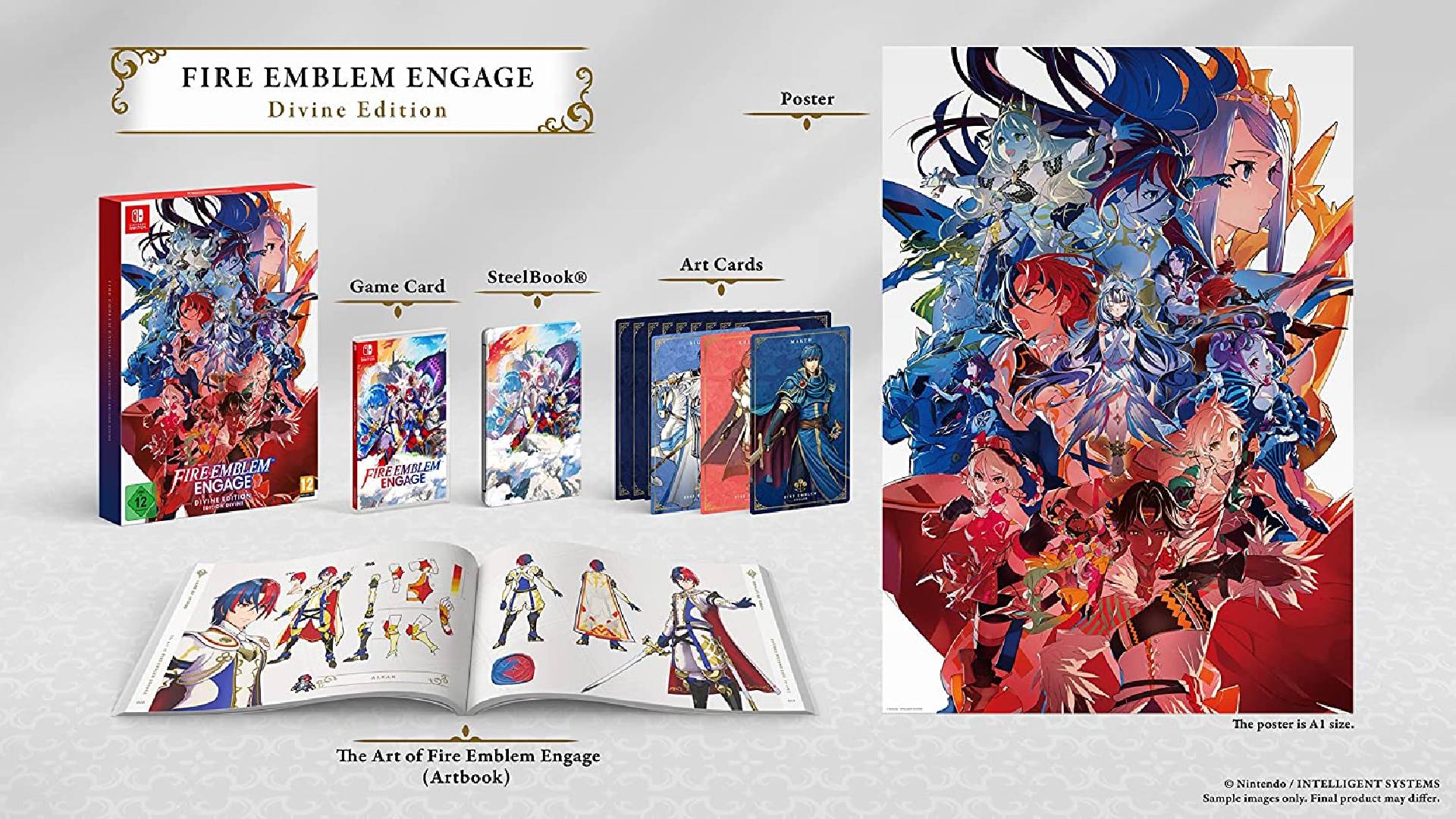
Fire Emblem Engage pre-order: a product listing for the Fire Emblem Engage Divine Edition shows the game and the pre-order bonuses, including art cards, an artbook, a steelbook, and an A1 poster

The Fire Emblem Engage: Divine Edition includes a copy of the game, a steelbook, art cards, an A1 poster featuring key art of the protagonists, and a deluxe Fire Emblem Engage artbook.

What to play ahead of Fire Emblem Engage?

The Fire Emblem games do not operate as sequels, with each taking place in its own universe and with its own cast of characters. You can pick up almost any of the recent Fire Emblem games to get an idea of Fire Emblem Engage, but we would recommend the most recent entries, either Fire Emblem Three Houses for the Nintendo Switch, Fire Emblem Awakening for the 3DS, or Fire Emblem Echoes: Shadows of Valentia for the Nintendo 3DS.

If you have played and enjoyed Fire Emblem Three Houses, don’t forget it actually has a sequel, in the form of the Koei Tecmo-developed Fire Emblem Three Hopes. This entry is a Musou-inspired game focusing on action, and follows the events of Three Houses in an alternative universe, showing many different aspects of the original story.

Ok gamers, hopefully, this helps you snag a bargain and ready yourself for the coming conflict. We’ll see you on the battlefield. However, if you need something to play today, be sure to check out our guide to the best Switch strategy games next.

Posted on Leave a comment

Cop a copy of Cuphead with its upcoming physical release

They say time flies when you’re having fun. Well, we must have been having a lot of fun when playing Cuphead because the beloved platformer turns five years old today. It took the world by storm back in 2017 thanks to its challenging platforming, fantastic music, and obviously the painstakingly illustrated hand-drawn animation visuals. The Switch port is also a tremendous conversion of the title, so wherever you play it, you’re in for a treat.

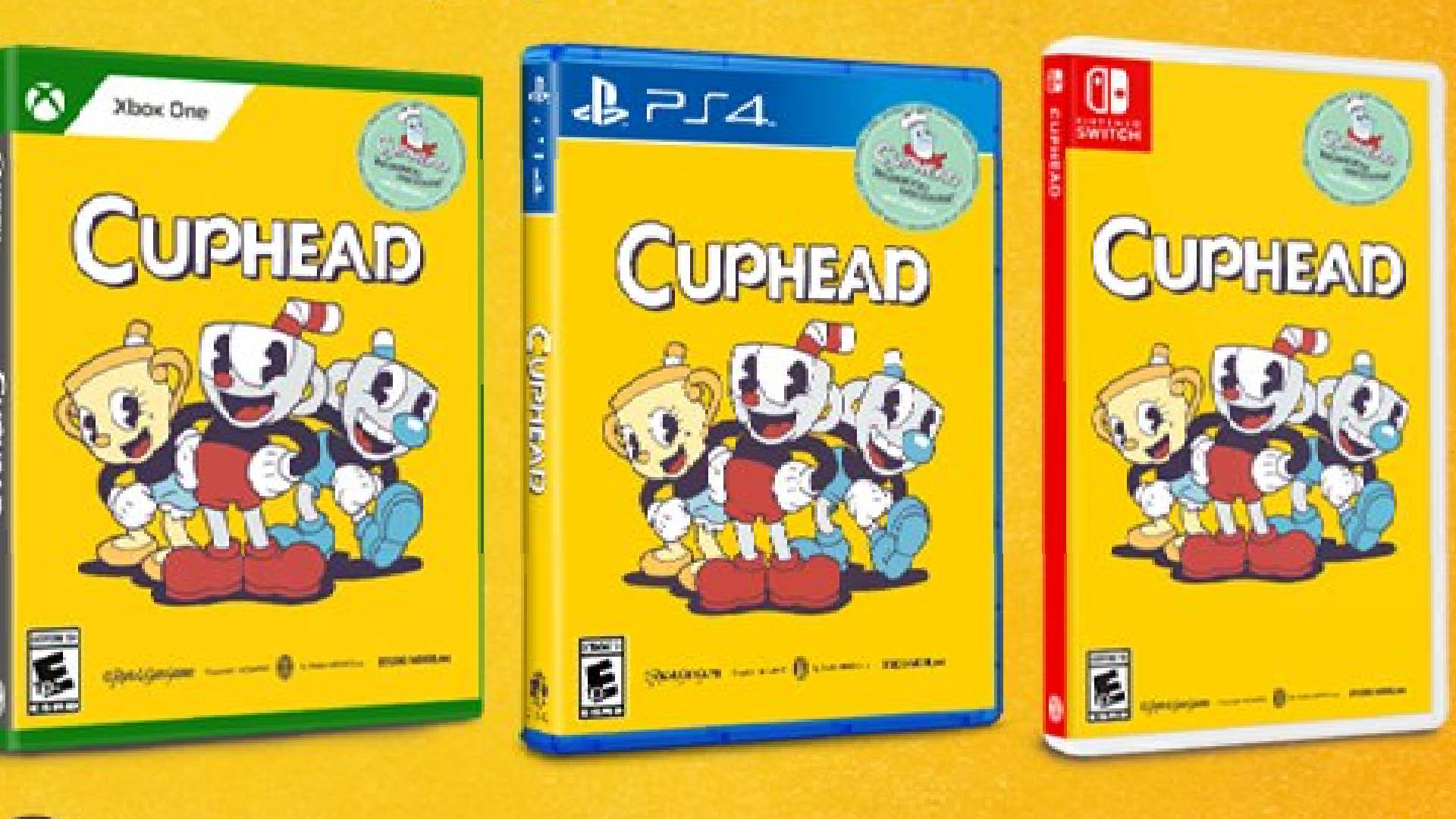
Now players have even more options, as Studio MDHR unveiled the Cuphead physical release to celebrate the game’s fifth birthday, and now we can finally put the title on our shelf as we’ve always dreamed of. Studio MDHR is teaming up with iam8bit for the launch, and the physical release is coming to Nintendo Switch, Xbox One, and Playstation 4. It also contains all content released so far, including the recent Cuphead: The Delicious Course DLC.

We don’t currently have any information about the Cuphead physical release date, but any interested fans can sign up to be notified when more information is available over at the iam8bit website. For even more great Cuphead content, be sure to check out our articles covering Cuphead bosses, Cuphead characters, and Cuphead Funko Pop.

Let’s dive into our guide to the Cuphead physical release date.

Cuphead physical release: promotional art shows boxed copies of the game Cuphead

 When is the Cuphead physical release date?

We don’t have any exact information on the Cuphead physical release date yet, but fans can register their interest through this portal at the iam8bit website

If you just can’t wait to get your next gaming fix, then be sure to check out our guide covering the best Switch platformers next.

Posted on Leave a comment

Where to pre-order The Legend of Zelda: Tears of the Kingdom

It felt like it would never happen. After five years of waiting, and more than a year since its original announcement, we finally have The Legend of Zelda: Tears of the Kingdom’s release date. Yep, that’s right, not only do we know when it’s coming, but we also know The Legend of Zelda: Breath of the Wild’s sequel has a name. I’m just delighted I can stop calling it BotW2. What a nightmare that was.

So, if you’re any fan like we are, then you’re probably going to want The Legend of Zelda: Tears of the Kingdom pre-order details right away, so you can guarantee that Link’s next adventure will be on your doorstep on day one. That’s what we’ve got, with lots of different places to buy it prior to release.

Keep in mind, however, that specific retailers may announce pre-order bonuses in the future. We’ll update this guide as soon as we see them, so it may be worth holding off for a minute to see if there are any extra goodies you can get from pre-ordering. Anyway, once you’re done here, check out our BotW recipe book to get a reminder of what you’ll be cooking on your next adventure.

The Legend of Zelda: Tears of the Kingdom pre-orders

You can get The Legend of Zelda: Tears of the Kingdom pre-orders from both Best Buy, Base, and Amazon, currently. We’re sure more retailers will get their pre-orders ready soon enough, so check back if you’d rather not give your money to daddy Bezos.

YouTube Thumbnail

That’s all The Legend of Zelda: Tears of the Kingdom pre-order information we’ve got for now. If you’re still hooked on the previous game, check out our BotW amiibo, BotW memory locations, and BotW Link guides.

Posted on Leave a comment

Temtem starters – what are they, which to choose, and evolutions

Following on from the tradition continued through all nine generations of main series Pokémon games, there are three Temtem starters to choose from in Crema’s monster tamer. It’s the biggest decision that you make through the game, and though you can pick up all three with a bit of smarts, it still matters which you opt for first.

So, we’ve put together this Temtem starters guide, laying out the details on the three main monsters, their evolutionary paths, and some other useful tidbits for your trainer adventure. Like we said earlier, you can pick up all three by the end of your journey, but whichever one you go for will have an impact on how you play the early game, and how you go about party composition.

For more trainer advice, be sure to see if there are any available freebies with our Temtem codes, or bone up on your battle awareness with our Temtem type chart. If you’re yet to jump into this new world of creatures and critters, check out our Temtem review to see if we can convince you to Temtem up.

Which Temtem starter should I choose?

It doesn’t really matter which starter Temtem you choose, as you can easily obtain the two you don’t pick either in the wild or via the Temtem trading house. With the variety of Temtem you can catch to bolster your team, and no real type advantage across all the dojo and story battles, it’s really down to personal preference which of the three you opt for.

High def images of the three Temtem starters Smazee, Houchic, and Crystle, jumping for joy

What are the Temtem starter evolutions?

All three of the Temtem starters have a three-tier evolutionary path, but the amount of training each starter Temtem needs is different for each.

Crystle / Sherald / Tortenite – Crystle first evolves into Sherald after 30 levels of training before transforming into the mighty Tortenite as a final evolution after training Sherald through 21 levels. Tortenite gets the addition of toxic typing to make it a crystal/toxic hybrid, as well as a special attack boost on its previous forms that makes it much more potent in battle.

Smazee / Baboong / Seismunch – Smazee’s evolutionary path turns the melee monkey into Baboong after 29 levels, and finally Seismunch after 23 levels with Baboong. The final evolution Seismunch is another dual type, combining melee and rock for some impressive physical attacks.

Houchic / Tental / Nagaise – Houchic evolves into its second stage, Tental, after 29 levels, before fully evolving into the final stage form and mental/water hybrid Nagaise after another 24 levels of training Tental. Nagaise is by far the most potent special attacker of the fully evolved starter trio, but its low HP makes it a little bit of a glass cannon in tough battles.

All three of the Temtem starters final evolutions on a custom made image

Temtem starter locations

If you’re looking to find the Temtem starters in the wild, we’ve put together a little table to indicate where in the wide world of the Airborne Archipelago you need to look. As you can see, each is a bit of a game of chance to find, with all three starters sharing a 5% catch probability, so you should probably take along a good status effect-inflicting monster

Temtem Location Catch chance
Crystle Mines of Mictlan and Kupeleleza 5% 
Smazee Greenglen Forest (Arbury)  5%
Houchic Meadowdale (Arbury)  5%

There you have it, all you need to know about the Temtem starters. To get your head around another bunch of starter monsters, but for the next big Pokémon adventure, be sure to check out our Pokémon Scarlet & Violet starters guide.