Posted on Leave a comment

What’s new in Fedora Workstation 38

Fedora Workstation 38 is the latest version of the leading-edge Linux desktop OS, made by a worldwide community, including you! This article describes some of the user-facing changes in this new version of Fedora Workstation. Upgrade today from GNOME Software, or use dnf system-upgrade in a terminal emulator!

GNOME 44

Fedora Workstation 38 features the newest version of the GNOME desktop environment. GNOME 44 features subtle tweaks and revamps all throughout, most notably in the Quick Settings menu and the Settings app. More details about can be found in the GNOME 44 release notes.

File chooser

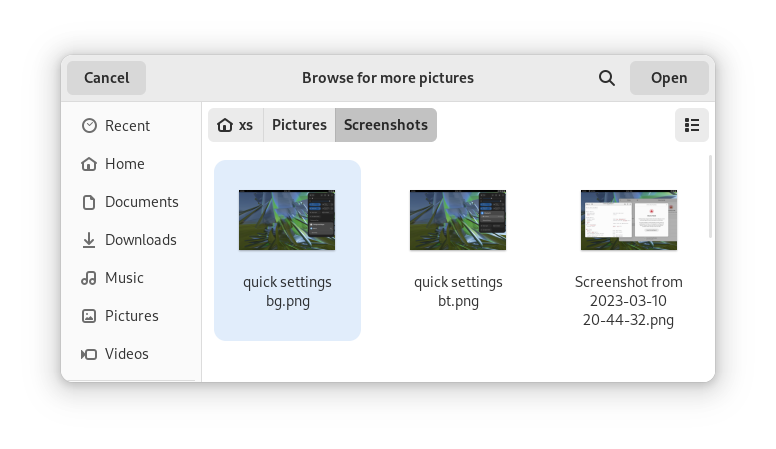
Most of the GNOME applications are built on GTK 4.10. This introduces a revamped file chooser with an icon view and image previews.

GTK 4.10's new file chooser, showing the icon view with image previews.
Icon view with image previews, new in GTK 4.10

Quick Settings tweaks

For GNOME 44 There have been a number of improvements to the Quick Settings menu. The new version includes a new Bluetooth menu, which introduces the ability to quickly connect and disconnect known Bluetooth devices. Additional information is available in each quick settings button, thanks to new subtitles.
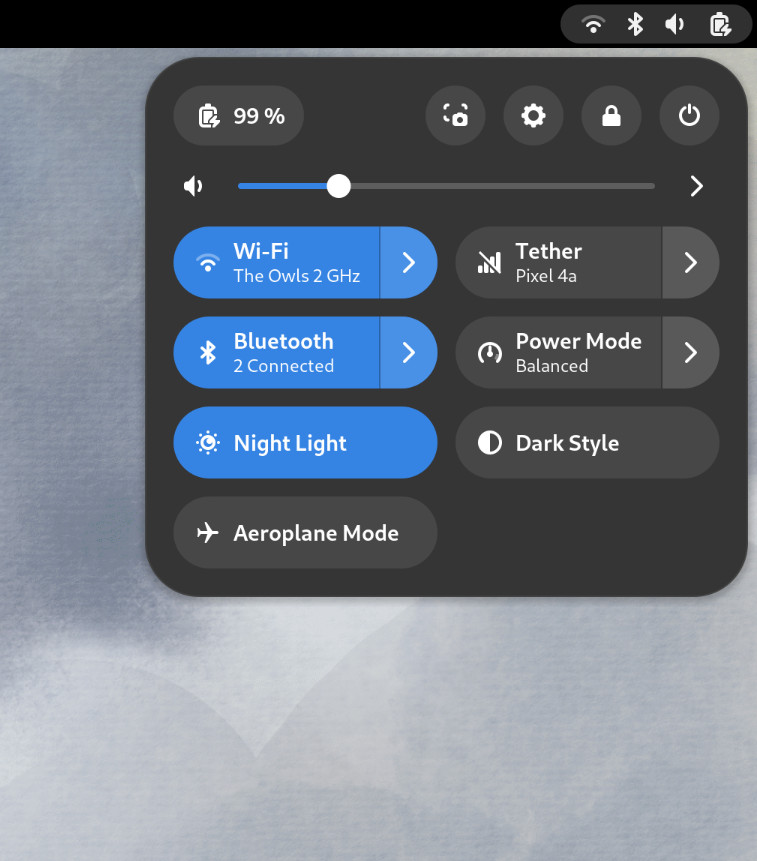
The Bluetooth menu can now be used to connect to known devices

Also in the quick settings menu, a new background apps feature lists Flatpak apps which are running without a visible window.
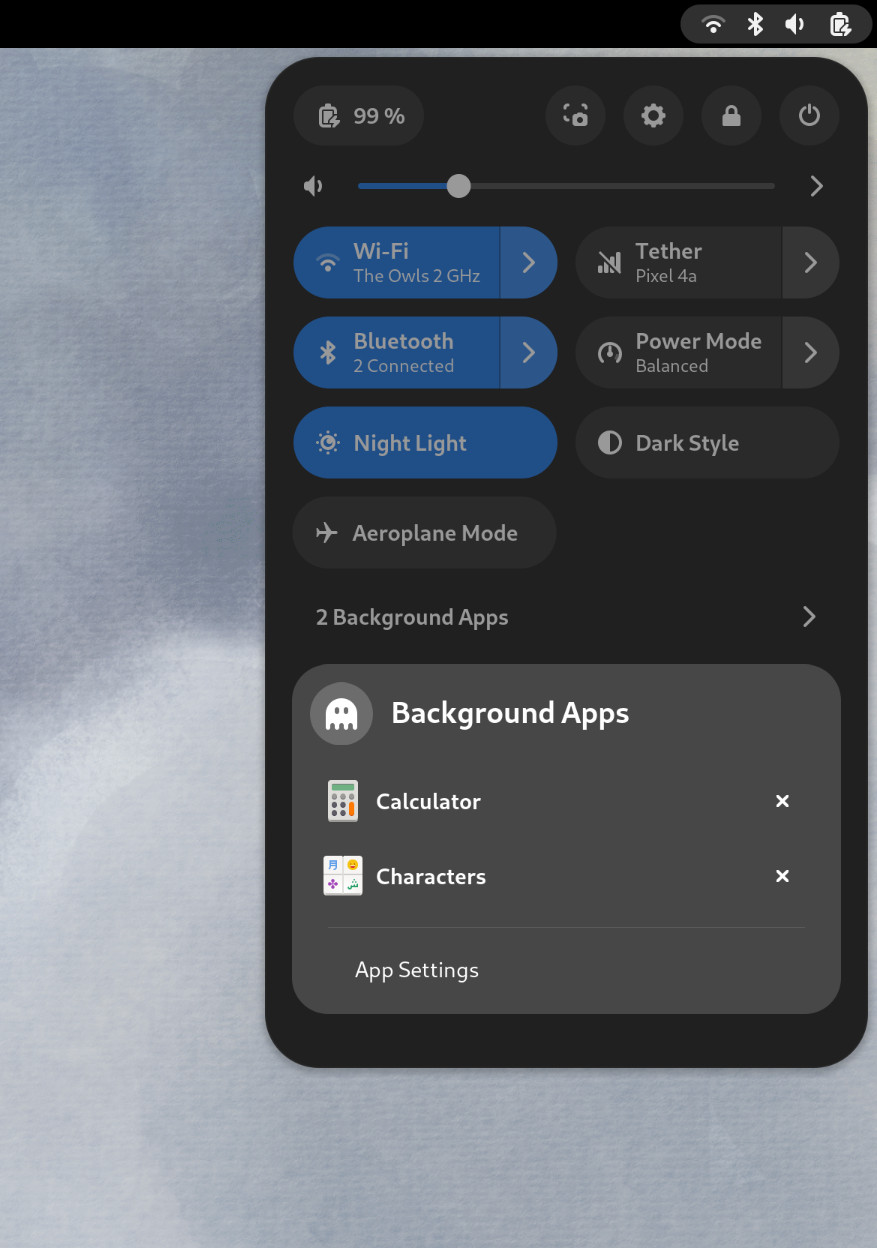
Background Apps lets you see sandboxed apps running without a visible window and close them

Core applications

GNOME’s core applications have received significant improvements in the new version.

Settings has seen a round of updates, focused on improving the experience in each of the settings panels. Here are some notable changes:

  • Major redesigns of Mouse & Touchpad and Accessibility significantly improves usability.
  • Updated Device Security now uses clearer language.
  • Redesigned sound now includes new windows for the volume mixer and alert sound.
  • You can now share your Wi-Fi credentials to another device through a QR code.
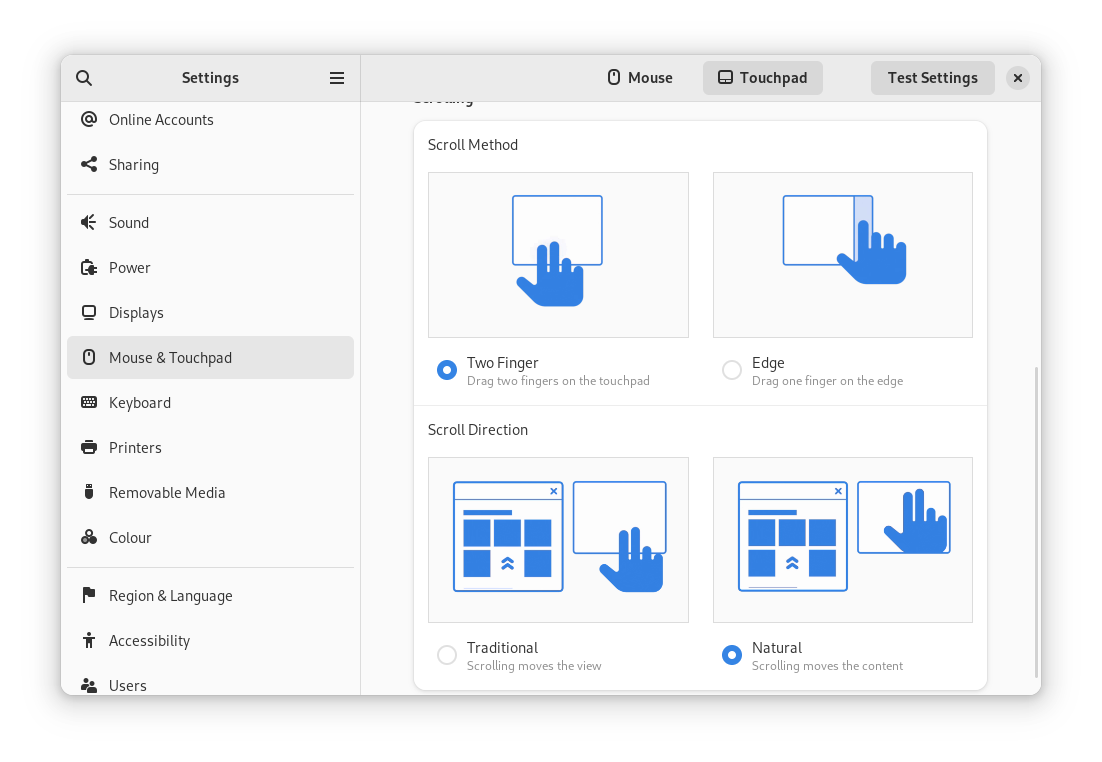
The Mouse & Touchpad panel in the GNOME Settings app, showing the Touchpad settings.
The revamped Mouse & Touchpad panel in Settings

In Files, there is now an option to expand folders in the list view.
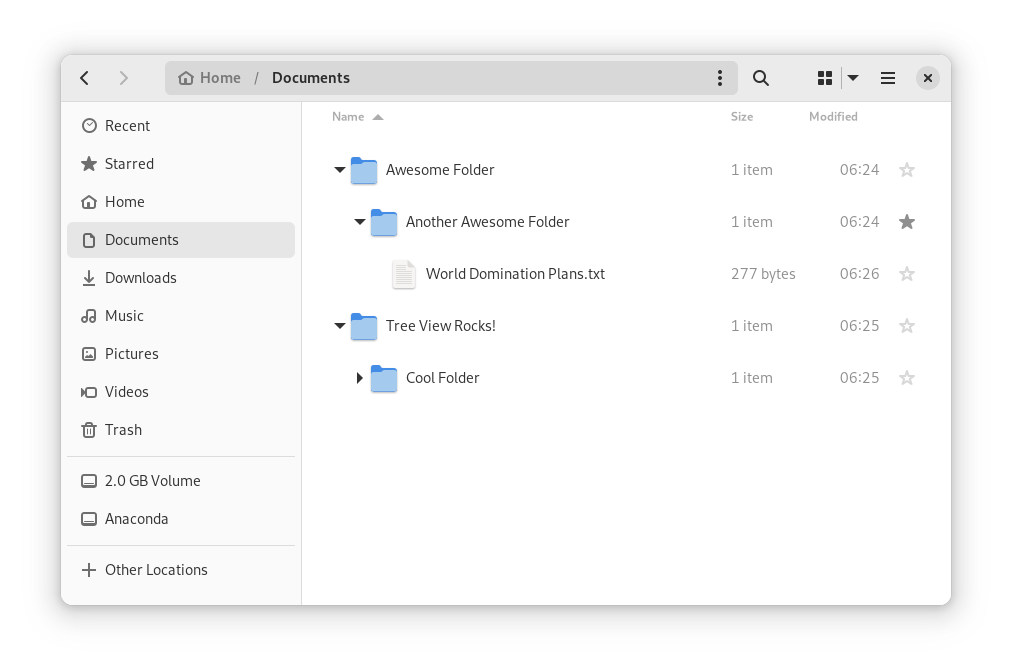
The tree view can be turned on in Files’ settings

GNOME Software now automatically checks for unused Flatpak runtimes and removes them, saving disk space. You can also choose to only allow open source apps in search results.

In Contacts, you can now share a contact through a QR code, making it super easy to share a contact from your desktop to your phone!

Third-party repositories

Fedora’s third-party repositories feature makes it easy to enable a selection of additional software repos. Previous versions included a filtered version of Flathub, which included a small number of apps. For Fedora 38, filtering of Flathub content no longer occurs. This means that the third party repos now provide full access to all of Flathub.

The third party repos must still be manually enabled, and individual repositories may be disabled from the GNOME Software settings. If you want to keep proprietary apps from showing up in your search results, you can also do that in GNOME Software’s preferences menu.
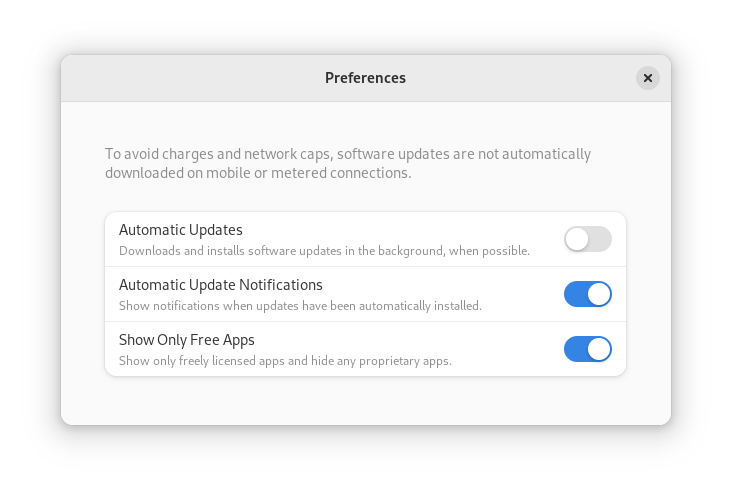
You are in control.

Under-the-hood changes throughout Fedora Linux 38

Fedora Linux 38 features many under the hood changes. Here are some notable ones:

  • The latest Linux kernel, version 6.2, brings extended hardware support, bug fixes and performance improvements.
  • The length of time that system services may block shutdown has been reduced. This means that, if a service delays your machine from powering off, it will be much less disruptive than in the past.
  • RPM now uses the Rust-written Sequoia OpenGPG parser for better security.
  • The Noto fonts are now the default for Khmer and Thai. The variable versions of the Noto CJK fonts are now used for Chinese, Japanese, and Korean. This reduces disk usage.
  • Profiling will be easier from Fedora 38, thanks to changes in its default build configuration. The expectation is that this will result in performance improvements in future versions.

Also check out…

Official spins for the Budgie desktop environment and Sway tiling Wayland compositor are now available!

Posted on Leave a comment

What’s new in Fedora Workstation 37

Fedora Workstation 37 is the latest version of the Fedora Project’s desktop operating system, made by a worldwide community dedicated to pushing forward innovation in open source. This article describes some of the new user-facing features in Fedora Workstation 37. Upgrade today from GNOME Software, or by using dnf system-upgrade in your favourite terminal emulator!

GNOME 43

Fedora Workstation 37 features the latest version of the GNOME desktop environment which sees more core applications ported to GTK 4, user interface tweaks, and performance tune-ups. Check out the GNOME 43 release notes for more information!

Redesigned Quick Settings menu

No need to open Settings just to change to and from Dark Mode

The new Quick Settings menu offers more control and convenience. You can now easily switch your Wi-Fi network in the menu instead of being taken to a full-screen dialogue box, change between default and dark modes, and enable Night Light without opening the Settings app. A convenient button for taking screenshots and screencasts is also now present.

Core applications

The GNOME core applications included in Fedora Workstation 37 have seen a round of tweaks and improvements.

  • Files has been ported to GTK 4, and the user interface has seen many improvements. Here are just some of them:
    • It is now adaptive – meaning it automatically adjusts to a narrower size, making better use of the available space.
    • The list view has been re-architected to make rubber-band selections easier.
    • The “Properties” and “Open With…” dialogues have been redesigned.
Rubber-band selection in Files 43
  • Calendar features a new sidebar that shows your upcoming events at a glance. It, along with Contacts, now feature adaptive user interfaces.
  • Characters now shows you different skin tone, hair colour, and gender options for emoji.
  • The package source selector in Software has been redesigned and moved to a more visible location.
  • Maps has been ported to GTK 4.
  • Settings includes a new Device Security panel, allowing you to easily see the hardware security features your devices offers – or lacks!
Uh oh!

New supplemental default wallpapers

Fedora Workstation 37 ships with a new set of supplemental wallpapers. See how they were made here!

The six new wallpapers come in both light and dark variants

Under-the-hood changes throughout Fedora Linux 37

Fedora Linux 37 features many under-the-hood changes. Here are some notable ones:

  • The Raspberry Pi 4 single-board computer is now officially supported, including 3D acceleration!
  • New installs on BIOS systems will use the GPT disk layout instead of the legacy MBR layout. The installer images will also now use GRUB instead of syslinux to boot on BIOS systems.
  • If you disable and then re-enable SELinux, or run the fixfiles onboot command, the file system relabelling processes will now be done in parallel, allowing for a significant speed boost.
  • The default fonts for Persian has been changed from DejaVu and Noto Sans Arabic to Vazirmatn, providing a more consistent experience for those who use Fedora Linux in Persian.

Also check out…

Cool happenings throughout the Fedora Project!

  • Fedora CoreOS and Fedora Cloud Base have been promoted to Edition status!
  • Preview installer images with a new GUI for Anaconda, the Fedora Linux system installer, will become available in about a week. An article will be published with more details, so watch this space!
Posted on Leave a comment

What’s new in Fedora Workstation 36

The latest release of Fedora Workstation 36 continues the Fedora Project’s ongoing commitment to delivering the latest innovations in the open source world. This article describes some of the notable user-facing changes that appear in this version.

GNOME 42

Fedora Workstation 36 includes the latest version of the GNOME desktop environment. GNOME 42 includes many improvements and new features. Just some of the improvements include:

  • Significantly improved input handling, resulting in lower input latency and improved responsiveness when the system is under load. This is particularly beneficial for games and graphics applications.
  • The Wayland session is now the default for those who use Nvidia’s proprietary graphics driver.
  • A universal dark mode is now available.
  • A new interface has been added for taking screenshots and screen video recordings.

In addition, many of the core apps have been ported to GTK 4, and the shell features a number of subtle refinements.

Refreshed look and feel

GNOME 42 as featured in Fedora Workstation 36

GNOME Shell features a refreshed look and feel, with rounder and more clearly separated elements throughout. All the symbolic icons have been updated and the top bar is no longer rounded.

Universal dark mode option

In Settings > Appearance, you can now choose a dark mode option which applies a dark theme to all supported applications. In addition, the pre-installed wallpapers now include dark mode variants. Dark themes can help reduce eye-strain when there is low ambient light, can help conserve battery life on devices with OLED displays, and can reduce the risk of burn-in on OLED displays. Plus, it looks cool!

New screenshot interface

Taking screenshots and screen video recordings is now easier than ever

Previously, pressing the Print Screen key simply took a screenshot of the entire screen and saved it to the Pictures folder. If you wanted to customize your screenshots, you had to remember a keyboard shortcut, or manually open the Screenshots app and use that to take the screenshot you wanted. This was inconvenient.

Now, pressing Print Screen presents you with an all-new user interface that allows you to take a screenshot of either your entire screen, just one window, or a rectangular selection. You can also choose whether to hide or show the mouse pointer, and you can also now take a screen video recording from within the new interface.

Core applications

Apps made in GTK 4 + libadwaita feature a distinct visual style

GNOME’s core applications have seen a number of improvements. A number of them have been ported to GTK 4 and use libadwaita, a new widget library that implements GNOME’s Human Interface Guidelines.

  • Files now includes the ability to sort files by creation date, and includes some visual refinements, such as a tweaked headerbar design and file renaming interface.
  • The Software app now includes a more informative update interface, and more prominently features GNOME Circle apps.
  • The Settings app now has a more visually appealing interface matching the visual tweaks present throughout GNOME Shell.
  • Text Editor replaces Gedit by default. Text Editor is an all-new app built in GTK 4 and libadwaita. You can always reinstall Gedit by searching for it in the Software app.

Wayland support on Nvidia’s proprietary graphics driver

In previous versions, Fedora Workstation defaulted to the X display server when using Nvidia’s proprietary graphics driver – now, Fedora Workstation 36 uses the Wayland session by default when using Nvidia’s proprietary graphics driver.

If you experience issues with the Wayland session, you can always switch back to the Xorg session by clicking the gear icon at the bottom-right corner of the login screen and choosing “GNOME on Xorg”.

Under-the-hood changes throughout Fedora Linux 36

  • When installing or upgrading packages with DNF or PackageKit, weak dependencies that have been manually removed will no longer be reinstalled. That is to say: if foo is installed and it has bar as a weak dependency, and bar is then removed, bar will not be reinstalled when foo is updated.
  • The Noto fonts are now used by default for many languages. This provides greater coverage for different character sets. For users who write in the Malayalam script, the new Meera and RIT Rachana fonts are now the default.
  • systemd messages now include unit names by default rather than just the description, making troubleshooting easier.
systemd messages shows unit names by default

Upgrade now!

You can upgrade your system through GNOME Software, via dnf system-upgrade in the terminal, or download the live ISO image from the official website.

Also check out…

There are always cool things happening in the Fedora Project!

Posted on Leave a comment

Comparison of Fedora Flatpaks and Flathub remotes

In the previous article in this series, we looked at how to get started with Fedora Flatpaks and how to use it. This article compares and contrasts between the Fedora Flatpaks remote and the Flathub remote. Flathub is the de-facto standard Flatpak remote, whereas Fedora Flatpaks is the Fedora Project’s Flatpak remote. The things that differ between the remotes include but are not limited to their policies, their ways of distribution, and their implementation.

Goals and motivation

Fedora Flatpaks and Flathub share the same goals but differ in motivation. The goal is to make applications accessible in their respective field, maximize convenience and minimize maintenance.

Fedora Flatpaks’s motivation is to push RPMs that come directly from the Fedora Project and make them accessible throughout Fedora Linux regardless of the versions, spin, etc. So, in theory, it would be possible to get the latest and greatest applications from the Fedora Project without needing to upgrade to the latest version of Fedora Linux. Of course, it’s always advisable to keep everything up-to-date.

Flathub’s motivation is to simply make applications and tools as accessible as possible regardless of the distribution in use. Hence, all tools are available on GitHub. Filing issues for applications provided by Flathub is the same as filing issues on any project on GitHub.

Packages

Fedora Flatpaks and Flathub create Flatpak applications differently. First and foremost, Fedora Flatpaks literally converts existing RPMs to Flatpak-compatible files where developers can then easily bundle as Flatpak and redistribute them. Flathub, on the other hand, is more open when it comes to how developers bundle applications.

Types of packages published

Fedora Flatpaks only publishes free and open source software, whereas Flathub publishes free and open source software as well as proprietary software. However, Flathub plans to separate proprietary applications from free and open source applications, as stated by a recent blog post from GNOME.

Sources

Flathub is open with what source a Flatpak application (re)uses, whereas Fedora Flatpaks strictly reuses the RPM format.

As such, Flathub has tons of applications that reuse other package formats. For example, the Chrome Flatpak reuses the .deb package, the UnityHub Flatpak reuses the AppImage, the Spotify Flatpak reuses the Snap package, the Android Studio Flatpak uses a tar.gz archive, etc.

Alternatively, Flathub also compiles directly from source. Sometimes from a source archive, from running git clone, etc.

Number of applications

Fedora Flatpaks has fewer applications than Flathub. To list the applications available from a remote, run flatpak remote-ls --app $REMOTE. You can go one step further and get the number of applications by piping to wc -l:

[Terminal ~]$ flatpak remote-ls --app fedora | wc -l
86
[Terminal ~]$ flatpak remote-ls --app flathub | wc -l
1518

Here, at the time of writing this article, we can see that Flathub has 1518 applications available, whereas Fedora Flatpaks has only 86.

OSTree and OCI formats

Implementations are quite different too. Both Fedora Flatpaks and Flathub use Flatpak to help you install, remove, and manage applications. However, in terms of how these applications are published, they fundamentally work differently. Flathub uses the OSTree format to publish applications, whereas Fedora Flatpaks uses the OCI format.

OSTree format

OSTree (or libostree) is a tool to keep track of system binaries. Developers consider OSTree as “Git for binaries” because it is conceptually analogous to git. The OSTree format is the default format for Flatpak, which Flathub uses to publish packages and updates.

When downloading an application, OSTree checks the differences between the installed application (if installed) and the updated application, and intelligently downloads and changes the differences while keeping everything else unchanged, which reduces bandwith. We call this process delta updates.

OCI format

Open Container Initiative (OCI) is an initiative by several organizations to standardize certain elements of containers. Fedora Flatpaks uses the OCI format to publish applications.

This format is similar to how Docker works, which makes it fairly easy to understand for developers who are already familiar with Docker. Furthermore, the OCI format allows the Fedora Project to extend the Fedora Registry, the Fedora Project’s Docker registry, by creating Flatpak applications as Docker images and publishing them to a Docker registry.

This avoids the burden and complications of having to use additional tools to maintain an additional infrastructure just to maintain a Flatpak remote. Instead, the Fedora Project simply reuses the Fedora Registry, to make maintenance much easier and manageable.

Runtimes

Flatpak runtimes are core dependencies where applications reuse these dependencies without duplicating data, also known as “deduplication”. Runtimes may be based on top of other runtimes, or built independently.

Flathub decentralizes these runtimes, meaning runtimes are only available for specific types of applications. For example GTK applications use the GNOME runtime (org.gnome.Platform), Qt applications use the KDE runtime (org.kde.Platform), almost everything else uses the freedesktop.org runtime (org.freedesktop.Platform). The respective organizations maintain these runtimes, and publish them on Flathub. Both the GNOME and KDE runtimes are built on top of the freedesktop.org runtime.

Fedora Flatpaks, on the other hand, uses one runtime for everything, regardless the size of the application. This means, installing one application from Fedora Flatpaks will download and install the whole Fedora runtime (org.fedoraproject.Platform).

Conclusion

In conclusion, we can see that there are several philosophical and technical differences between Fedora Flatpaks and Flathub.

Fedora Flatpaks focuses on fully taking advantage of the existing infrastructure by providing more to an average user without using more resources. In contrast, Flathub strives to make distributing/publishing applications and using them as painless as possible for the developers and for users.

Both remotes are quite impressive with how rapid they improved in very little time. We hope both remotes get better and better, and become the standard across the majority of desktop Linux distributions.

Posted on Leave a comment

Fedora’s gaggle of desktops

There are 38 different desktops or window managers in Fedora 31. You could try a different one every day for a month, and still have some left over. Some have very few features. Some have so many features they are called a desktop environment. This article can’t go into detail on each, but it’s interesting to see the whole list in one place.

Criteria for desktops

To be on this list, the desktop must show up on the desktop manager’s selection list. If the desktop has more than one entry in the desktop manager list, they are counted just as that one desktop. An example is “GNOME”, “GNOME Classic” and “GNOME (Wayland).” These all show up on the desktop manager list, but they are still just GNOME.

List of desktops

9wm

Emulation of the Plan 9 window manager 8 1/2 dnf install 9wm

awesome

Highly configurable, framework window manager for X. Fast, light and extensible https://fedoramagazine.org/5-cool-tiling-window-managers/ dnf install awesome

blackbox

Very small and fast Window Manager Fedora uses the maintained fork on github dnf install blackbox

bspwm

A tiling window manager based on binary space partitioning https://github.com/windelicato/dotfiles/wiki/bspwm-for-dummies dnf install bspwm

byobu

Light-weight, configurable window manager built upon GNU screen dnf install byobu

Cinnamon

Cinnamon provides a desktop with a traditional layout, advanced features, easy to use, powerful and flexible. https://projects.linuxmint.com/cinnamon/ https://opensource.com/article/19/12/cinnamon-linux-desktop dnf group install "Cinnamon Desktop"

cwm

Calm Window Manager by OpenBSD project https://steemit.com/technology/@jamesdeagle/the-calm-window-manager-cwm-a-quick-start-guide dnf install cwm

Deepin

Deepin desktop is the desktop environment released with deepin (the linux distribution). It aims at being elegant and easy to use. dnf group install "Deepin Desktop" (optional) dnf group install "Deepin Desktop Office" "Media packages for Deepin Desktop"

dwm

Dynamic window manager for X https://fedoramagazine.org/lets-try-dwm-dynamic-window-manger/ https://fedoramagazine.org/5-cool-tiling-window-managers/ dnf install dwm (optional) dnf install dwm-user

enlightenment

Enlightenment window manager https://opensource.com/article/19/12/linux-enlightenment-desktop dnf install enlightenment

e16

The Enlightenment window manager, DR16 dnf install e16 (optional) dnf install e16-epplets e16-keyedit e16-themes

fluxbox

Window Manager based on Blackbox dnf install fluxbox (optional) dnf install fluxbox-pulseaudio fluxbox-vim-syntax

fvwm

Highly configurable multiple virtual desktop window manager http://www.fvwm.org/ https://opensource.com/article/19/12/fvwm-linux-desktop dnf install fvwm

GNOME

GNOME is a highly intuitive and user friendly desktop environment. * both X11 and wayland https://opensource.com/article/19/12/gnome-linux-desktop https://fedoramagazine.org/3-simple-and-useful-gnome-shell-extensions/ dnf group install "GNOME" (optional but large) dnf group install "Fedora Workstation"

herbstluftwm

A manual tiling window manager https://opensource.com/article/19/12/herbstluftwm-linux-desktop dnf install herbstluftwm (optional) dnf install herbstluftwm-zsh herbstluftwm-fish

i3

Improved tiling window manager https://fedoramagazine.org/getting-started-i3-window-manager/ https://fedoramagazine.org/using-i3-with-multiple-monitors/ dnf install i3 (optional) dnf install i3-doc i3-ipc

icewm

Window manager designed for speed, usability, and consistency https://fedoramagazine.org/icewm-a-really-cool-desktop/ dnf install icewm (optional) dnf install icewm-minimal-session

jwm

Joe's Window Manager https://opensource.com/article/19/12/joes-window-manager-linux-desktop dnf install jwm

KDE Plasma Desktop

The KDE Plasma Workspaces, a highly-configurable graphical user interface which includes a panel, desktop, system icons and desktop widgets, and many powerful KDE applications. * both X11 and wayland https://opensource.com/article/19/12/linux-kde-plasma https://fedoramagazine.org/installing-kde-plasma-5/ dnf group install "KDE Plasma Workspaces" (optional) dnf group install "KDE Applications" "KDE Educational applications" "KDE Multimedia support" "KDE Office" "KDE Telepathy" (optional for wayland) dnf install kwin-wayland plasma-workspace-wayland

lumina

A lightweight, portable desktop environment https://opensource.com/article/19/12/linux-lumina-desktop dnf install lumina-desktop (optional) dnf install lumina-*

LXDE

LXDE is a lightweight X11 desktop environment designed for computers with low hardware specifications like netbooks, mobile devices or older computers. https://opensource.com/article/19/12/lxqt-lxde-linux-desktop dnf group install "LXDE Desktop" (optional) dnf group install "LXDE Office" "Multimedia support for LXDE"

LXQt

LXQt is a lightweight X11 desktop environment designed for computers with low hardware specifications like netbooks, mobile devices or older computers. https://opensource.com/article/19/12/lxqt-lxde-linux-desktop dnf group install "LXQt Desktop" (optional) dnf group install "LXQt Office" "Multimedia support for LXQt"

MATE

MATE Desktop is based on GNOME 2 and provides a powerful graphical user interface for users who seek a simple easy to use traditional desktop interface. https://opensource.com/article/19/12/mate-linux-desktop https://fedoramagazine.org/installing-another-desktop/ dnf group install "MATE Desktop" (optional) dnf group install "MATE Applications"

musca

A simple dynamic window manager fox X dnf install musca

openbox

A highly configurable and standards-compliant X11 window manager https://opensource.com/article/19/12/openbox-linux-desktop https://fedoramagazine.org/openbox-fedora/ dnf install openbox (optional) dnf install openbox-kde openbox-theme-mistral-thin-dark

Pantheon

The Pantheon desktop environment is the DE that powers elementaryOS. https://github.com/elementary https://opensource.com/article/19/12/pantheon-linux-desktop dnf group install "Pantheon Desktop" (optional) dnf install elementary-capnet-assist elementary-greeter elementary-shortcut-overlay

pekwm

A small and flexible window manager https://opensource.com/article/19/12/pekwm-linux-desktop dnf install pekwm

qtile

A pure-Python tiling window manager https://fedoramagazine.org/5-cool-tiling-window-managers/ dnf install qtile

ratpoison

Minimalistic window manager https://opensource.com/article/19/12/ratpoison-linux-desktop dnf install ratpoison

sawfish

An extensible window manager for the X Window System dnf install sawfish (optional) dnf install sawfish-pager

spectrwm

Minimalist tiling window manager written in C dnf install spectrwm

Sugar

A software playground for learning about learning. * Possibly the most unique desktop of this list. dnf group install "Sugar Desktop Environment" (optional) dnf group install "Additional Sugar Activities"

sway

i3-compatible window manager for Wayland * Wayland only https://fedoramagazine.org/setting-up-the-sway-window-manager-on-fedora/ https://fedoramagazine.org/5-cool-tiling-window-managers/ dnf install sway

twm

X.Org X11 twm window manager https://en.wikipedia.org/wiki/Twm https://opensource.com/article/19/12/twm-linux-desktop dnf install xorg-x11-twm

WindowMaker

A fast, feature rich Window Manager https://opensource.com/article/19/12/linux-window-maker-desktop dnf install WindowMaker (optional) dnf install WindowMaker-extra

wmx

A really simple window manager for X dnf install wmx

XFCE

A lightweight desktop environment that works well on low end machines. https://opensource.com/article/19/12/xfce-linux-desktop dnf group install "Xfce Desktop" (optional) dnf group install "Applications for the Xfce Desktop" "Extra plugins for the Xfce panel" "Multimedia support for Xfce" "Xfce Office"

xmonad

A tiling window manager dnf install xmonad (optional) dnf install xmonad-mate

Photo by Annie Spratt on Unsplash.

Posted on Leave a comment

Connect Fedora to your Android phone with GSConnect

Both Apple and Microsoft offer varying levels of integration of their desktop offerings with your mobile devices. Fedora offers a similar if not greater degree of integration with GSConnect. It lets you pair your Android phone with your Fedora desktop and opens up a lot of possibilities. Keep reading to discover more about what it is and how it works.

What is GSConnect?

GSConnect is an implementation of the KDE Connect project tailored for the GNOME desktop. KDE Connect makes it possible for your devices to communicate with each other. However, installing it on Fedora’s default GNOME desktop requires pulling in a large number of KDE dependencies.

GSConnect is a complete implementation of KDE Connect, but in the form of a GNOME shell extension. Once installed, GSConnect lets you do the following and a lot more:

  • Receive phone notifications on your desktop and reply to messages
  • Use your phone as a remote control for your desktop
  • Share files and links between devices
  • Check your phone’s battery level from the desktop
  • Ring your phone to help find it

Setting up the GSConnect extension

Setting up GSConnect requires installing two components: the GSConnect extension on your desktop and the KDE Connect app on your Android device.

First, install the GSConnect extension from the GNOME Shell extensions website: GSConnect. (Fedora Magazine has a handy article on How to install a GNOME Shell extension to help you with this step.)

The KDE Connect app is available on Google’s Play Store. It’s also available on the FOSS Android apps repository, F-Droid.

Once you have installed both these components, you can pair your two devices. Installing the extension makes it show up in your system menu as Mobile Devices. Clicking on it displays a drop down menu, from which you can access Mobile Settings.

GSConnect menu within system menu

Here’s where you can view your paired devices and manage the features offered by GSConnect. Once you are on this screen, launch the app on your Android device.

You can initiate pairing from either device, but here you’ll be connecting to your desktop from the Android device. Simply hit refresh on the app, and as long as both devices are on the same wireless network, your desktop shows up in your Android device. You can now send a pair request to the desktop. Accept the pair request on your desktop to complete the pairing.

Pair request from Android app to desktop

Using GSConnect

Once paired, you’ll need to grant permissions on your Android device to make use of the many features available on GSConnect. Click on the paired device in the list of devices to see all available functions and enable or disable them according to your preferences.

GSConnect device preferences

Remember that you’ll also need to grant corresponding permissions in the Android app to be able to use these functions. Depending upon the features you’ve enabled and the permissions you’ve granted, you can now access your mobile contacts on your desktop, get notified of messages and reply to them, and even sync the desktop and Android device clipboards.

Integration with Files and your web browsers

GSConnect allows you to directly send files to your Android device from your desktop file explorer’s context menu.

On Fedora’s default GNOME desktop, you will need to install the nautilus-python package in order to make your paired devices show up in the context menu. Installing this is as straightforward as running the following command from your preferred terminal:

$ sudo dnf install nautilus-python

Once done, the Send to Mobile Device entry appears in the context menu of the Files app.

Context menu entry to send file to mobile device

Similarly, install the corresponding WebExtension for your browser, be it Firefox or Chrome, to send links to your Android device. You have the option to send the link to launch directly in your browser or to deliver it as SMS.

Running Commands

GSConnect lets you define commands which you can then run on your desktop, from your remote device. This allows you to do things such as take a screenshot of your desktop, or lock and unlock your desktop from your Android device, remotely.

Define commands to be run from the mobile device, on the desktop

To make use of this feature, you can use standard shell commands and the CLI exposed by GSConnect. Documentation on this is provided in the project’s GitHub repository: CLI Scripting.

The KDE UserBase Wiki has a list of example commands. These examples cover controlling the brightness and volume on your desktop, locking the mouse and keyboard, and even changing the desktop theme. Some of the commands are specific for KDE Plasma, and modifications are necessary to make it run on the GNOME desktop.

Explore and have fun

GSConnect makes it possible to enjoy a great degree of convenience and comfort. Dive into the preferences to see all that you can do and get creative with the commands function. Feel free to share all the possibilities this utility unlocked in your workflow in the comments below.


Photo by Pathum Danthanarayana on Unsplash.

Posted on Leave a comment

Setting up the sway window manager on Fedora

Sometimes during a critical activity, working with overlapping windows becomes counterproductive. You might find a tiled window manager like sway to be a good alternative.

Sway is a tiling Wayland compositor. It has the advantage of compatibility with an existing i3 configuration, so you can use it to replace i3 and use Wayland as the display protocol.

Installing sway

To setup sway, open a new terminal and type the following command

sudo dnf install sway

Once the installation is completed, log out of your user session. At the login screen, select your user account. Before you enter your password, choose Sway from the menu, as shown in the following image.

After login, your desktop looks like this:

Configuration

To begin configuration, copy the default config into your user directory. Do that using the following commands.

mkdir -p .config/sway
cp /etc/sway/config ~/.config/sway/

Sway is highly configurable. It’s suggested you read the project’s wiki page to fine tune your settings. For example, to change the keyboard layout, open a new terminal and run this command:

$ swaymsg -t get_inputs
[george@mrwhite ~]$ swaymsg -t get_inputs Input device: VirtualPS/2 VMware VMMouse Type: Mouse Identifier: 2:19:VirtualPS/2_VMware_VMMouse Product ID: 19 Vendor ID: 2 Libinput Send Events: enabled Input device: VirtualPS/2 VMware VMMouse Type: Mouse Identifier: 2:19:VirtualPS/2_VMware_VMMouse Product ID: 19 Vendor ID: 2 Libinput Send Events: enabled Input device: AT Translated Set 2 keyboard Type: Keyboard Identifier: 1:1:AT_Translated_Set_2_keyboard Product ID: 1 Vendor ID: 1 Active Keyboard Layout: Portuguese (Brazil) Libinput Send Events: enabled

Copy the identifier keyboard code. Open your ~/.config/sway/config file with your text editor and edit the configuration accordingly:

## Input configuration
input "1:1:AT_Translated_Set_2_keyboard" { xkb_layout br
}

Save the settings. To reload the configurations, press Super+Shift+c. (Typically the Super key is mapped to the logo key on a PC.)

Waybar

Sway’s default status bar may not have all the functions you want. Fortunately Waybar is a good replacement. To install, run the follow commands. (Note, however, that COPR is not an official Fedora repository and not supported by the Fedora Project.)

sudo dnf copr enable alebastr/waybar sudo dnf install waybar 

Open your ~/.config/sway/config file. Edit the bar configuration like this:

bar { swaybar_command waybar
}

Reload the configuration and you’ll now see the waybar in action, as shown below.

To customize the waybar, you can visit this wiki page for more details and ideas.

Alacritty

Alacritty is a terminal emulator that uses the GPU for rendering, and a good replacement for urxvt. To install run the following lines

sudo dnf copr enable pschyska/alacritty
sudo dnf install alacritty

To enable it as default terminal emulator edit your ~/.config/sway/config. Change this line:

set $term urxvt256c-ml

To:

set $term alacritty

Reload your configuration.

When you open a new terminal with Super+C, alacritty will be open as seen in the following image:


Photo by Ivan Vranić on Unsplash.

Posted on Leave a comment

A quick introduction to Toolbox on Fedora

Toolbox allows you to sort and manage your development environments in containers without requiring root privileges or manually attaching volumes. It creates a container where you can install your own CLI tools, without installing them on the base system itself. You can also utilize it when you do not have root access or cannot install programs directly. This article gives you an introduction to toolbox and what it does.

Installing Toolbox

Silverblue includes Toolbox by default. For the Workstation and Server editions, you can grab it from the default repositories using dnf install toolbox.

Creating Toolboxes

Open your terminal and run toolbox enter. The utility will automatically request permission to download the latest image, create your first container, and place your shell inside this container.

$ toolbox enter
No toolbox containers found. Create now? [y/N] y
Image required to create toolbox container.
Download registry.fedoraproject.org/f30/fedora-toolbox:30 (500MB)? [y/N]: y

Currently there is no difference between the toolbox and your base system. Your filesystems and packages appear unchanged. Here is an example using a repository that contains documentation source for a resume under a ~/src/resume folder. The resume is built using the pandoc tool.

$ pwd /home/rwaltr $ cd src/resume/ $ head -n 5 Makefile all: pdf html rtf text docx pdf: init pandoc -s -o BUILDS/resume.pdf markdown/* $ make pdf
bash: make: command not found
$ pandoc -v
bash: pandoc: command not found

This toolbox does not have the programs required to build the resume. You can remedy this by installing the tools with dnf. You will not be prompted for the root password, because you are running in a container.

$ sudo dnf groupinstall "Authoring and Publishing" -y && sudo dnf install pandoc make -y
... $ make all #Successful builds
mkdir -p BUILDS
pandoc -s -o BUILDS/resume.pdf markdown/*
pandoc -s -o BUILDS/resume.html markdown/*
pandoc -s -o BUILDS/resume.rtf markdown/*
pandoc -s -o BUILDS/resume.txt markdown/*
pandoc -s -o BUILDS/resume.docx markdown/*
$ ls BUILDS/
resume.docx resume.html resume.pdf resume.rtf resume.txt

Run exit at any time to exit the toolbox.

$ cd BUILDS/
$ pandoc --version || ls
pandoc 2.2.1
Compiled with pandoc-types 1.17.5.4, texmath 0.11.1.2, skylighting 0.7.5
...
for a particular purpose.
resume.docx resume.html resume.pdf resume.rtf resume.txt
$ exit logout
$ pandoc --version || ls
bash: pandoc: command not found...
resume.docx resume.html resume.pdf resume.rtf resume.txt

You retain the files created by your toolbox in your home directory. None of the programs installed in your toolbox will be available outside of it.

Tips and tricks

This introduction to toolbox only scratches the surface. Here are some additional tips, but you can also check out the official documentation.

  • Toolbox –help will show you the man page for Toolbox
  • You can have multiple toolboxes at once. Use toolbox create -c Toolboxname and toolbox enter -c Toolboxname
  • Toolbox uses Podman to do the heavy lifting. Use toolbox list to find the IDs of the containers Toolbox creates. Podman can use these IDs to perform actions such as rm and stop. (You can also read more about Podman in this Magazine article.)

Photo courtesy of Florian Richter from Flickr.

Posted on Leave a comment

GNOME 3.34 released — coming soon in Fedora 31

Today the GNOME project announced the release of GNOME 3.34. This latest release of GNOME will be the default desktop environment in Fedora 31 Workstation. The Beta release of Fedora 31 is currently expected in the next week or two, with the Final release scheduled for late October.

GNOME 3.34 includes a number of new features and improvements. Congratulations and thank you to the whole GNOME community for the work that went into this release! Read on for more details.

GNOME 3.34 desktop environment at work

Notable features

The desktop itself has been refreshed with a pleasing new background. You can also compare your background images to see what they’ll look like on the desktop.

There’s a new custom application folder feature in the GNOME Shell Overview. It lets you combine applications in a group to make it easier to find the apps you use.

You already know that Boxes lets you easily download an OS and create virtual machines for testing, development, or even daily use. Now you can find sources for your virtual machines more easily, as well as boot from CD or DVD (ISO) images more easily. There is also an Express Install feature available that now supports Windows versions.

Now that you can save states when using GNOME Games, gaming is more fun. You can snapshot your progress without getting in the way of the fun. You can even move snapshots to other devices running GNOME.

More details

These are not the only features of the new and improved GNOME 3.34. For an overview, visit the official release announcement. For even more details, check out the GNOME 3.34 release notes.

The Fedora 31 Workstation Beta release is right around the corner. Fedora 31 will feature GNOME 3.34 and you’ll be able to experience it in the Beta release.

Posted on Leave a comment

What is Silverblue?

Fedora Silverblue is becoming more and more popular inside and outside the Fedora world. So based on feedback from the community, here are answers to some interesting questions about the project. If you do have any other Silverblue related questions, please leave it in the comments section and we will try to answer them in a future article.

What is Silverblue?

Silverblue is a codename for the new generation of the desktop operating system, previously known as Atomic Workstation. The operating system is delivered in images that are created by utilizing the rpm-ostree project. The main benefits of the system are speed, security, atomic updates and immutability.

What does “Silverblue” actually mean?

“Team Silverblue” or “Silverblue” in short doesn’t have any hidden meaning. It was chosen after roughly two months when the project, previously known as Atomic Workstation was rebranded. There were over 150 words or word combinations reviewed in the process. In the end Silverblue was chosen because it had an available domain as well as the social network accounts. One could think of it as a new take on Fedora’s blue branding, and could be used in phrases like “Go, Team Silverblue!” or “Want to join the team and improve Silverblue?”.

What is ostree?

OSTree or libostree is a project that combines a “git-like” model for committing and downloading bootable filesystem trees, together with a layer to deploy them and manage the bootloader configuration. OSTree is used by rpm-ostree, a hybrid package/image based system that Silverblue uses. It atomically replicates a base OS and allows the user to “layer” the traditional RPM on top of the base OS if needed.

Why use Silverblue?

Because it allows you to concentrate on your work and not on the operating system you’re running. It’s more robust as the updates of the system are atomic. The only thing you need to do is to restart into the new image. Also, if there’s anything wrong with the currently booted image, you can easily reboot/rollback to the previous working one, if available. If it isn’t, you can download and boot any other image that was generated in the past, using the ostree command.

Another advantage is the possibility of an easy switch between branches (or, in an old context, Fedora releases). You can easily try the Rawhide or updates-testing branch and then return back to the one that contains the current stable release. Also, you should consider Silverblue if you want to try something new and unusual.

What are the benefits of an immutable OS?

One of the main benefits is security. The base operating system is mounted as read-only, and thus cannot be modified by malicious software. The only way to alter the system is through the rpm-ostree utility.

Another benefit is robustness. It’s nearly impossible for a regular user to get the OS to the state when it doesn’t boot or doesn’t work properly after accidentally or unintentionally removing some system library. Try to think about these kind of experiences from your past, and imagine how Silverblue could help you there.

How does one manage applications and packages in Silverblue?

For graphical user interface applications, Flatpak is recommended, if the application is available as a flatpak. Users can choose between Flatpaks from either Fedora and built from Fedora packages and in Fedora-owned infrastructure, or Flathub that currently has a wider offering. Users can install them easily through GNOME Software, which already supports Fedora Silverblue.

One of the first things users find out is there is no dnf preinstalled in the OS. The main reason is that it wouldn’t work on Silverblue — and part of its functionality was replaced by the rpm-ostree command. Users can overlay the traditional packages by using the rpm-ostree install PACKAGE. But it should only be used when there is no other way. This is because when the new system images are pulled from the repository, the system image must be rebuilt every time it is altered to accommodate the layered packages, or packages that were removed from the base OS or replaced with a different version.

Fedora Silverblue comes with the default set of GUI applications that are part of the base OS. The team is working on porting them to Flatpaks so they can be distributed that way. As a benefit, the base OS will become smaller and easier to maintain and test, and users can modify their default installation more easily. If you want to look at how it’s done or help, take a look at the official documentation.

What is Toolbox?

Toolbox is a project to make containers easily consumable for regular users. It does that by using podman’s rootless containers. Toolbox lets you easily and quickly create a container with a regular Fedora installation that you can play with or develop on, separated from your OS.

Is there any Silverblue roadmap?

Formally there isn’t any, as we’re focusing on problems we discover during our testing and from community feedback. We’re currently using Fedora’s Taiga to do our planning.

What’s the release life cycle of the Silverblue?

It’s the same as regular Fedora Workstation. A new release comes every 6 months and is supported for 13 months. The team plans to release updates for the OS bi-weekly (or longer) instead of daily as they currently do. That way the updates can be more thoroughly tested by QA and community volunteers before they are sent to the rest of the users.

What is the future of the immutable OS?

From our point of view the future of the desktop involves the immutable OS. It’s safest for the user, and Android, ChromeOS, and the last macOS Catalina all use this method under the hood. For the Linux desktop there are still problems with some third party software that expects to write to the OS. HP printer drivers are a good example.

Another issue is how parts of the system are distributed and installed. Fonts are a good example. Currently in Fedora they’re distributed in RPM packages. If you want to use them, you have to overlay them and then restart to the newly created image that contains them.

What is the future of standard Workstation?

There is a possibility that the Silverblue will replace the regular Workstation. But there’s still a long way to go for Silverblue to provide the same functionality and user experience as the Workstation. In the meantime both desktop offerings will be delivered at the same time.

How does Atomic Workstation or Fedora CoreOS relate to any of this?

Atomic Workstation was the name of the project before it was renamed to Fedora Silverblue.

Fedora CoreOS is a different, but similar project. It shares some fundamental technologies with Silverblue, such as rpm-ostree, toolbox and others. Nevertheless, CoreOS is a more minimal, container-focused and automatically updating OS.