Posted on Leave a comment

Dead by Daylight Mobile is out now

Behaviour Interactive’s mobile port of the multiplayer survival horror game, Dead by Daylight, is out right now. The mobile version plays almost exactly the same as the original, with four players taking on the roles of survivors and a single player acting as murderous psychopath. Survivors attempt to escape without getting killed, the killer does the killing.

It’s not as simple as running to the exit or chopping heads off though, as both survivor and killer have a bunch of mechanics to keep in mind that help them complete objectives. Survivors, for example, can’t harm the killer at all. Instead, they have to use the power of stealth to avoid the enemy, hiding behind or inside objects, and moving as quietly as possible.

However, you won’t always be able to visually see the killer, which is where your terror radius comes in. When you get close to the killer, you’ll hear a heartbeat sound. This becomes louder as you get closer to the killer, at which point you’ll be able to see where the killer is looking thanks to a red cone of light in front of them.

While survivors can’t actively attack the killer, you can help your fellows to escape capture by temporarily blinding or stunning the killer. You can also heal your teammates when they get injured. In terms of actually escaping though, you have to attempt to repair five generators dotted around the map. Doing so makes a lot of noise, which can attract the killer to your position. Once you’ve repaired all of the generators, you can head straight towards the exit gates.

Meanwhile, killers have their own set of mechanics to help them hunt and butcher survivors. Due to your heightened senses, you can see tracks and bloodstains left behind by survivors, as well as track their location when you hear a loud noise. You can also run faster than a survivor, which helps you catch them when spotted. If you do catch them, you’ll have to attack them to knock them down, and you’ve got both a short-range and lunge attack to help you. Two hits, and the survivor is down.

To actually kill a survivor, you have to carry them to one of the various sacrificial hooks dotted around the map. You’ll have to be quick and careful though, as survivors can wriggle free, stunning you in the process, or be saved by their fellows. If you manage to successfully transport a survivor to the hook, you’ll still have to be on your guard, as survivors can still attempt to escape and their teammates can rescue them.

[embedded content]

Dead by Daylight Mobile is basically the same game, just redesigned for mobile. You’ll find the progression system, which provides a bunch of different characters, perks, and cosmetics to unlock, intact, as well as a redesigned UI and controls for mobile. If you’d like to check it out, go ahead and grab Dead by Daylight right now on iOS or Android via the App Store or Google Play respectively.

Posted on Leave a comment

Scrappers is the latest Apple Arcade release

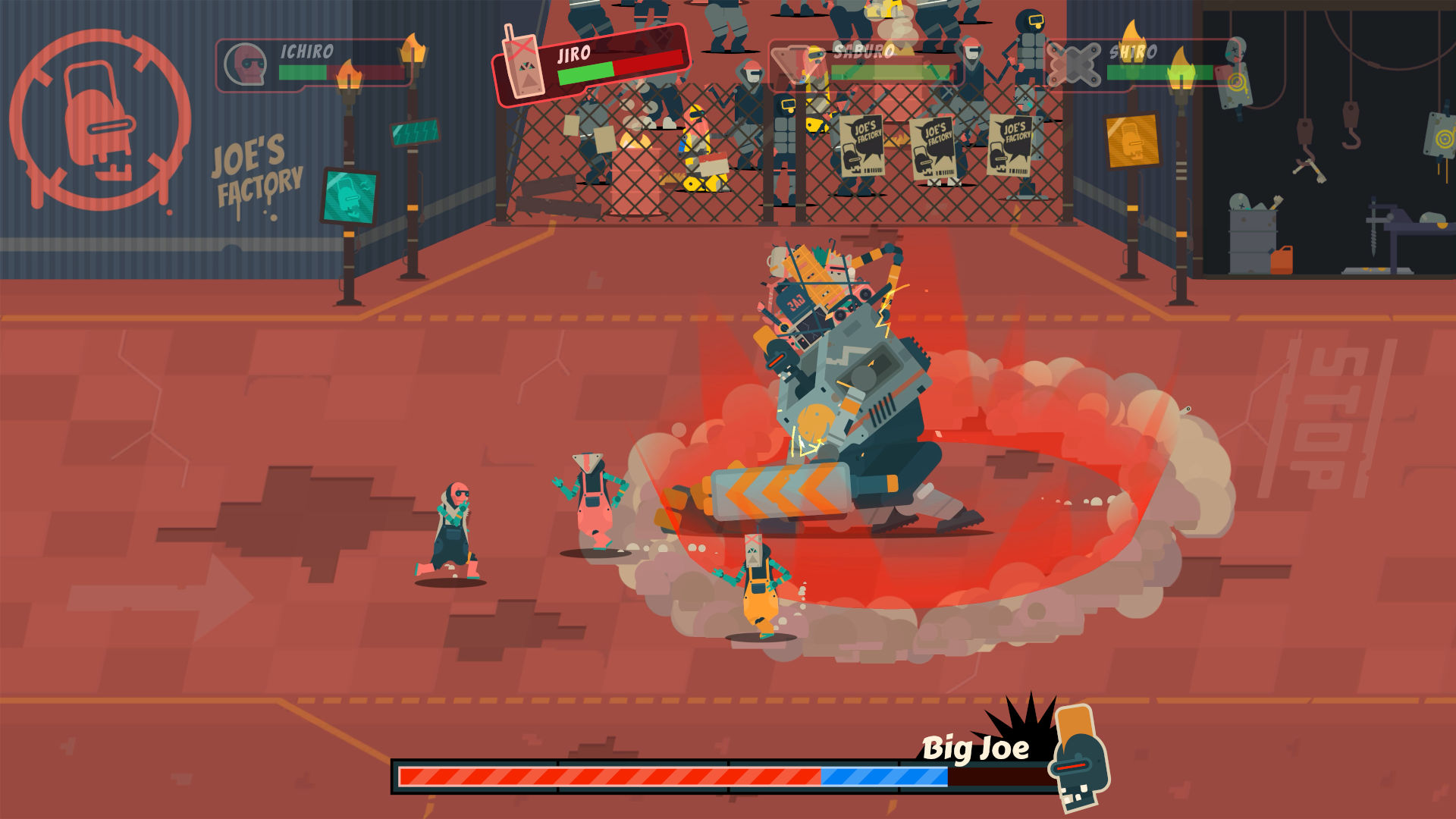
Apple Arcade has a brand new title in the form of Scrappers, a multiplayer beat-’em-up in which you literally clean up the streets as a team of robot garbage collectors. It takes place in the future, after humanity has destroyed itself. We thought it was a great idea to fire all of the world’s rubbish into space in a rocket, which subsequently crashed down and destroyed the planet.

Skip to the not-so-distant future and robots have taken over. Trash has become a valuable commodity; so much so that rival gangs now stalk the streets looking to keep it all for themselves, and you have to fight them off as you complete your daily rounds. You can partner up with three other players in multiplayer, or go it alone across the game’s over 20 different stages.

There are two key components to Scrappers: cleaning up the streets and beating up any fools trying to stop you. You run around picking up trash and passing it to your teammates, who are carrying a huge stack. The larger the stack, and the more you work together as a team, the greater the rewards.

Then there’s the combat, which should appeal to fans of Streets of Rage. You perform a variety of different combos and attacks, whether it’s with a weapon or your fists. You can unlock new weapons and ‘Scrappers’ (playable characters) by getting high scores, which also provides custom parts that you can use to tweak your garbage truck.

Aside from the lengthy campaign, there are a bunch of minigames to participate in, which you unlock by completing levels on a Super Mario World-style map. There are four different areas to travel through, which are wholly different from each other visually.

If you think you have what it takes to clean up the city of Junktown, head on over to the App Store right now and download it. You’ll need an Apple Arcade subscription to play it.

Posted on Leave a comment

This dongle can upgrade you to wireless CarPlay for cheap

Wireless CarPlay is still scarce, but there is a way for existing CarPlay users to break free of wires inexpensively, and we’ve been testing it for months now.

Using CarPlay wireless

Using CarPlay wireless

Editor’s note: We stumbled across this dongle some time ago. In the three months since we originally published this piece, we’ve had questions about it, and we’ve had more time to test it in more conditions.

Wired CarPlay is near-ubiquitous among newer vehicles, with only a few recently making the jump to wireless. Ford announced several vehicles will go wireless with a new Sync 4 update and Uconnect 5 from FCA will also bring wireless CarPlay to a massive number of vehicles.

Unfortunately, that leaves everyone else out in the cold currently relying on their existing wired CarPlay setups. Typically, the only real cost-effective ways to get wireless CarPlay is to wait until you step up to a new vehicle or pony up some big cash for an aftermarket head unit, such as the Pioneer AVH-W4400NEX receiver we tested. But, an after-market solution can sometimes cause problems with integrated electronics, like backup cameras or remote starter systems.

[embedded content]

Fortunately, we’ve recently stumbled upon a middle ground. There is a way to achieve wireless CarPlay without a replacement receiver and without a new vehicle.

Hack your way to wireless CarPlay

We managed to do this with an external USB box that essentially “tricks” your vehicle into thinking your iPhone is plugged in. There are several versions of this device floating around online though the one we picked up is called CarPlay2Air.

This device connects to your car’s USB port that is used for CarPlay. The vehicle then registers this as a CarPlay device. Your iPhone sees this new external receiver as a CarPlay device and will connect to it wirelessly.

What this amounts to in the end, at least today, is seamless, wireless CarPlay.

The CarPlay interface as it connects to your iPhone

The CarPlay interface as it connects to your iPhone

With the adapter installed, wireless CarPlay works like any other official solution. You get in the vehicle, as soon as it boots up, your phone will automatically connect to your infotainment system.

A new loading screen appears for a few moments as your phone connects. This is the one difference between this solution and an official solution.

Wireless CarPlay brings several benefits. Your iPhone’s battery life gets displayed on your infotainment screen which leaves you free to keep the phone in your pocket or purse. Fiddly wires become a thing of the past.

Best of all, you can finally use a wireless charger. We hit the road often and have destroyed Lightning cables because a small amount of water has gotten on the pins. A bad Lightning cable means no CarPlay.

Quarrles and quibbles

Not everything is perfect with these wireless CarPlay adapters.

Occasionally when we would use remote start, upon entering the vehicle CarPlay would not automatically connect per usual. This requires us to unplug and re-plug the CarPlay adapter to get it working again. That said, we have also had similar issues with manufacturer installed and third-party wireless CarPlay units so it is hard to peg who’s at fault conclusively, in this regard.

There have also been many reports as of late of issues with wireless CarPlay on recent versions of iOS. Again, it makes it hard to particularly different to discern if iOS, the receiver, or the CarPlay adapter are the ones causing this occasional hiccups.

Only a hack

The CarPlay2Air CPlay2Air adapter

The CarPlay2Air CPlay2Air adapter

The bigger issue at play is that these aren’t much more than a hack and are in no way supported by Apple. Going forward, there is no guarantee that a new version of iOS doesn’t deploy that completely kills how they work. The same goes for many customer-driven projects such as HomeBridge for connecting non-certified accessories to HomeKit.

It is a gamble, but some users —like me —see the benefit of that risk for a feature that isn’t being delivered by auto manufacturers.

All we know is that these wireless CarPlay adapters —at least the one we tried —work for now. Here’s hoping they stay that way.

Update

AppleInsider has further reached out to the CarPlay2Air developer for additional clarification on how the adapter works.

According to them, the adapter isn’t so much a “hack” as it is a clever piece of engineering. The dongle is mimicking a legitimate CarPlay receiver so the only way that this would be disabled is if other all CarPlay receivers were also broken.

While we can’t entirely confirm on our own how the intricacies work of the adapter, this does give us more relief that this piece of hardware won’t be deemed useless by a future iOS update.

The other third-party adapters we originally linked to below were more in the vein of a hack and required you to install an app on whichever compatible head unit you have installed. CarPlay2Air does not need to do so and plugs into almost any existing wired CarPlay system.

Where to buy

If you’d like to try one out for yourself, you can pick up the CarPlay2Air adapter from its site for $159.

Posted on Leave a comment

Apple & Google’s contact tracing won’t stop COVID-19, but it will help

Using smartphone contact tracing to track and mitigate the spread of COVID-19 has been floated as a possible way out of the outbreak —but there are plenty of signs suggesting that its effectiveness is an open question.

Smartphone surveillance seems like a promising way to mitigate the COVID-19 pandemic, but there are major hurdles that it may not be able to overcome. Credit: Giles Lambert.

Smartphone surveillance seems like a promising way to mitigate the COVID-19 pandemic, but there are major hurdles that it may not be able to overcome. Credit: Giles Lambert.

The coronavirus has upended life for most Americans, and government and private entities are looking for a way out. On Friday, Apple and Google announced a joint initiative to develop systems for cross-platform contact tracing. But there’s much more to the conversation, and the probability of the system actually working, than you might see at first glance.

Past attempts at COVID-19 surveillance

A heatmap of smartphones held by Florida beachgoers in March, collected from mobile ad firm X-Mode. Credit: Tectonix

A heatmap of smartphones held by Florida beachgoers in March, collected from mobile ad firm X-Mode. Credit: Tectonix

The U.S. government is already using smartphone location data to track the movements of Americans, per a March story from The Wall Street Journal.

According to the report, the lion’s share of that data is sourced from mobile advertising firms, either from location-tracking applications or from app developers who resell the data. Some of it has been provided by Google’s “Community Mobility Reports” project, which is collected on an opt-in basis from Google users.

But neither of those data types actually count as contact tracing. The data, stripped of personally identifiable information, is only really useful for keeping tabs on where people are congregating, and the general patterns of movement of large groups of people. It isn’t useful for tracking out how and when COVID-19 spreads from person-to-person.

More than that, privacy advocates have long cautioned that this type of location data can never be truly anonymized. In 2019, a research paper published by the University of Washington shows that it was relatively trivial to figure out a specific person’s location using location-based ad targeting. On the flip side, unmasking an “anonymous” user is also relatively easy for skilled attackers.

Apple has long been trying to fight against data collection from advertisers and third-party analytics firms. The iOS 13 update, for example, contained new features that Ad Age said “crippled” location-based advertising. Again, that’s the same data type provided to the government by marketing firms.

All of this has largely lead to short-range Bluetooth signals being forwarded as the most realistic means to implement contact tracing on a widespread basis. Hence Apple and Google’s Friday announcement. But while it does away with some of the pitfalls of mass geo-surveillance, it has its own hurdles to overcome.

The Apple and Google solution

Credit: Apple, Google

Credit: Apple, Google

In a rare show of unity, Apple and Google on Friday announced new plans for a cross-platform, system-level feature that will allow public health officials to track and possibly reduce the spread of COVID-19.

By leveraging short-range Bluetooth signals, the system will help public health officials identify and follow up with smartphone users who have possibly come into contact with someone infected by COVID-19. They’ll even receive a notification on their phone that this event occurred.

Both companies are likely highly conscious of their respective privacy reputations, so they both claim that the system is being developed in a private and transparent manner. Out of the gate, they’ve published documentation illustrating how the system would work, including one document focused on the cryptographic standards used to protect privacy.

The initiative will apparently be deployed in two parts. In May, both companies will release a developer API for iOS and Android that app makers and public health teams can use in their own apps to enable contact tracing. Deeper system-level functionality, which will presumably negate the need for a third-party app entirely, will be released “in the coming months.”

But while Apple and Google are the most high-profile proponents of Bluetooth contact tracing, they are far from the first to float the idea. Earlier in April, researchers at MIT developed essentially the same system partly inspired by Apple’s offline Find My feature.

Contact tracing apps have also already been used in places like Singapore and South Korea, where they reached varying levels of success.

The problems with Bluetooth contact tracing

An illustration of Bluetooth contact tracing. Credit: MIT

An illustration of Bluetooth contact tracing. Credit: MIT

Bluetooth-based contract tracing still has one major downfall. Both Apple and Google made it clear that both waves of contact tracing deployment will be offered on an opt-in basis. The first wave requires that users download an app using the API. The second wave explicitly says users need to “choose to opt in.”

Like social distancing, this type of contact tracing absolutely depends on adoption by a significant portion of the population. Otherwise, it won’t make much of a difference. The fact that this is being deployed on both iOS and Android certainly helps, but it’s not enough to ensure that most people will actually use it, particularly in the U.S.

Unless this type of system is government-mandated, we have serious doubts that enough people are going to volunteer for it to be effective. This is borne out by many states and local governments only starting to ensure compliance with social distancing requirements by force of law when citizens didn’t voluntarily adopt suggestions.

On the flip side, government-mandated contact tracing runs into the same privacy and ethical issues as widespread location surveillance, and will likely meet the same resistance that voluntary lock-in did.

And, there are still some signs casting doubt on whether it really will help curb the spread of COVID-19. Just take a look at Singapore, which implemented fastidious physical contact tracing and surveillance methods, along with an app that used a mix of Bluetooth, Wi-Fi, GPS and cell tower signals to track user locations.

Prime Minister Lee Hsien Loong said that despite the “good contact tracing,” the government has been unable to figure out how people are catching COVID-19 for “nearly half” of cases. While initially a “master class” for COVID-19 mitigation success, the BBC reports that there has since been a surge in new cases on the tiny island-state despite control measures.

Singapore is a small country with a population smaller than New York City. Adopting widespread contact tracing in the U.S. may be near impossible, even with the computing and financial might of Apple and Google behind it. Even though its effectiveness in Singapore is questionable, it probably won’t do nearly as well in larger countries just because of scale.

And, of course, there are unanswered questions about what will happen to all of these systems and data once the shadow of COVID-19 no longer looms over daily life, as digital rights group The Electronic Frontier Foundation points out. Unless the systems are completely dismantled and the data wiped, the possibility for dragnet surveillance is still there.

Possible ways forward

As we’ve thoroughly covered, for a contact tracing app to be effective, it needs to be used by at least a majority of citizens. For that, it either needs the trust of the people or it needs to be mandated.

In the U.S., neither of those options seems particularly promising, with trust in both the federal government and technology juggernauts at a relative low. Even pro-privacy Apple may have a hard time persuading people to willingly undergo surveillance.

Even if a simple majority of people sign up for contact tracing, the system likely won’t do much for most COVID-19 cases, as is evidenced by cases like Singapore and South Korea. If the government starts requiring the usage of the app or implements it was a prerequisite for testing, there will undoubtedly be a backlash.

Which begs the question of what will actually work, a question many officials in the U.S. are actively trying to answer. Without something of a return to normalcy, the economic impact may well be unimaginable. And if we return to normal too quickly, lives will be lost — and the economy will still see a major impact.

One of the possible alternatives, per several proposals seen by Vox, is to implement mass coronavirus testing in lieu of surveillance. Like with mass location tracking or contact tracing, that’s a herculean effort.

The most realistic way forward is a balanced approach mixing these strategies. But that, of course, is easier said than done. The Apple and Google systems will help because they’re privacy-respecting and cross-platform, reducing friction and centralizing data. But it’s just piece of a larger puzzle, and past contract tracing attempts suggest it may not be a significant piece.

Until a vaccine is implemented — something that’s at least a full year away according to experts and the companies developing them — solutions like these are only going to be able to do so much.

Posted on Leave a comment

Pokémon Go gets an online leaderboard later today

Right in time for the bank holiday weekend (depending where you are), Niantic is gearing up to drop an exciting new feature in Pokémon Go: online leaderboards. These tie into the Go Battle League feature, and provide you with a list of the top 500 players statistically. The leaderboard hasn’t gone live yet, but you’ll be able to see it at the official Pokémon Go live website as soon as the Go Battle League changes to Master League from Ultra.

The leaderboard will detail the top 500 players’ nicknames, teams, ranks, ratings, and the total number of battles played. This information is taken from the previous day’s statistics, and will update between 20:00 and 22:00 UTC each day. If you want to make it on the leaderboard, you’ll not only have to be a good enough battler, but you’ll also have to ensure that you don’t have an offensive nickname.

To celebrate the launch of the Go Battle League leaderboards, Niantic is hosting a Go Battle Day event on Sunday, which features the Pokémon Marill. The more battles you perform between 11:00 and 14:00 in your local time zone, the higher the chance you’ll have of encountering the fan-favourite Pokémon.

Marill will also appear as a guaranteed reward after your first and third wins, though those who own a premium battle pass will get Marill after every single win. All players will also receive twice the normal amount of stardust for catching Marill.

Niantic is also extending the number of battles you can perform for the entirety of Sunday (in your local time). Rather than the five sets of battles you can typically perform, Niantic is increasing this to 20. That’s a whopping 100 battles for those who want to participate.

If you’re interested, you can go ahead and grab Pokémon Go from the App Store or Google Play right now and get ready for the online leaderboards going live later today. The Go Battle Day event happens on Sunday.

Posted on Leave a comment

Door Kickers: Action Squad is now available on Android

April 8, 2020 KillHouse Games has just confirmed that Door Kickers: Action Squad is finally available on Android, and that many of the bugs users over on iOS have been experiencing, including crashes, have been fixed.

April 3, 2020 Door Kickers: Action Squad isn’t available on Android in all regions yet, and we apologise for the confusion. KillHouse Games has confirmed that the release is still pending on Google’s side. We’ll update you all further when it’s actually available.

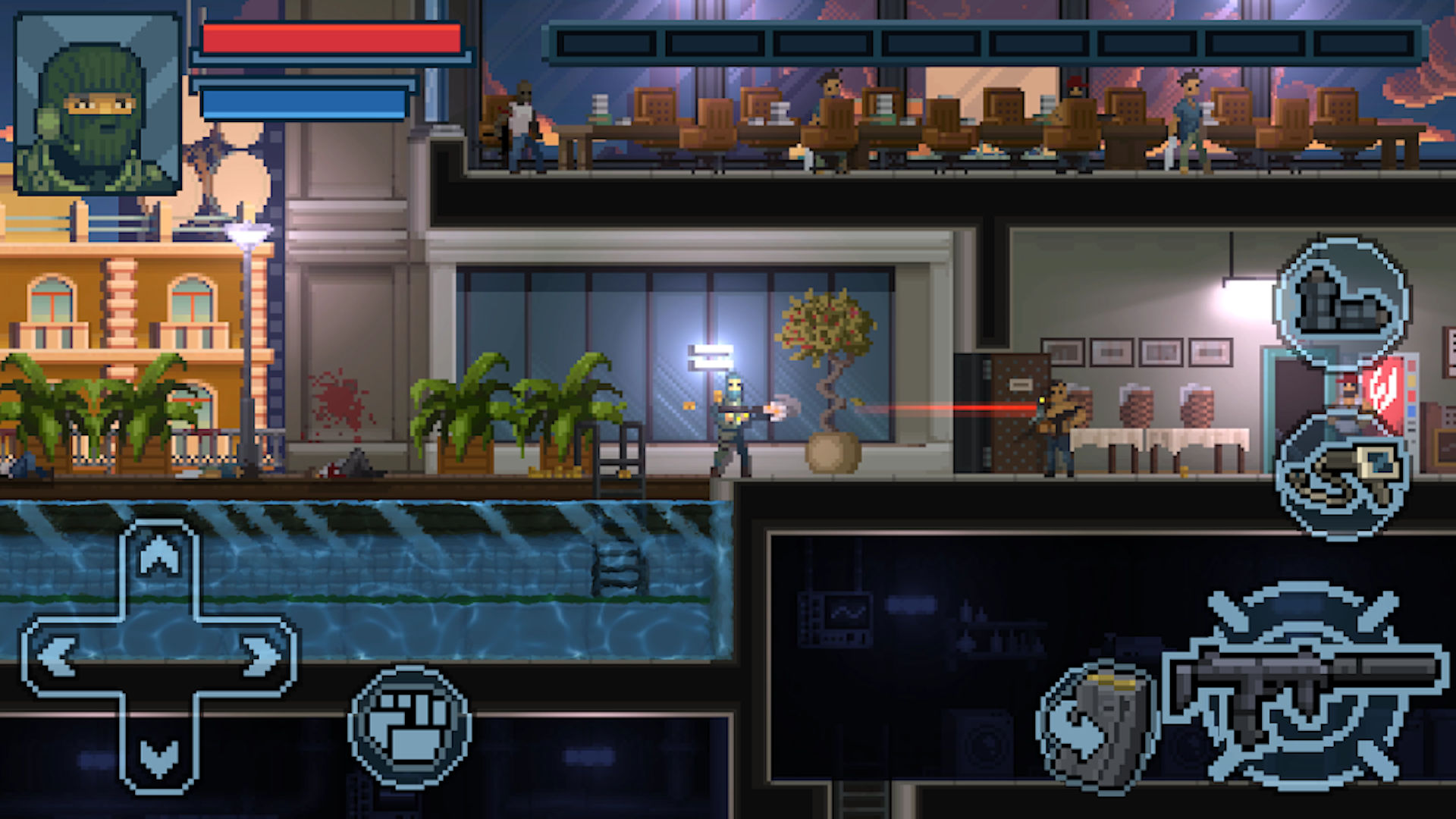
If you’ve ever wished that the real world resembled that found in ’80s police movies, Door Kickers: Action Squad is the game for you. It’s a pleasingly-retro side-scrolling shooter in which you direct a SWAT trooper on a murderous rampage across Nowhere City USA. Bullets will fly, heads will roll, and many doors will be kicked.

Like any self-respecting SWAT member, you’ll begin by selecting your gear. There’s a wide variety of weaponry and useful items, like health packs or refills, and each gun has its own unique set of recoil and reload speeds. Given that this is a sequel to the deeply-strategic Door Kickers, you can expect to develop some level of mastery over time.

Because while, on paper, it looks like a Contra-style shoot-’em-up, it’s actually an experience that requires a fair amount of thought. The action might fly in thick and fast, but those that go in prepared will have a much easier time. You can use cover to stay safe, utilise a variety of strategic abilities to turn the tide, and unleash your ultimate skill to clear out a room.

There are six different characters to select from too, which each have their own playstyle. You can level each of them up individually, with different improvements available per character.

In terms of gameplay, there’s a single-player campaign to beat that features a whopping 84 explorable levels, an endless tower mode, and a zombie invasion mode, which remixes the base campaign to include the shambling undead.

It’s an intriguing sequel in that it maintains much of what we loved about the original, the strategic play, while changing pretty much everything else. If you’d like to check it out for yourself, you can grab it right now on iOS via the App Store and Android via Google Play. It’s a premium app at $2.99 (£2.99).

Posted on Leave a comment

Legends of Runeterra launches April 30 on mobile

Riot Games has announced that Legends of Runeterra, the upcoming League of Legends card game, will officially launch on mobile on April 30. That’s a simultaneous launch with the PC version, which is just rather lovely. If you’re not sure what this is, it’s a brand new card game by League of Legends creator Riot, who is clearly on a mission to beat Blizzard at its own game. Literally. It draws a lot of inspiration from Hearthstone, you see.

It’s free-to-play and you can earn cards by simply playing or purchasing them from the store. You’ll be able to directly purchase the cards you want, as well rather than rely on whatever you can get out of card packs. The ability to have that much more control over your decks will likely appeal to fans who are tired of bad luck.

Aside from that, though, it’s all very business as usual. You’ll craft a deck out of a wide variety of cards, each of which comes from one of six different regions. Regions behave similarly to classes in Hearthstone, providing a variety of different play styles. You can combine cards from different regions to create your own strategy.

You can also pick a champion, which is a powerful card that you’ll likely build your deck around. There are six champions in total, with each one hailing from one of the different regions available in the game.

Legends of Runeterra is currently available in open beta on PC, and you can still earn a limited-time Moonstruck Poro at launch if you check it out ahead of the full launch. That’s on April 30, when it will launch across PC, iOS, and Android simultaneously. You can pre-register right now on Android via Google Play, but will have to wait until the official launch to grab it on iOS.

Posted on Leave a comment

Apple News outage briefly impacted selected users [u]


A small number of users worldwide were reporting that Apple News was down for a period of time on Friday morning, but there was no consistency to which territories were affected, and devices on the same network could be working.

These two iPhones are on the same network and using the same Apple ID. The iPad that the shot was taken with also has Apple News running, but it did take longer than usual to load.

These two iPhones are on the same network and using the same Apple ID. The iPad that the shot was taken with also has Apple News running, but it did take longer than usual to load.

Reports overnight claimed that the Apple News service was down, with users worldwide saying that the app wasn’t populated with stories, and then displaying an error message. That message said that the “feed is unavailable,” and recommended trying again later.

However, not only was Apple’s regular service status reporting no problems, Apple News is appearing as normal for most people.

More peculiarly, that included people who have multiple devices —one may have said the feed is unavailable, but the other showed the regular service. In some cases, the feed is taking longer than usual to appear.

In AppleInsider testing, the majority of iOS devices, and Macs, were all working correctly. In one test of four devices on the same network and with the same Apple ID, two worked perfectly, one was slow, and only one failed to load Apple News at all.

Update 7:00 A.M. Eastern time: Apple News appears to have been completely restored.

Posted on Leave a comment

The award-winning platformer Gris is out now on Android

April 2, 2020 Gris is now available on Android, and you can find a link to download it at the bottom of this story.

Winner of the Game Awards, ‘Games For Impact’ category, Gris is launching on Android later this week. Following the journey of a girl of the same name, Gris explores ideas of sorrow and grief in a fading world, her dress granting powers which she uses to traverse its many obstacles. Released in December 2018, and launching on iOS at the same time, Gris can be counted as one of the most critically acclaimed indie games of the past couple of years.

In particular, the game was praised for how it dealt with the subject of grief, but also its gorgeous visual aesthetic, and its enchanting soundtrack. Having already cemented its place on mobile with a wonderful iOS port, this Android release has been a long time coming.

Your journey through Gris is somewhat similar to Hellblade (though with far less stabbing of Norse spirits) as you gradually help her recover strength, represented in the powers linked to her dress, and to find acceptance in regards to whatever sorrowful event brought her to this strange plane of existence.

There have been a number of games dealing with mental health in recent years, whether Hellblade, or Sea of Solitude, but with a memorable art style and soundtrack, Gris has carved out some recognition for itself. It was also highly successful considering it was the first game of Barcelona-based developer, Nomada Studio; a collaboration between two ex triple-A developers.

It’s plain to see how inventive Gris is in terms of its gameplay, combining aspects of endless runners, platforming, puzzle, and Metroidvania in terms of abilities. But most of all, the game was recognised for creating a relaxing, therapeutic play experience, mirroring the restorative journey of its protagonist.

If this sounds like your cup of tea, you can grab the Android version right now on Google Play, or purchase the iOS from the App Store for $4.99 (£4.99).

Posted on Leave a comment

Zoom iOS update removes ‘feature’ that sent user data to Facebook


Video conferencing service Zoom on Friday issued an update for its iOS app, removing an SDK that sent users’ data to Facebook without their express consent.

Zoom

Zoom for iOS was updated today to remove Facebook’s SDK.

On Thursday, a report from Motherboard revealed Zoom’s iOS app was sharing user analytics data with Facebook without noting the practice in its privacy policy.

Specifically, the app used Facebook’s SDK to integrate “Login with Facebook,” a feature that provides quick and easy sign-in capabilities. By including the SDK, however, Zoom automatically connected to and shared information with the Facebook Graph API, even if a user did not maintain Facebook account.

The company also failed to adequately inform users of its data sharing practices.

After the revelation was made public, Zoom on Friday removed Facebook’s SDK for “collecting unnecessary device data.”

“The data collected by the Facebook SDK did not include any personal user information, but rather included data about users’ devices such as the mobile OS type and version, the device time zone, device OS, device model and carrier, screen size, processor cores, and disk space,” Zoom said in a statement to Motherboard.

Zoom is “reconfiguring” the Facebook login feature to allow users to sign on with Facebook through a web browser. Users will need to download an updated version of Zoom’s iOS app in order for the changes to take effect.

“We sincerely apologize for this oversight, and remain firmly committed to the protection of our users’ data,” Zoom said in its statement.